Astral Projections Online January 2026
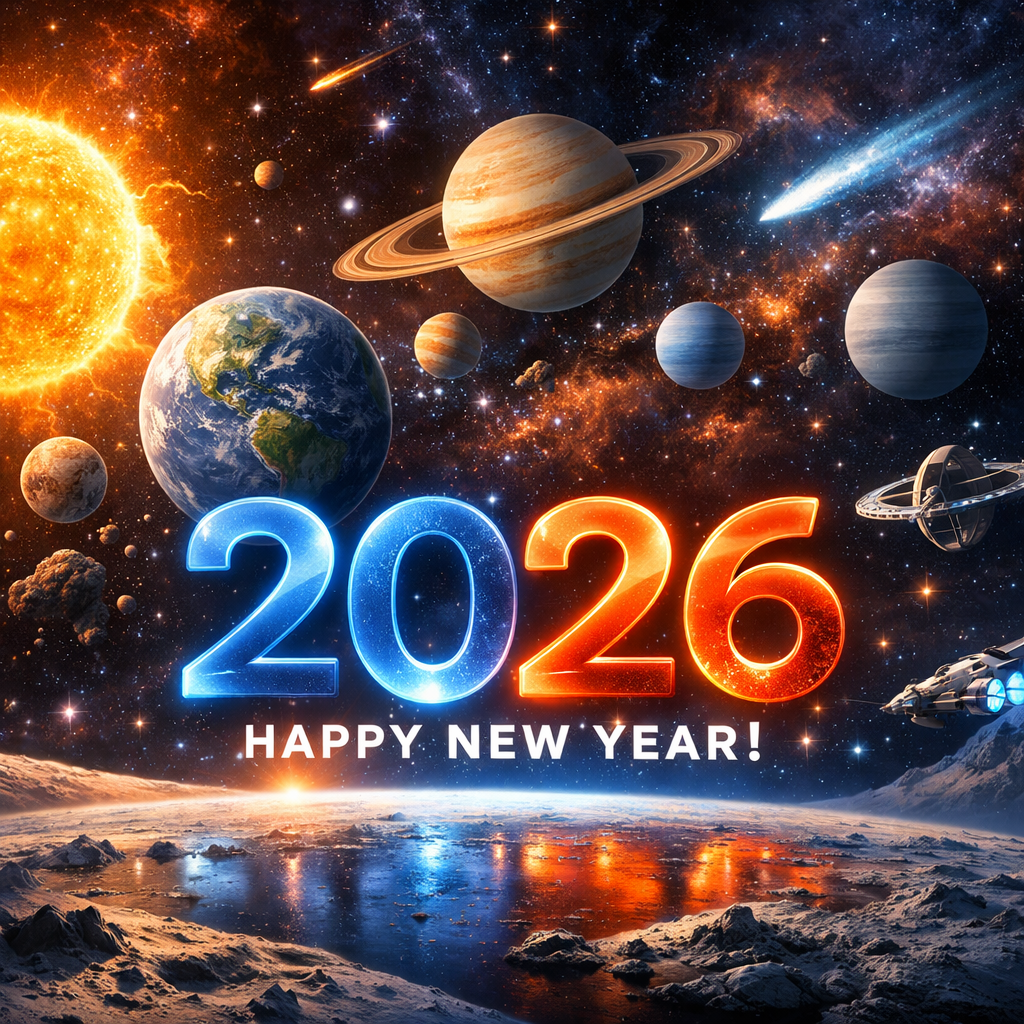
Wishing all our members, family, and friends of ASTRA a Happy New Year.
Hoping we have a better star party season this year.
Check our Website for updated content at www.astra-nj.com
Club Presentations Wanted:
Does anyone have any astronomy items of interest to share with the membership?
Please let us know at Club Contacts. For 2026, we still have some open slots.
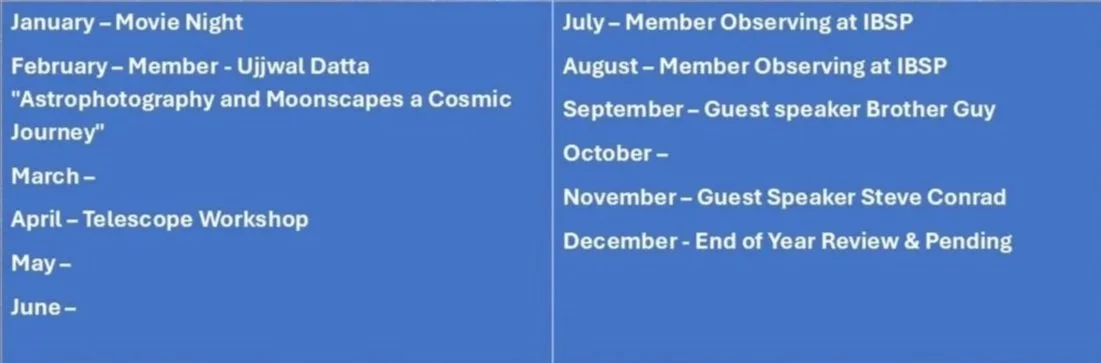
Note: We may have one more additional guest speaker.
Club dues and membership. If you renew after March 31, you will be renewed as a new member.
It is time to start renewing your ASTRA membership for 2026.
Forms can be found on the website or here.
ASTRA Elections
No changes to the ASTRA Board.
President - Jim Webster
Vice-President - Vinny Illuzzi
Treasurer - Rosemarie Spedaliere
ASTRAL PROJECTIONS ONLINE (APO for short) is an email-linked publication for members only. If you exit APO to the club website or other resources you will need to use the emailed link again to get back to it. If you wish to retain a copy please bookmark or refer back to the email. We will make all efforts to post by the first week of the month.
Submissions Welcome: Members are invited to submit articles, photos, news, or stories for inclusion with Astral Projections Online. Please contact the ASTRA Webmaster.
Event Calendar
Event Cancellations: Members will receive email notifications of event cancellations.
Upcoming January ASTRA Meeting
Friday, January 9, 2026, at 7:00 PM EST at Novins Planetarium
Upcoming Public Star Parties
February 21, 2026 - Jake’s Branch - 6:30 PM
March 21, 2026 - Jake’s BRanch - 8 PM
Upcoming Public, County & State Park Presentations 2026
Public Outreach Presentations: If any member wishes to support ASTRA outreach efforts with the public, please let Vinny, Ro, or Jim know of any interest. Additional help for these events is always appreciated.
County and State Park presentations require a registration fee; call the hosting park to reserve.
Private Event for 4H Club
Cloverdale Farms, February 19 at 6 PM
Constellations

Website Updates …
Please visit our club website. We continue to have additional updates, if some content would be useful to members please let us know.
“The wonder is, not that the field of stars is so vast, but that man has measured it.”
Anatole France - The Garden of Epicurus - 1894
French poet, journalist, and novelist. Nobel Prize in Literature in 1921.

ASTRA Meeting - January 9 at 7 PM
For our December meeting at the planetarium, we will meet in the meeting room at 7 PM. This will be our January Movie night.
We will also review the Park Rules and star parties.
Please support Novins Planetarium, patranizing their shows, who has supported us since the begining of ASTRA.
Event Reports
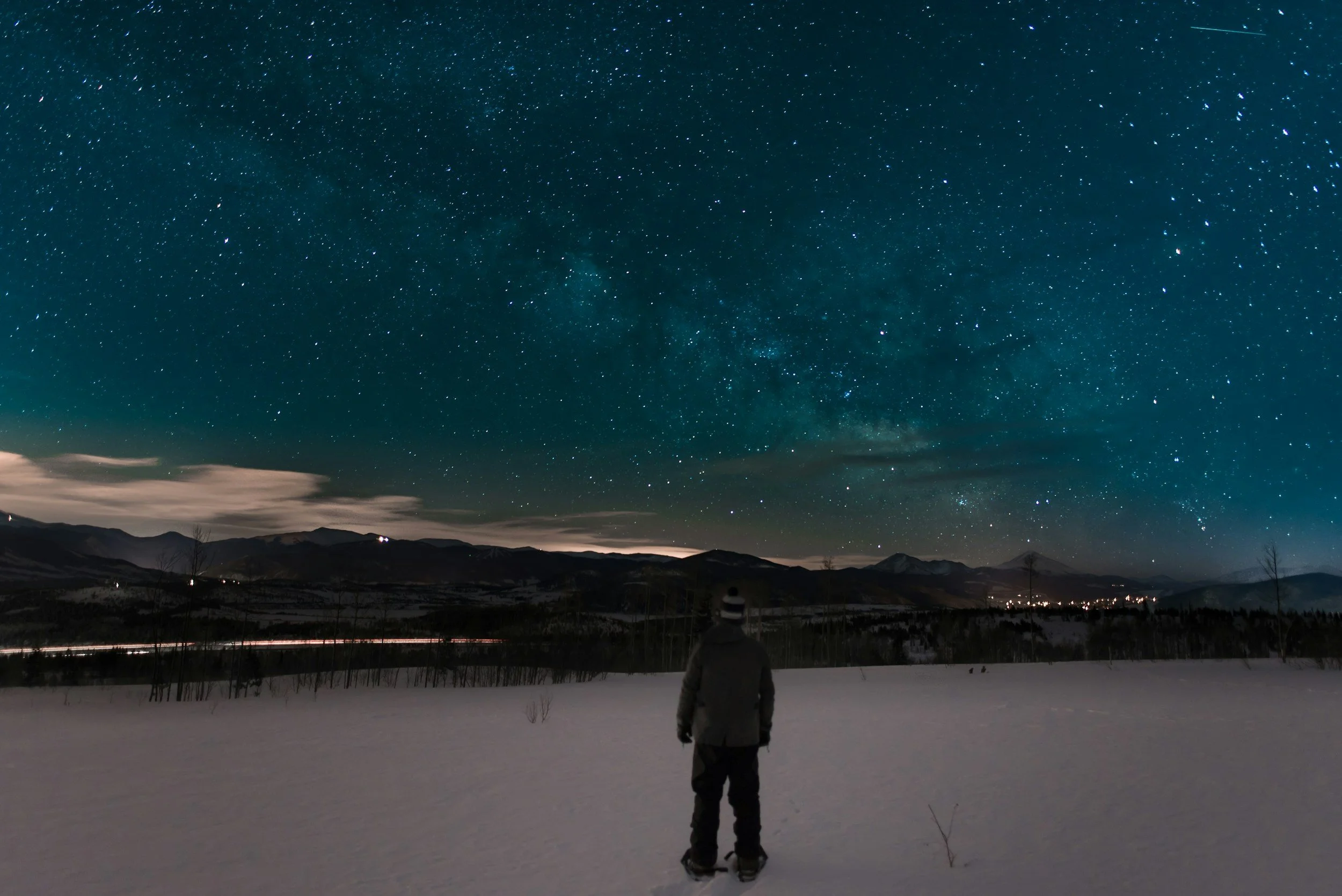
No star parties were scheduled for December.
Nathan Anderson - Stock image on SquareSpace
https://unsplash.com/@nathananderson
December ASTRA Meeting Summary
Our December meeting, as in the past few years, was our end-of-year video. Since we didn’t have much by way of star parties, we had an ASTRA over the years video review to make up for lost weather-impacted events.
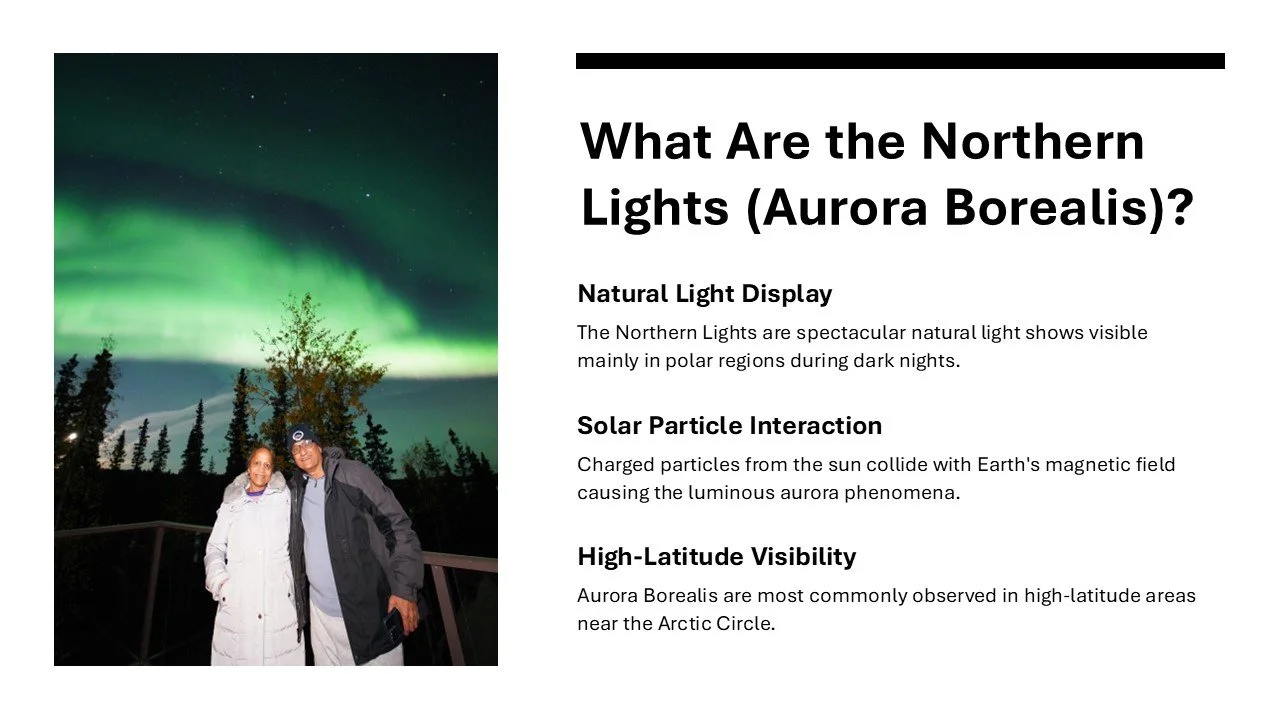
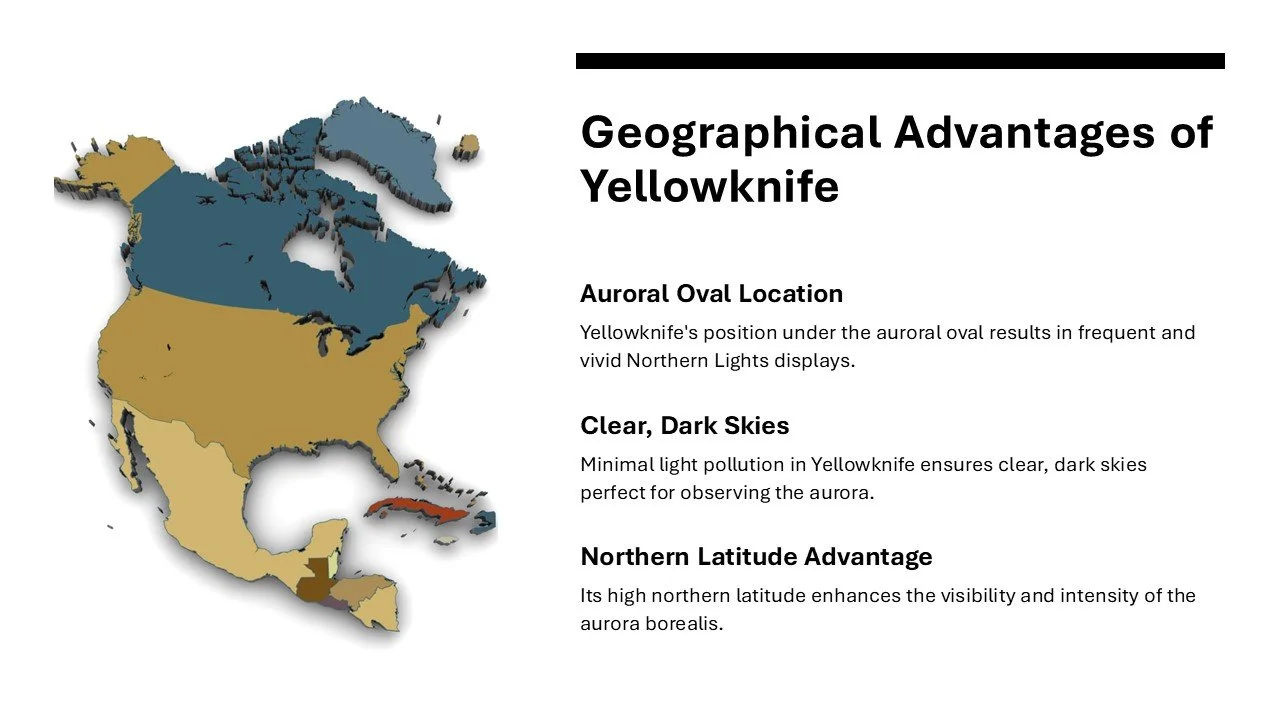
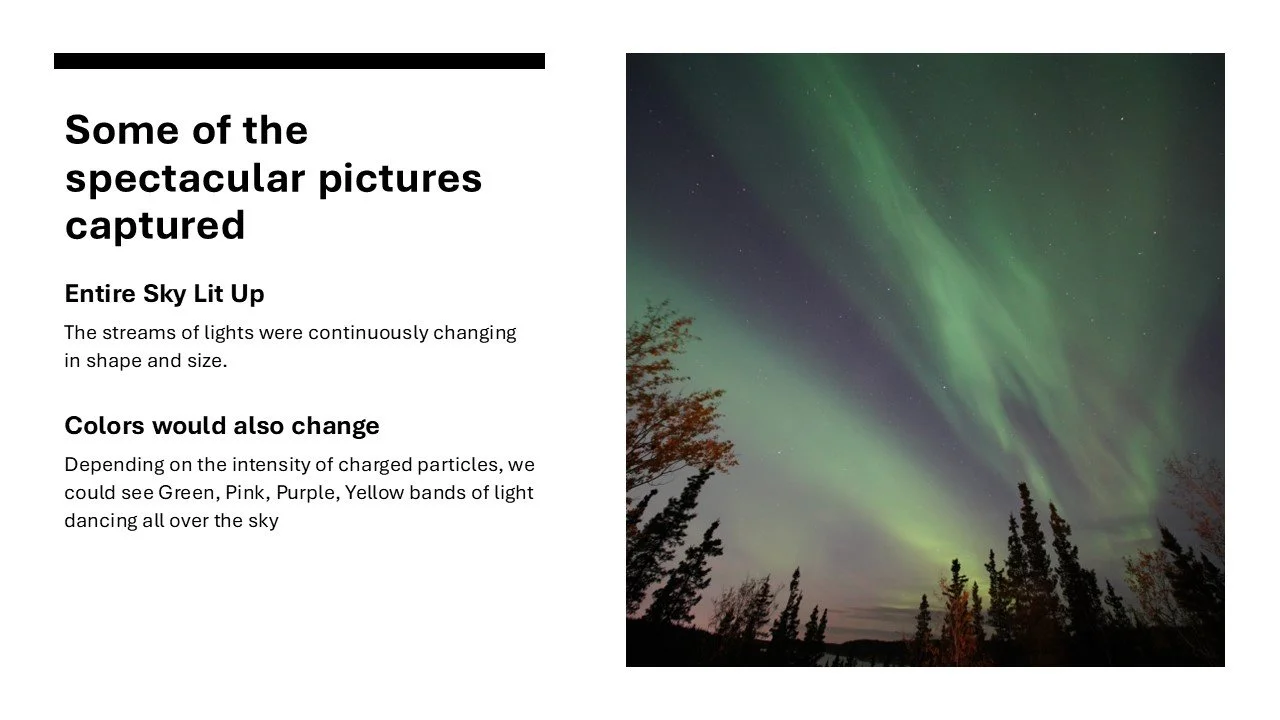
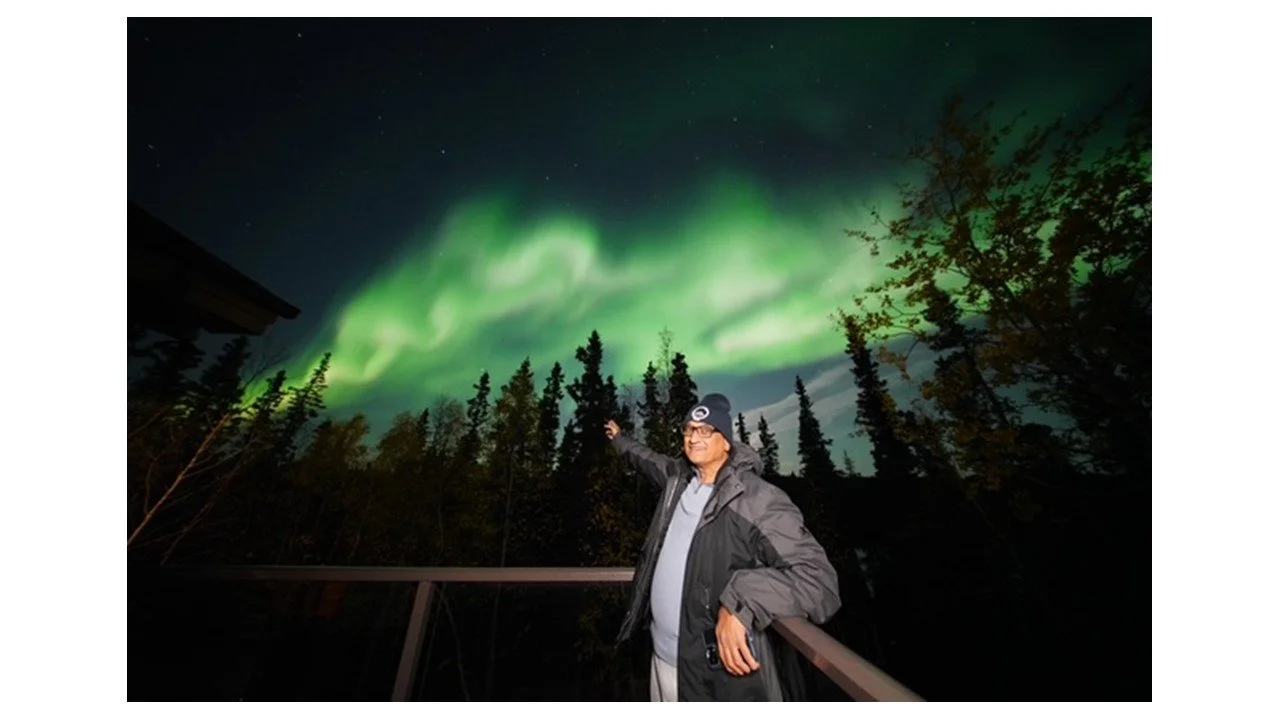
Also for December, ASTRA members, Sandy and Sharad Shroff, provided their Aurira presentation about their aurora trip to Yellowknife, Canada. A great presentation, with many images and one video.
Yellowknife is the capital and only city in Canada's Northwest Territories, located on the northern shore of Great Slave Lake. Known as the "Aurora Capital of North America," it is world-renowned for its Northern Lights viewing and its blend of frontier history and modern amenities.
Northern Lights (Aurora Borealis): Visible up to 240 nights a year, with peak seasons from January to March and late August to September. Popular viewing spots include Aurora Village.
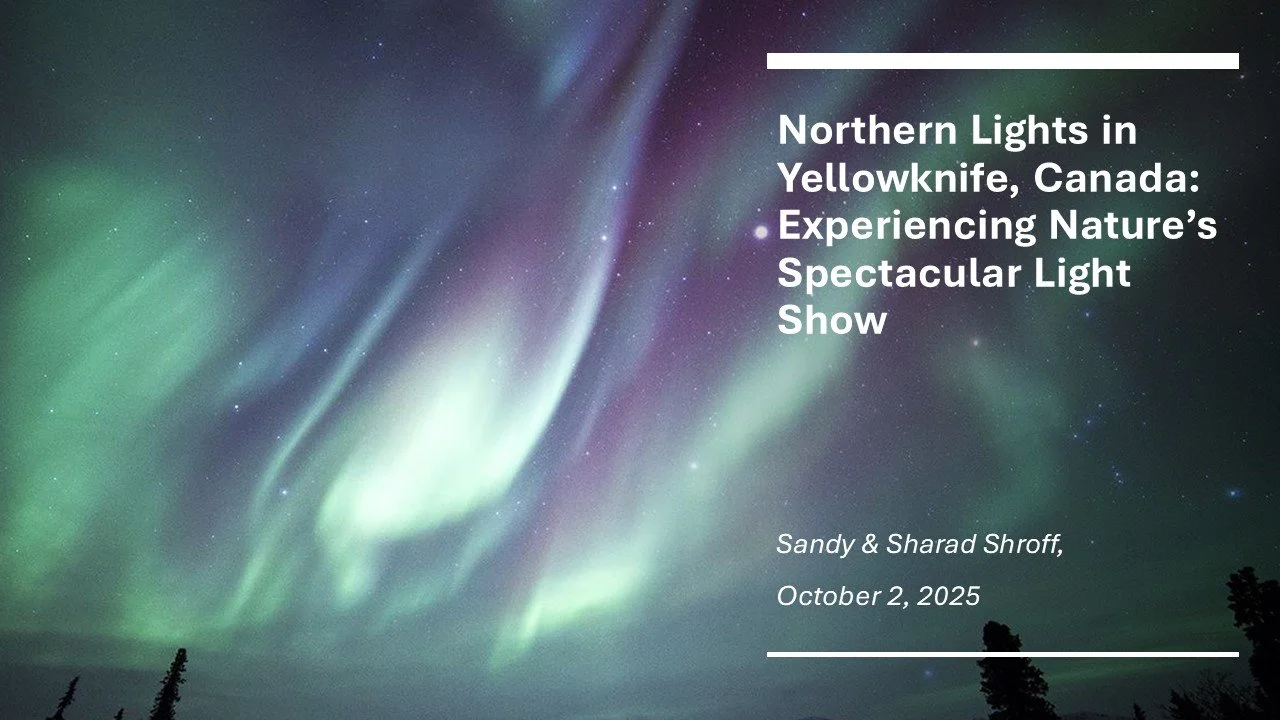

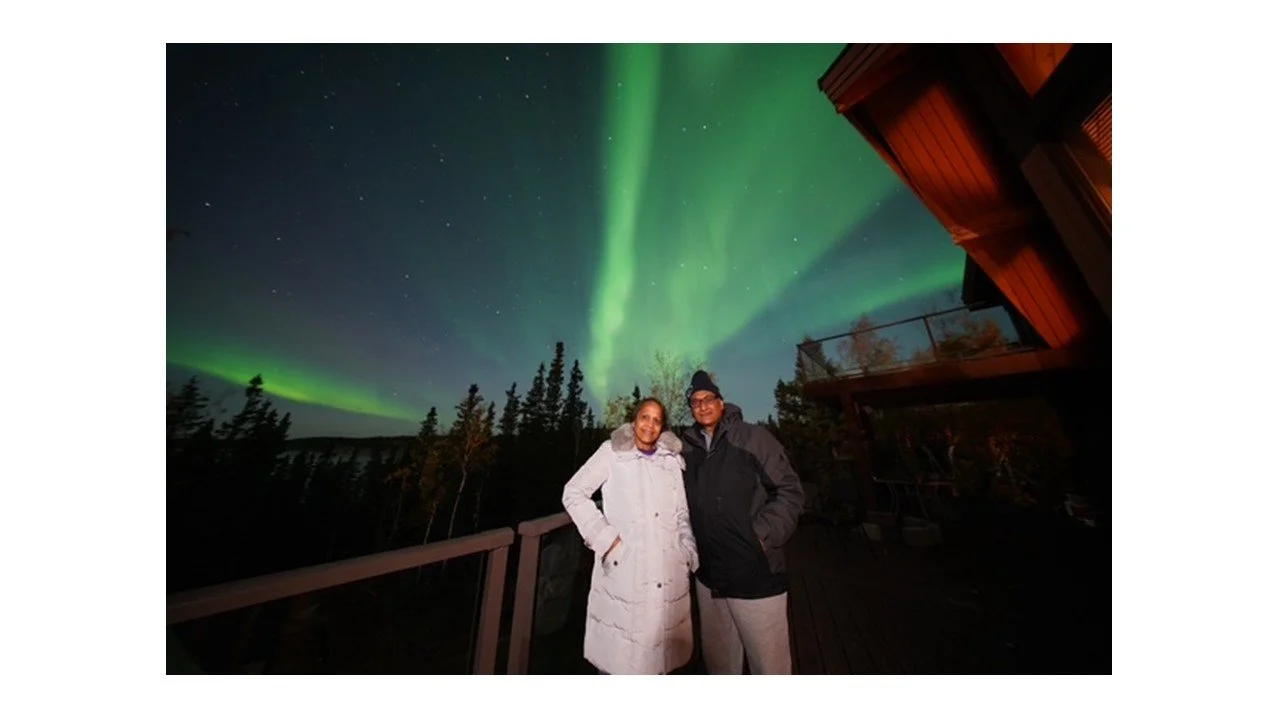
For more visit YouTube: Canada’s Northern Territories’ Aurora Village and Norther LIghts
Public Events and Presentations
None for December
Members Submitted Articles & Items
Whatever it is, how you tell your story online can make all the difference.
Contact: Jim Webster, ASTRA President and Webmaster, regarding submissions.
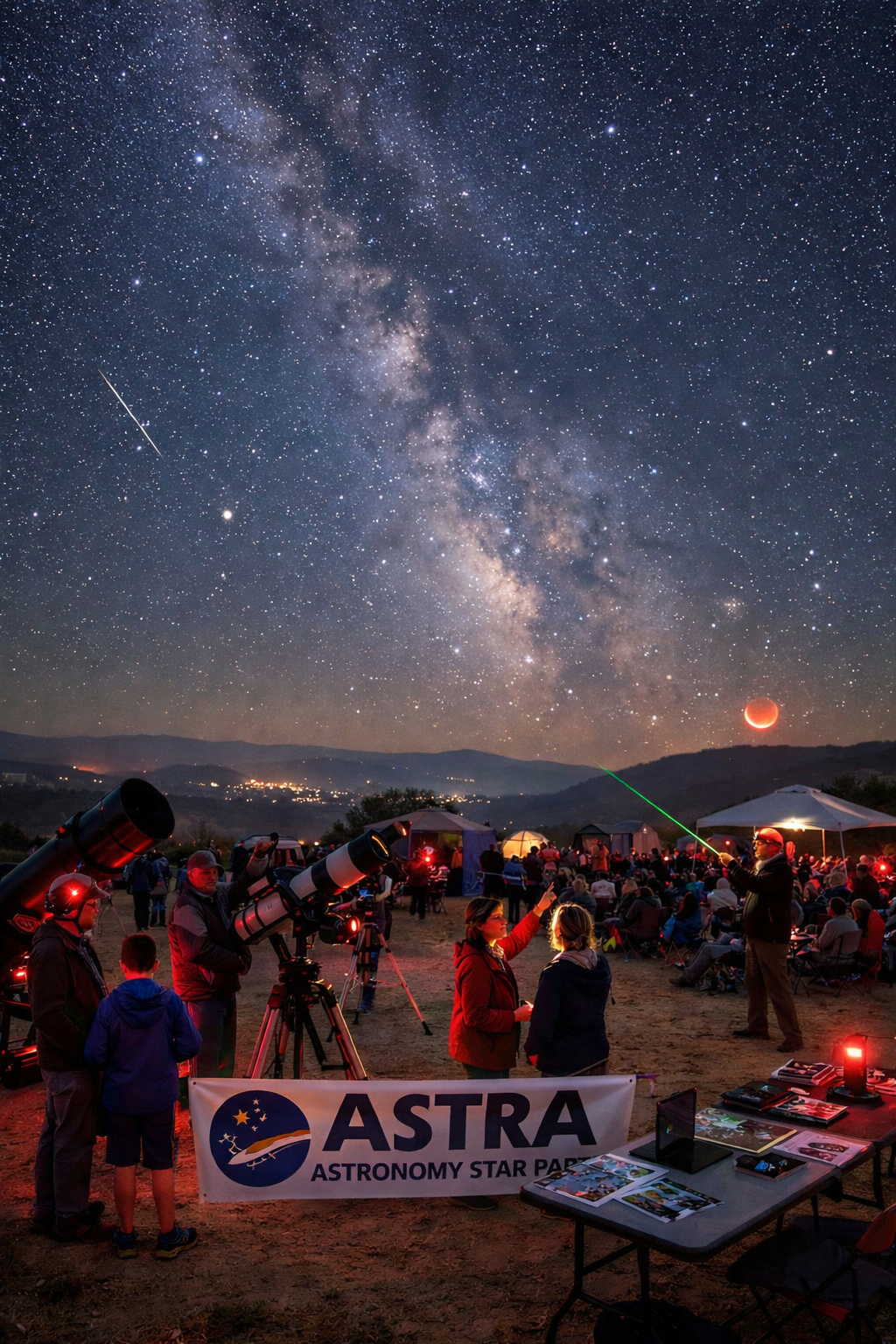
Norman Rockwell - Jim Webster
While this isn’t really an astronomy-related topic, I experimented with images using AI. Followed by an article on Astronomy and AI.
To the left is a fabricated ASTRA Star Party that was AI-generated with some provided information.
I’ve always had a fascination with old photos and Norman Rockwell depictions of earlier times in our history.
I recently came across the app ChatGPT that can change any photo to your desired interest. ChatGPT can also create others from scratch. The New Year’s 2026, earlier in the APO, is one that was AI-generated. Below is what I was able to do with Novins Planetarium photos.
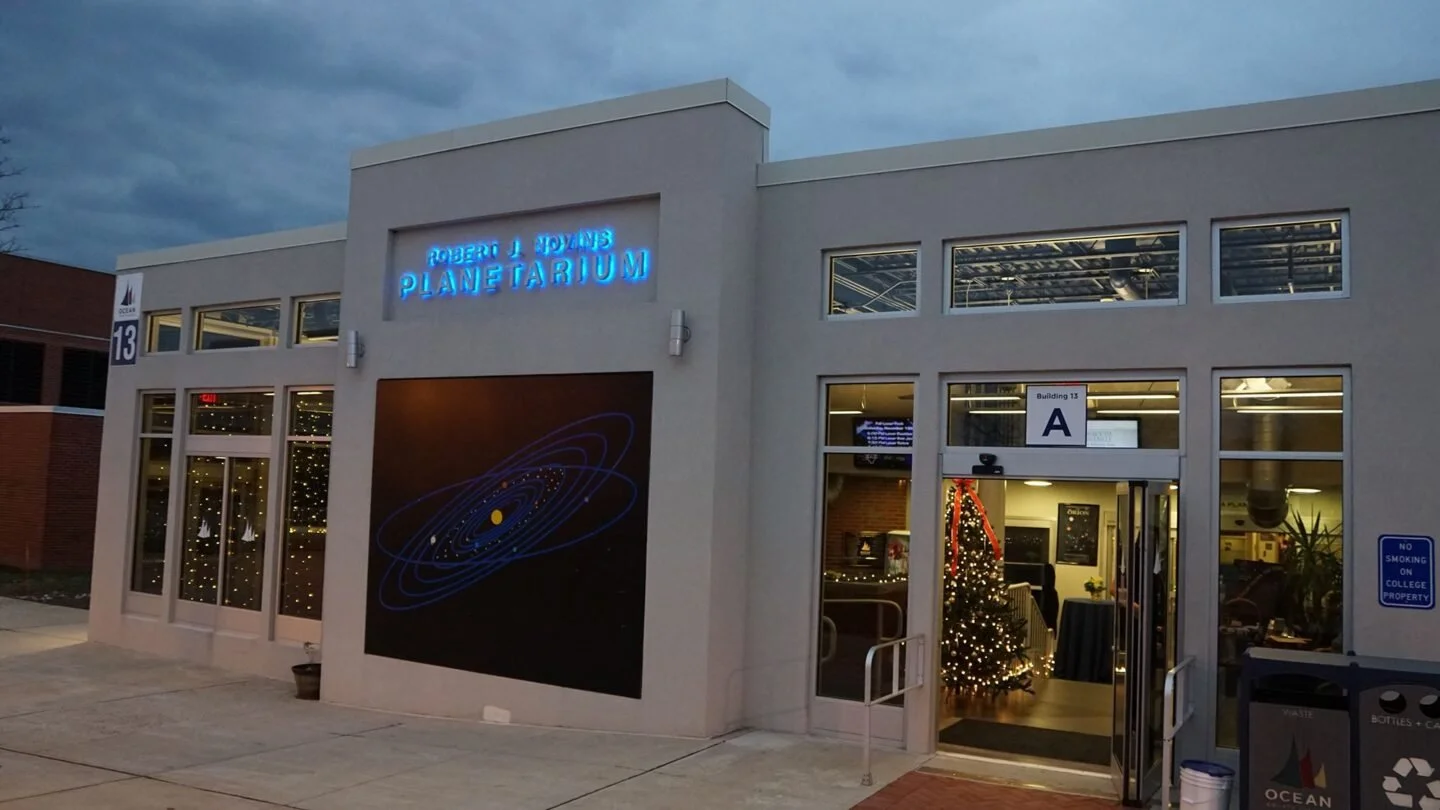
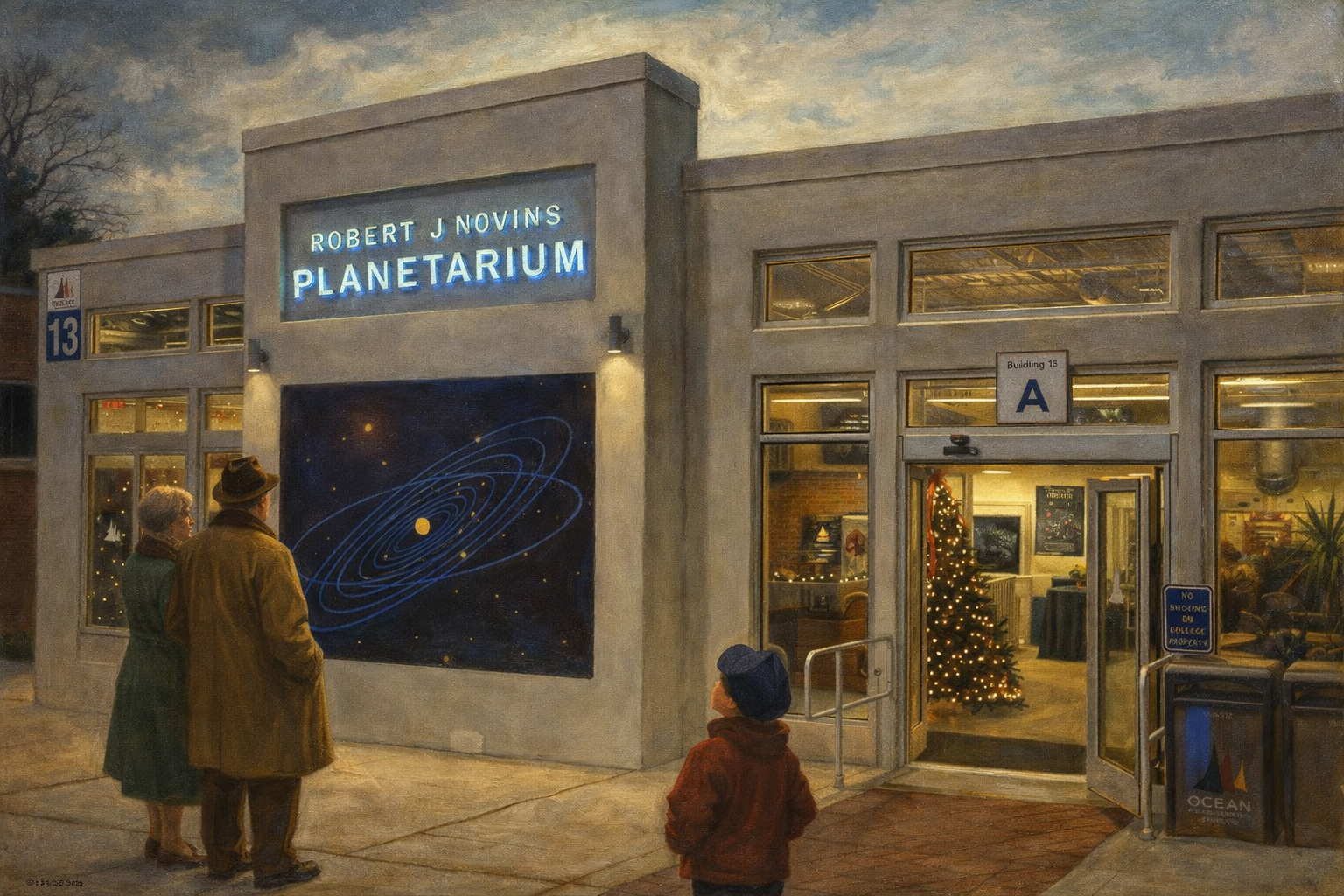
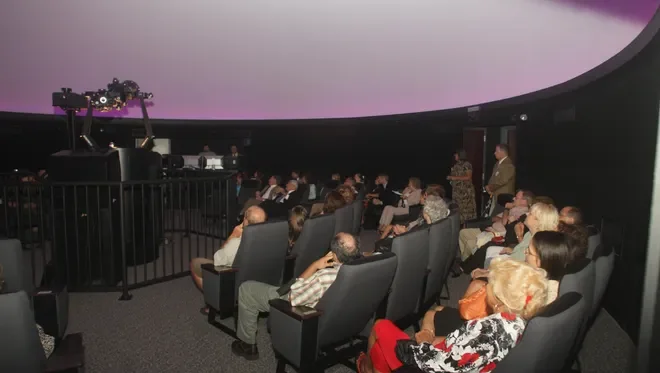
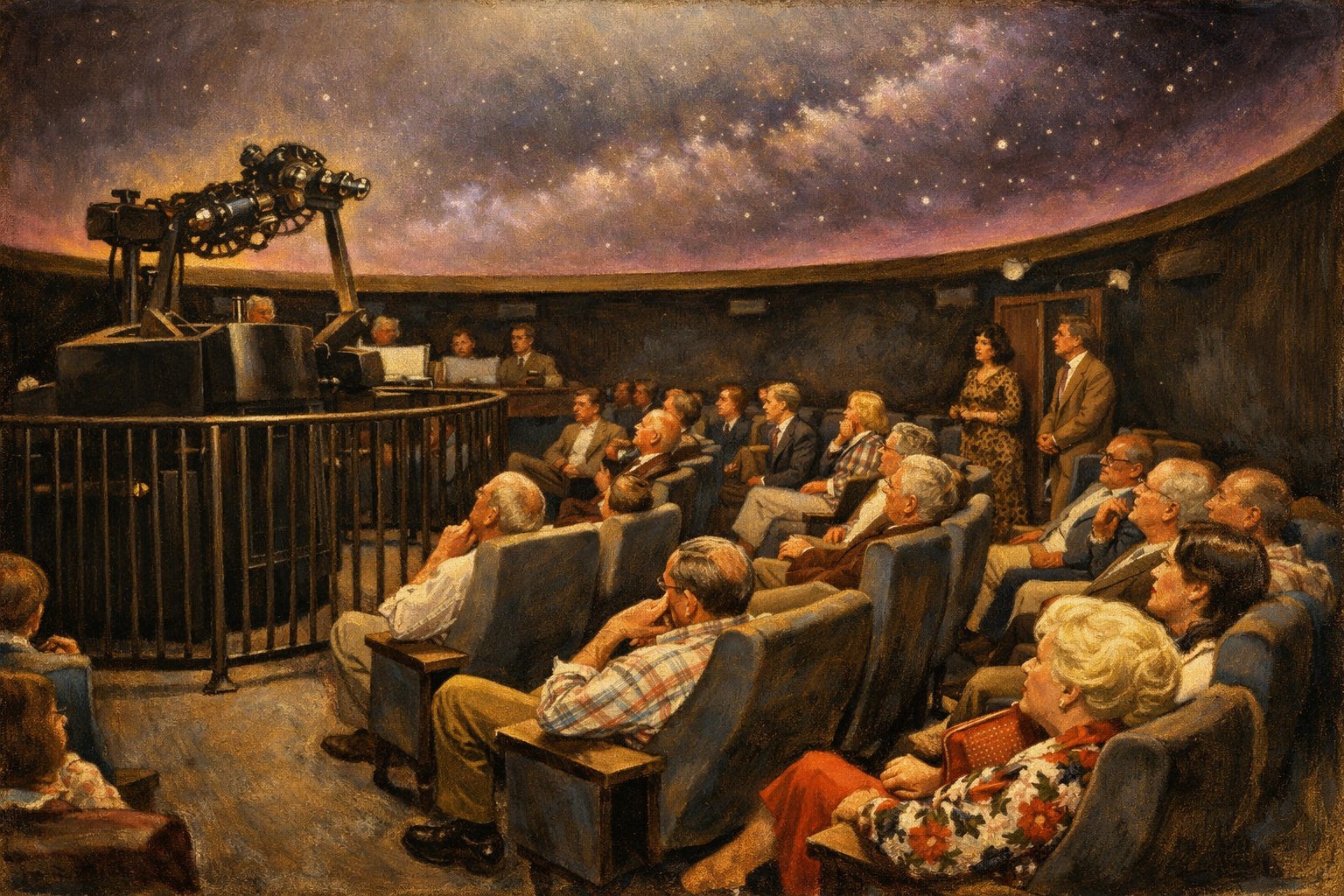
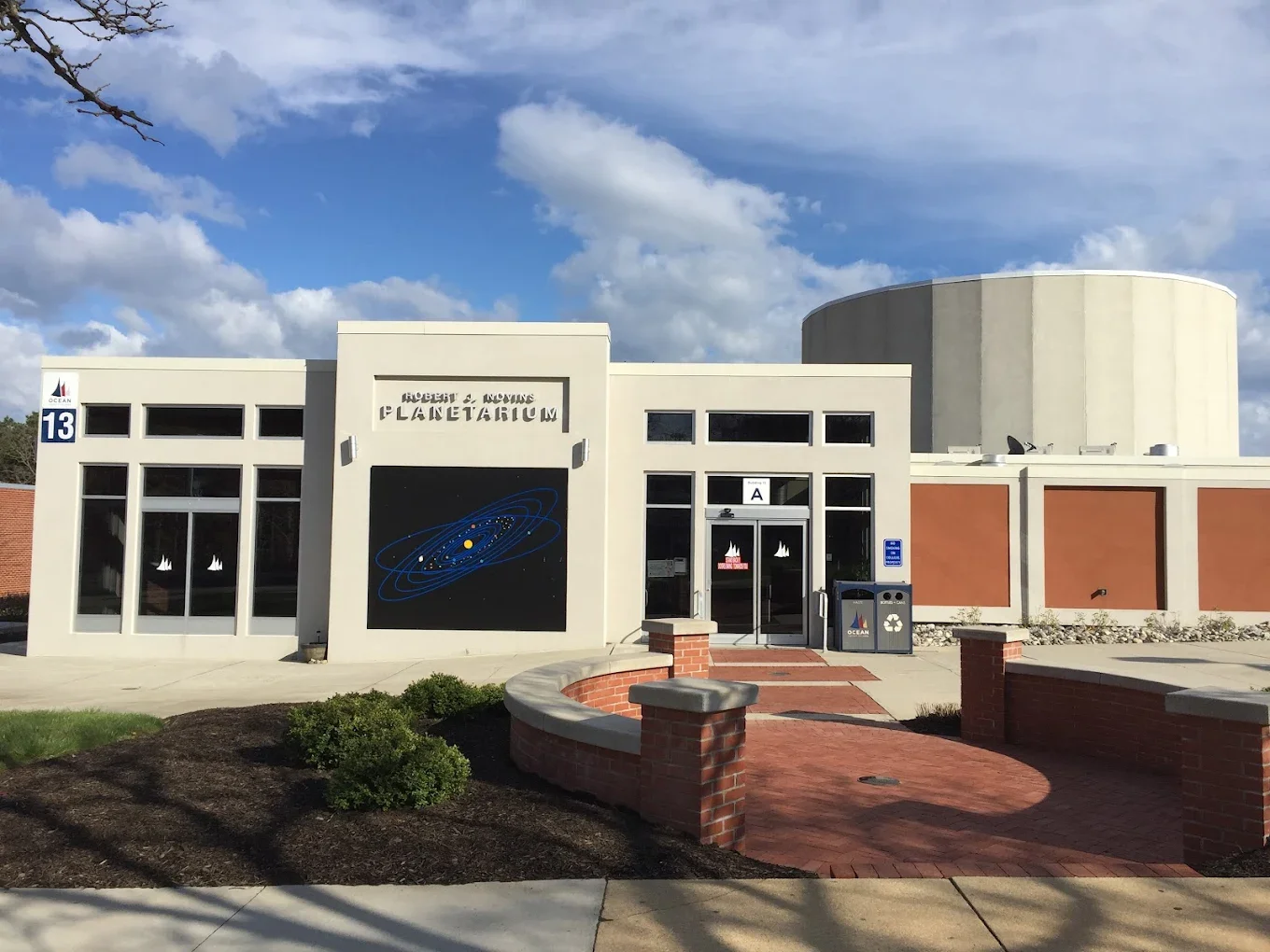
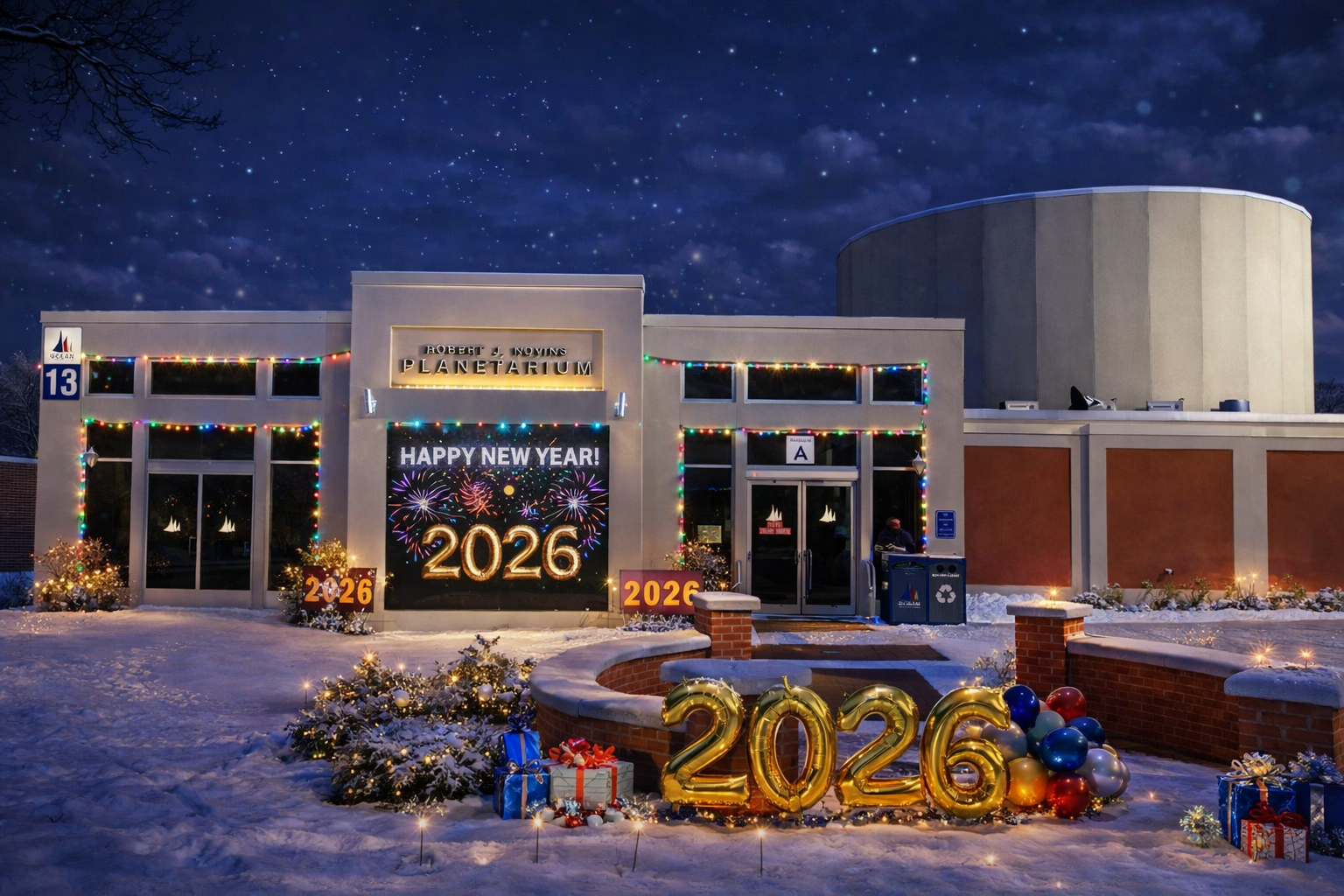
AI and Astronomy
Jim Webster
Does AI have a place in astronomy?
Yes, AI has a massive and growing place in astronomy, revolutionizing how scientists analyze vast datasets, find new objects, classify celestial bodies, clean noisy images, and even discover unexpected phenomena, helping to handle the data deluge from modern telescopes and accelerating discoveries in everything from exoplanets to dark matter.
AI algorithms excel at pattern recognition in huge datasets, allowing astronomers to find faint signals, classify galaxies, map cosmic structures, and identify anomalies that humans might miss.
Key applications of AI in astronomy:
Data Processing: Cleaning noisy telescope images, filtering observations, and extracting useful information from massive data streams.
Object Detection & Classification: Identifying and classifying known objects like galaxies, stars, and exoplanets, and finding new ones.
Exoplanet Discovery: Analyzing light curves to find transiting planets and developing advanced techniques for direct imaging.
Gravitational Waves: Classifying glitches in gravitational wave detector data (e.g., Gravity Spy).
Cosmology: Mapping dark matter distribution and simulating complex phenomena like black holes.
Discovery of the Unexpected: Flagging anomalies or patterns that don't fit known models, potentially leading to new physics.
Examples of AI in action:
DeepDISC: Uses deep learning to identify and classify objects in telescope images.
Gravity Spy: An AI project for classifying glitches in gravitational-wave data.
Autonomous Rovers: Rovers like Mars rovers use AI (AEGIS) to autonomously select rocks for analysis.
Does AI have a negative impact?
AI doesn't necessarily hurt astronomy but presents challenges, primarily around maintaining authenticity, avoiding over-reliance, and potential loss of human creativity, while simultaneously offering huge benefits like faster data processing, noise reduction, and discovering new celestial objects, making it a powerful tool when used thoughtfully alongside traditional methods, not as a replacement for human curiosity.
AI has unfortunately contributed to the spread of fake news and images, and it currently appears unchecked. Some are unintentional results of incorrect user queries and image requests. The other side is individuals purposely trying to mislead people. Protecting against AI fake news and imaging requires a combination of critical thinking, technological tools, and personal vigilance. The most effective strategies involve evaluating content critically, verifying information from trusted sources, and securing your personal information online.
Lastly, another concern is the potential impact on the environment. AI consumes massive amounts of power and water. Protecting the environment from the negative impacts of AI involves mitigating its significant energy consumption and electronic waste, while simultaneously harnessing its capabilities to solve environmental challenges such as climate modeling and conservation efforts. It is also a vital tool for solving climate-related challenges.

NASA and AI
NASA has integrated artificial intelligence (AI) into its missions since the 1980s. Today, AI is critical for navigating extraterrestrial terrain, analyzing massive datasets, and designing spacecraft. Hurricane responses and astrobiology have also been enhanced by AI, and more uses are being utilized.
More on NASA and AI.
The Human Role (The Balance)
AI is here to stay, but we need to be responsible for how we use it and how much we allow it to work independently of us and society. Responsible AI in amateur astronomy involves using tools ethically and effectively.
Acting as a powerful partner, not a replacement, for humans, the balance involves leveraging AI's speed for pattern detection while retaining human expertise for interpretation, addressing challenges like algorithmic bias, and fostering collaboration between AI tools and human creativity to ensure meaningful scientific progress and prevent over-reliance on potentially flawed systems.
For disclosure this AI article was 50% AI generated and 50% from myself.
For more: Artificial Intelligence in Astronomy - The Times of AI , and How is AI Used in Astronomy? - Physics Frontier

AstroMag December 2025
A free online publication for Amateur Astrophotographers.
The Moon: Our Nearest Neighbor
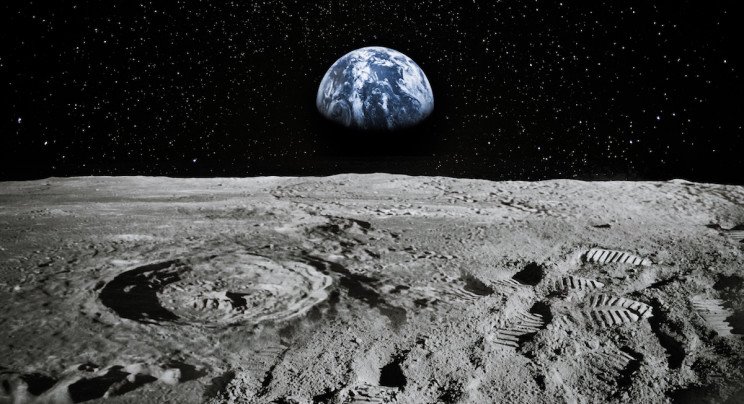
Let’s explore some interesting features, facts, or myths about our nearest neighbor, the Moon. Without it, life on Earth would be totally different, if not at all.
Upcoming Artemis II Mission
Note: This article is AI-generated.
NASA's big Moon news centers on the upcoming Artemis II mission, sending four astronauts on a lunar flyby in early 2026 to test systems for future landings, with preparations in full swing at Kennedy Space Center. They're also continuing the Commercial Lunar Payload Services (CLPS), landing science instruments on the surface, and planning for the crewed Artemis III landing at the lunar south pole. Other recent science includes studying lunar shrinking and moonquakes, with new instruments selected for future delivery.
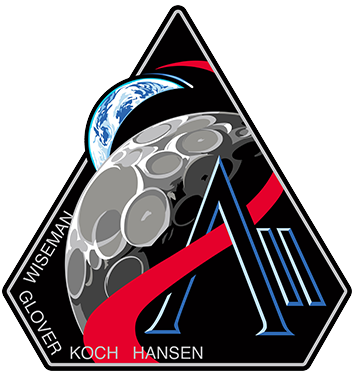
Artemis II: The Next Crewed Lunar Mission
What: A 10-day mission sending astronauts Reid Wiseman, Victor Glover, Christina Koch, and Jeremy Hansen around the Moon.
When: Launch window opens as early as February 6, 2026, potentially launching no later than April 2026.
Goal: Test Orion spacecraft, life support, and deep-space communication, paving the way for Artemis III.
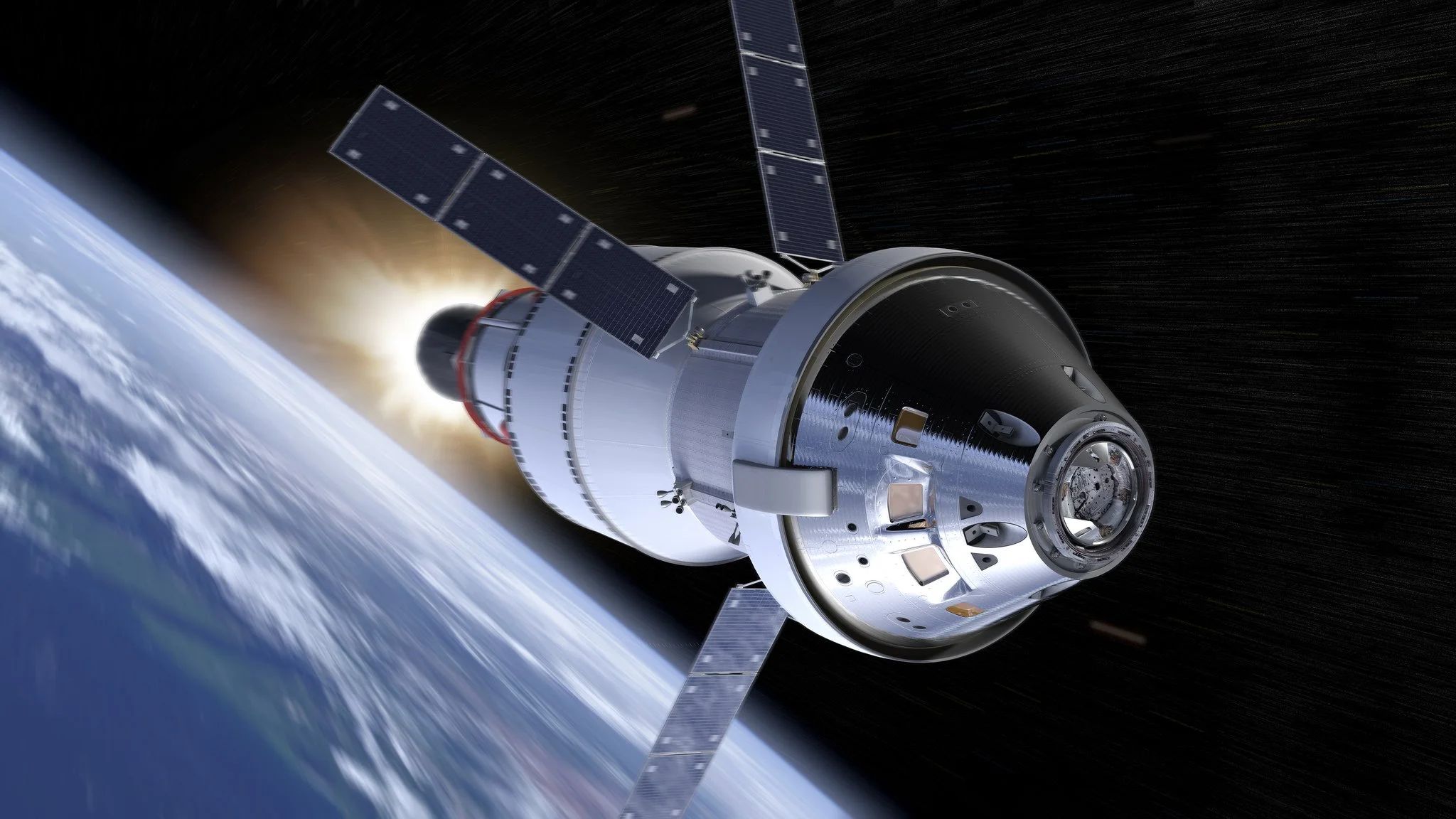
The linked video shows the assembly of the massive Moon rocket for the Artemis II mission, found on Spaceflight Now and Spaceflight Now article.
For more than two years at NASA's Kennedy Space Center in Florida, the agency has been assembling the various pieces of the 322-foot-tall Space Launch System rocket, topped with the Orion spacecraft, that will carry the four astronauts on a ten-day journey.
Now that the rocket is complete, here's a comprehensive overview of how the launch vehicle came together, piece by piece, as the mission's launch date was impacted by launch delays, stemming from learnings derived from the Artemis 1 mission in November 2022.
Addition Information: Space.com

Outreach material below is distributed free for public outreach.
Astronomy for ASTRA Kids
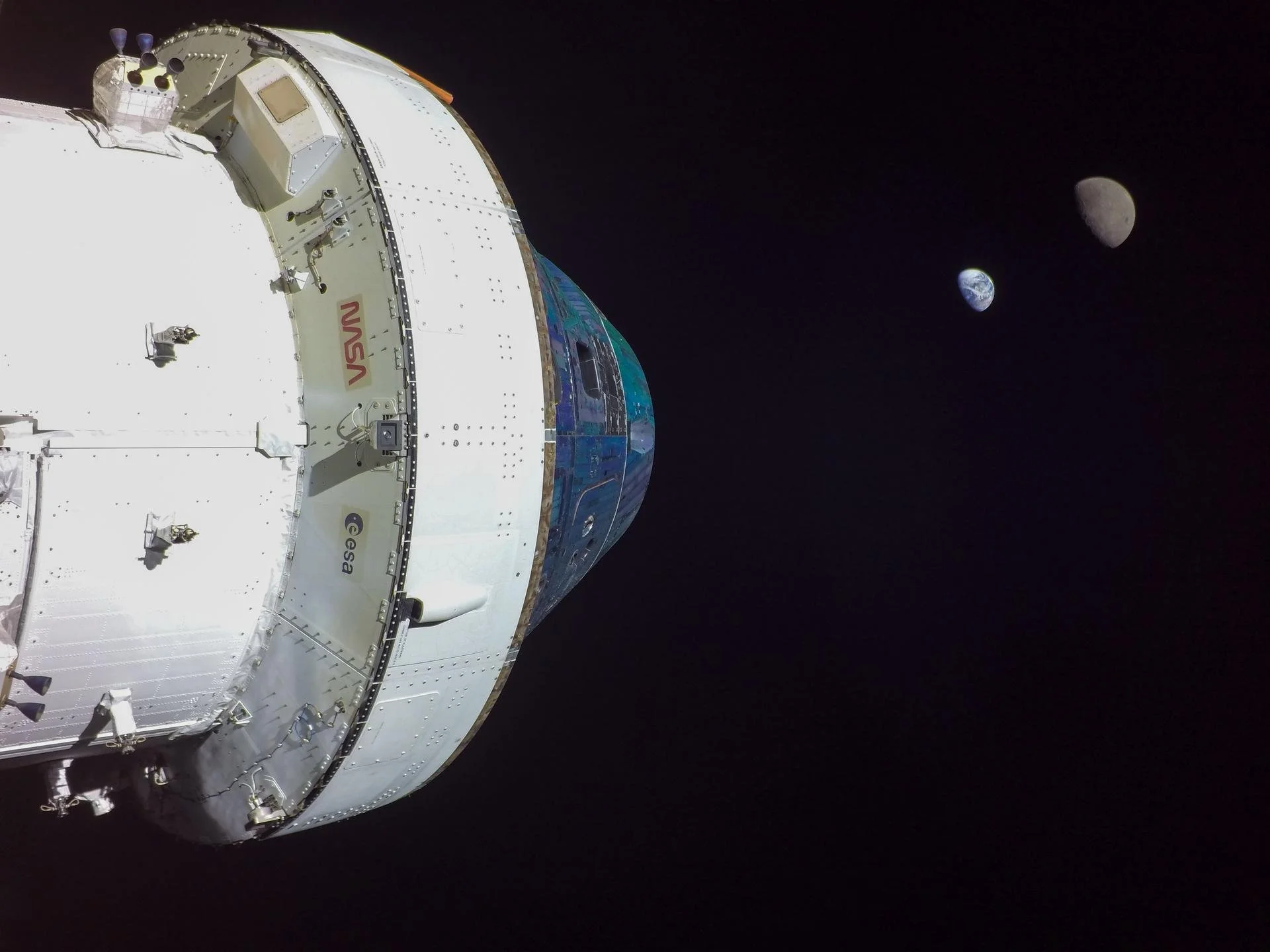
NASA Science
With Artemis II preparing to go to the moon, just how are away it it?
For our young ASTRA members, NASA has online webpages for kids. An educational resource for fun learning and arts & crafts.
Just how far away is the moon?
Around The Web
Dark Sky News

Latest News:
DarkSky New Jersey Sample Ordnance for New Jersey towns has been approved and released.
DarkSky New Jersey is still reviewing the impact of street-lights on safety.
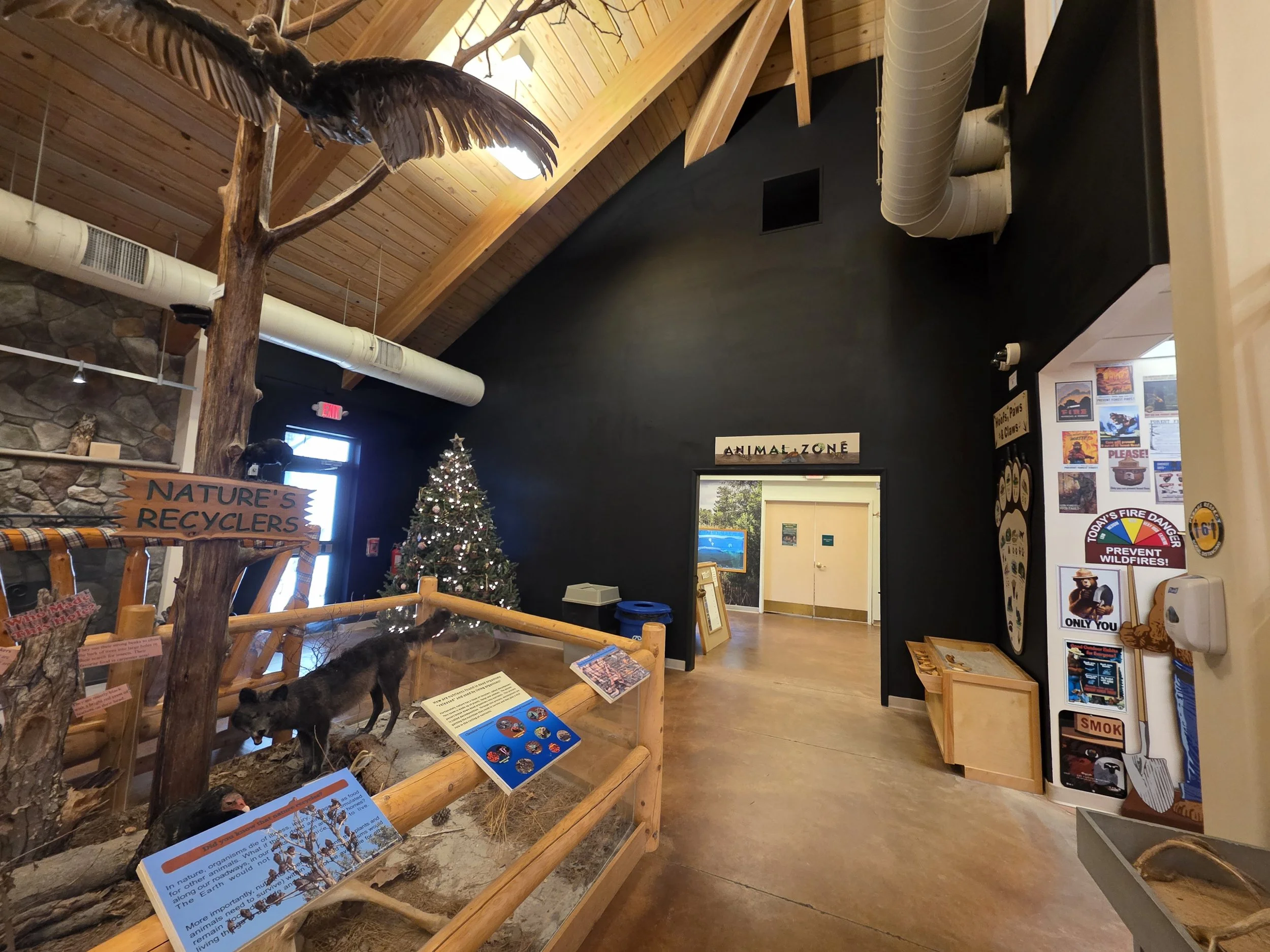
Light Pollution Exhibit
Work on the light pollution exhibit at Jake’s Branch County Park has begun. Light fixtures were removed, and the selected area has been painted black.
Looking forward to what comes next after the holidays.
On the lighter side of astronomy …

What’s Up:
Sky Watching Tips from NASA
Provided by NASA Jet Propulsion Laboratory. Is usually updated anywhere from the first day of the month to the fifth day of the month. Check back to this linked image if it hasn’t been updated yet.
For more go to NASA Jet Propulsion Laboratory webpage: What’s Up: Skywatching Tips From NASA

This article and images are distributed by NASA Night Sky Network
The Night Sky Network program supports astronomy clubs across the USA dedicated to astronomy outreach.
Visit nightsky.jpl.nasa.gov to find local clubs, events, and more!
NSN Articles have been suspended until further notice.
The articles below are from other free sources, including older NSN articles.
The intro for each is provided, but you will need to utilize the included link to view the full article.
NASA’s Tally of Planets Outside Our Solar System Reaches 6,000
The Orion Nebula: Window Into a Stellar Nursery
Reposted Article By David Prosper
Winter begins in December for observers in the Northern Hemisphere, bringing cold nights and the return of one of the most famous constellations to our early evening skies: Orion the Hunter!
Orion is a striking pattern of stars and is one of the few constellations whose pattern is repeated almost unchanged in the star stories of cultures around the world. Below the three bright stars of Orion’s Belt lies his sword, where you can find the famous Orion Nebula, also known as M42. The nebula is visible to our unaided eyes in even moderately light-polluted skies as a fuzzy “star” in the middle of Orion’s Sword. M42 is about 20 light years across, which helps with its visibility since it’s roughly 1,344 light years away! Baby stars, including the famous “Trapezium” cluster, are found inside the nebula’s whirling gas clouds. These gas clouds also hide “protostars” from view: objects in the process of becoming stars, but that have not yet achieved fusion at their core.
The Orion Nebula is a small window into a vastly larger area of star formation centered around the constellation of Orion itself. NASA’s Great Observatories, space telescopes like Hubble, Spitzer, Compton, and Chandra, studied this area in wavelengths we can’t see with our earthbound eyes, revealing the entire constellation alight with star birth, not just the comparatively tiny area of the nebula. Why then can we only see the nebula? M42 contains hot young stars whose stellar winds blew away their cocoons of gas after their “birth,” the moment when they begin to fuse hydrogen into helium. Those gas clouds, which block visible light, were cleared away just enough to give us a peek inside at these young stars. The rest of the complex remains hidden to human eyes, but not to advanced space-based telescopes.
We put telescopes in orbit to get above the interference of our atmosphere, which absorbs many wavelengths of light. Infrared space telescopes, such as Spitzer and the upcoming James Webb Space Telescope, detect longer wavelengths of light that allow them to see through the dust clouds in Orion, revealing hidden stars and cloud structures. It’s similar to the infrared goggles firefighters wear to see through smoke from burning buildings and wildfires.
Learn more about how astronomers combine observations made at different wavelengths with the Night Sky Network activity, ‘The Universe in a Different Light,” is a downloadable resource. You can find more stunning science and images from NASA’s Great Observatories at nasa.gov.
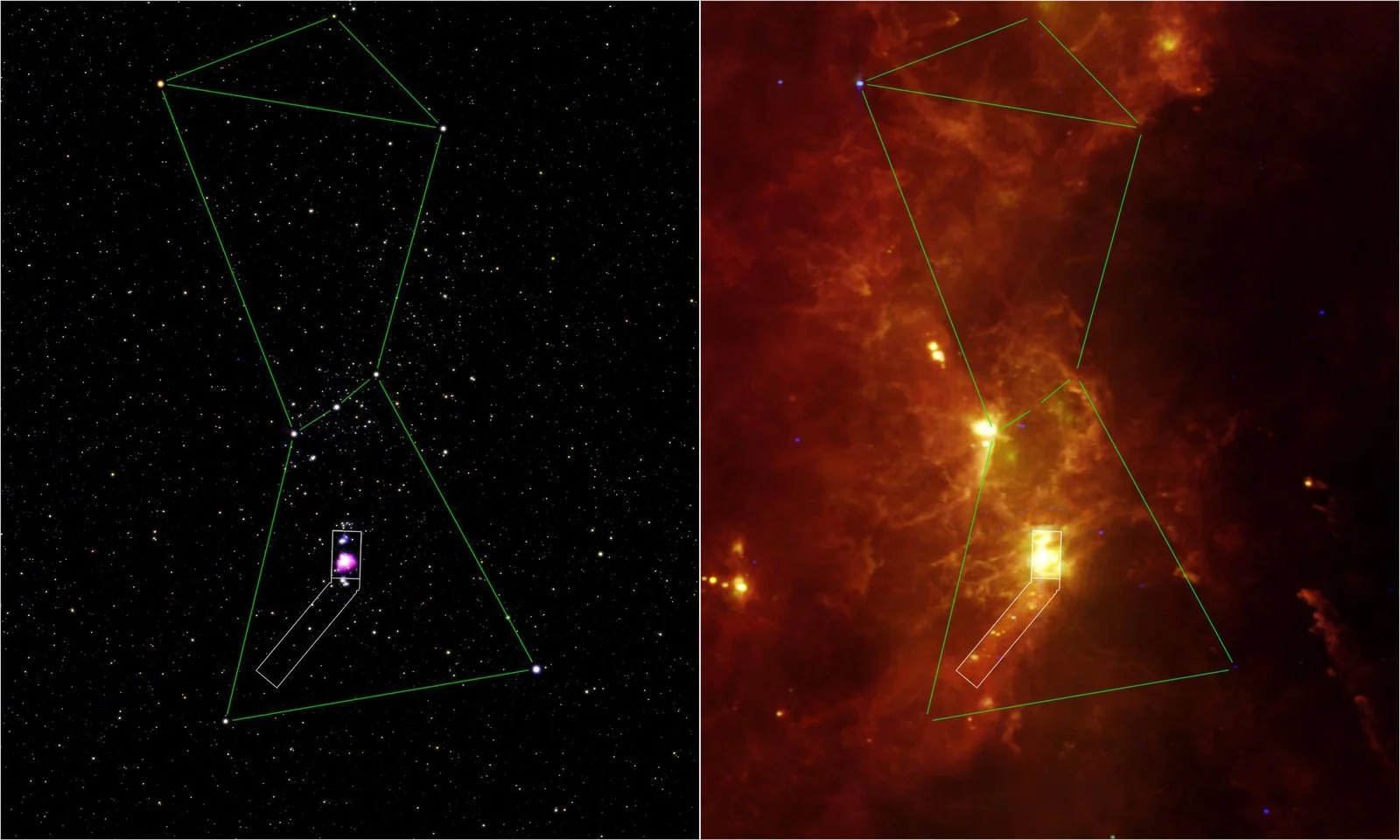
Caption: This image from NASA’s Spitzer missions shows Orion in a different light – quite literally! Note the small outline of the Orion Nebula region in the visible light image on the left, versus the massive amount of activity shown in the infrared image of the same region on the right. Image Credit: NASA/JPL-Caltech/IRAS /H. McCallon. From bit.ly/SpitzerOrion
Smart Telescopes & the Orion Nebula
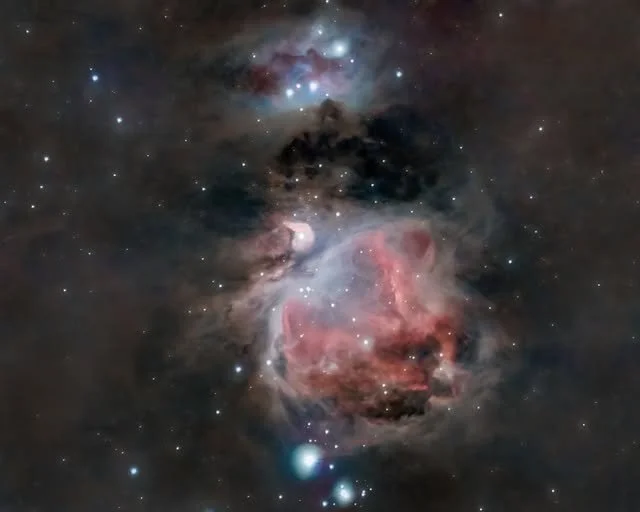
Smart telescopes are well-suited for observing and photographing the Orion Nebula (M42), a bright, expansive deep-sky object that is a popular target for beginners. The best smart telescopes for this purpose feature a wide field of view, automated tracking and image stacking, and often include light pollution filters.
While Smart Telescopes will never replace the traditional astrophotography setup, … yet. It does provide us with some great images of the Orion Nebula.
The above image is from January 7, 2025, by Martin Yiannoullou, a wedding photographer in the UK. This and other astro images can be found on the Facebook group for Dwarf Lab. Just shy of 3 hours total integration time. Stacked and edited in DeepSkyStacker and photoshop. 60 seconds, 60 gain. Bortle 7.
SPACENEWS.COM
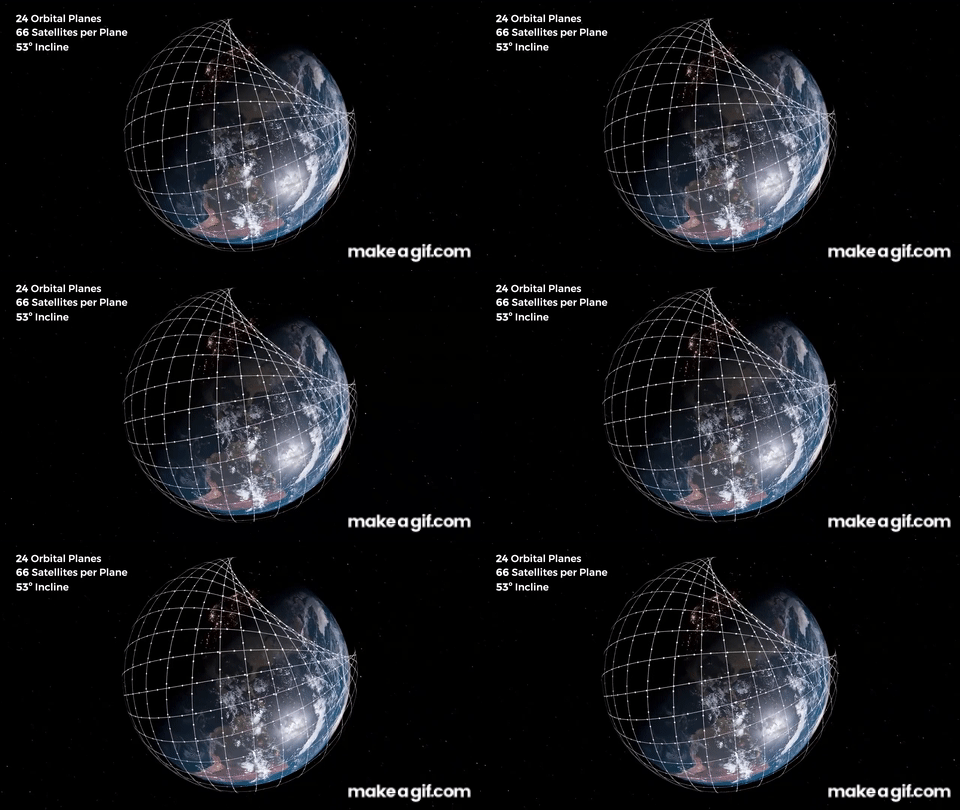
SpaceX is making an orbitable path change for some of it’s StarLink Satellite.
Visit spacenews.com

Let’s Explore Space
The Latest News on Astronomy and Sky Watching — By StarWalk Astronomy App - Sky Tonight

Tonight’s Sky: No longer posting
October 2024 was the last updated posting of Tonight’s Sky. It is still available via YouTube.
Linked is the twelve-month playlist on YouTube.
Any suggested replacements, let me know.
Visit the STScI which produces Hubblesite.org video overviews for Tonight’s Sky.
They can be found both on Facebook and stsci.edu.
Submissions Welcome
Members are invited to submit articles, photos, news, or stories for inclusion with Astral Projections Online. Please contact the ASTRA Webmaster.