Astral Projections Online July 2026
Check our Website for updated content at www.astra-nj.com
Club Presentations Wanted:
Does anyone have any astronomy items of interest to share with the membership?
Please let us know at Club Contacts. For 2026, we still have some open slots.
Club dues and membership.
If you renew after March 31, you will be renewed as a new member.
Forms can be found on the website or here.
ASTRAL PROJECTIONS ONLINE (APO for short) is an email-linked publication for members only. If you exit APO to the club website or other resources you will need to use the emailed link again to get back to it. If you wish to retain a copy please bookmark or refer back to the email. We will make all efforts to post by the first week of the month.
Submissions Welcome: Members are invited to submit articles, photos, news, or stories for inclusion with Astral Projections Online. Please contact the ASTRA Webmaster.
Event Calendar
Event Cancellations: Members will receive email notifications of event cancellations.
Upcoming July ASTRA Observing Meeting
ASTRA's next meeting will be Friday, July 10, 2025, at 8:00 PM EST.
Heads Up for July and August Meetings.
July and August meetings will be Observing Meetings at Island Beach State Park.
Unlike the public Star Parties at IBSP, Observing Meetings are at Area 15.
All members are invited with or without a telescope, but must be registered members.
If the event is canceled due to weather, there is no backup plan; do not go to the planetarium.
Upcoming Public Star Parties
July 18 - Jake’s Branch - 9 PM
August 15 - Cloverdale Farm - 9 PM
August 22 - Jake’s Branch 9 PM
Upcoming Public, County & State Park Presentations 2026
Public Outreach Presentations: If any member wishes to support ASTRA's public outreach efforts, please let Vinny, Ro, or Jim know of any interest. Additional help for these events is always appreciated.
Brick Township Library - July 28 - 6:30 PM - Coastal Dark Skies
County and State Park presentations require a registration fee; call the hosting park to reserve.

Website Updates …
Please visit our club website. We continue to have additional updates, if some content would be useful to members please let us know.
"It’s raining! Who bought something for their telescope or a new telescope?"
Just about every astronomer on the planet.
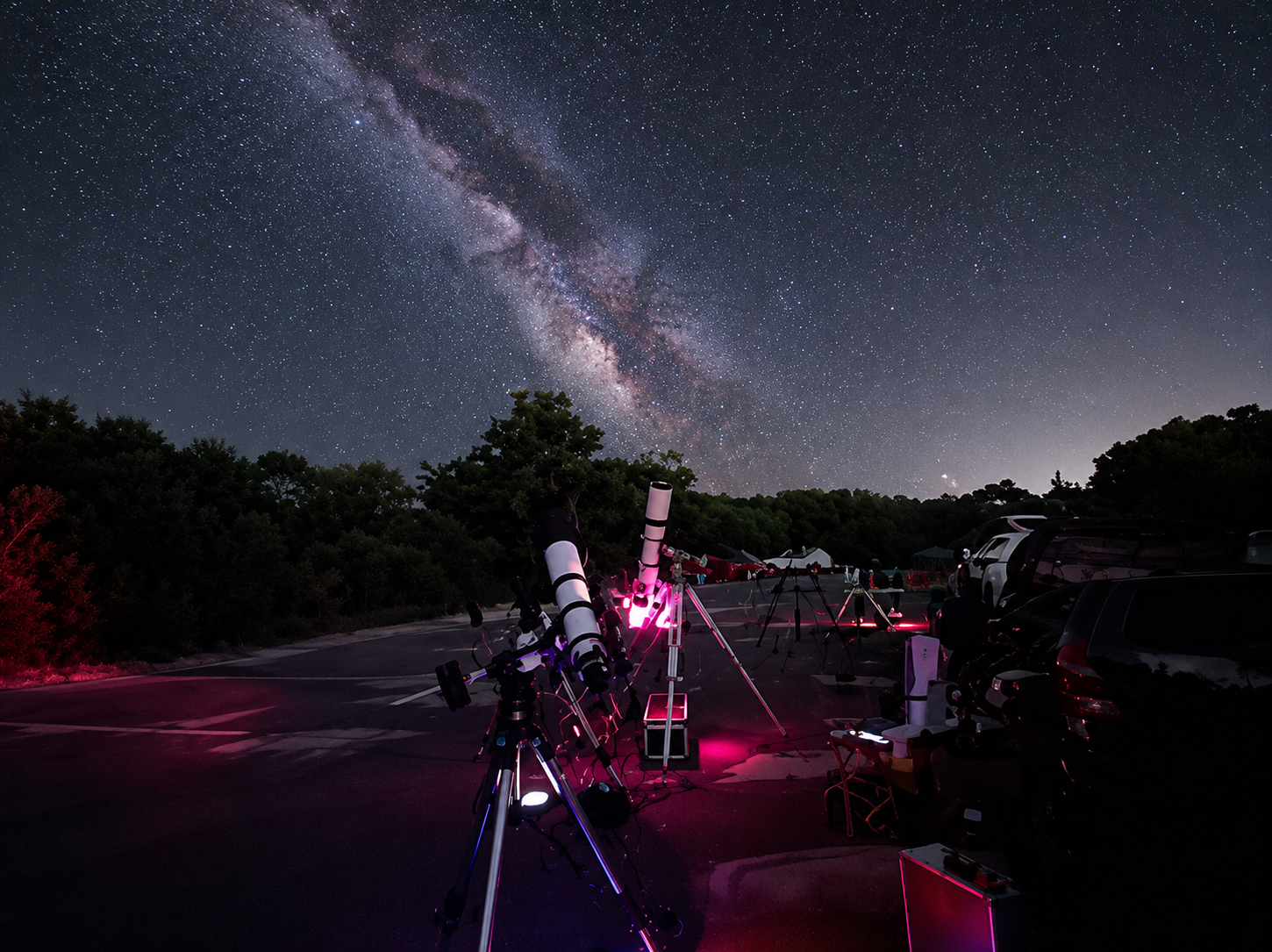
ASTRA Meeting - July 10 at 8 PM
For July and August, we will have an observing meeting at Island Beach State Park. We will be at Parking Lot #15 at 8 PM. This will give us plenty of time to socialize and set up before it gets dark.
You can’t camp out, but there is no time limit for staying to observe or image. Great for our astrophotographers.
*** You must be a registered member. ***
If the event is canceled due to weather, there is no backup plan; do not go to the planetarium.
Please support Novins Planetarium, patronizing their shows, who has supported us since the beginning of ASTRA.
Event Reports
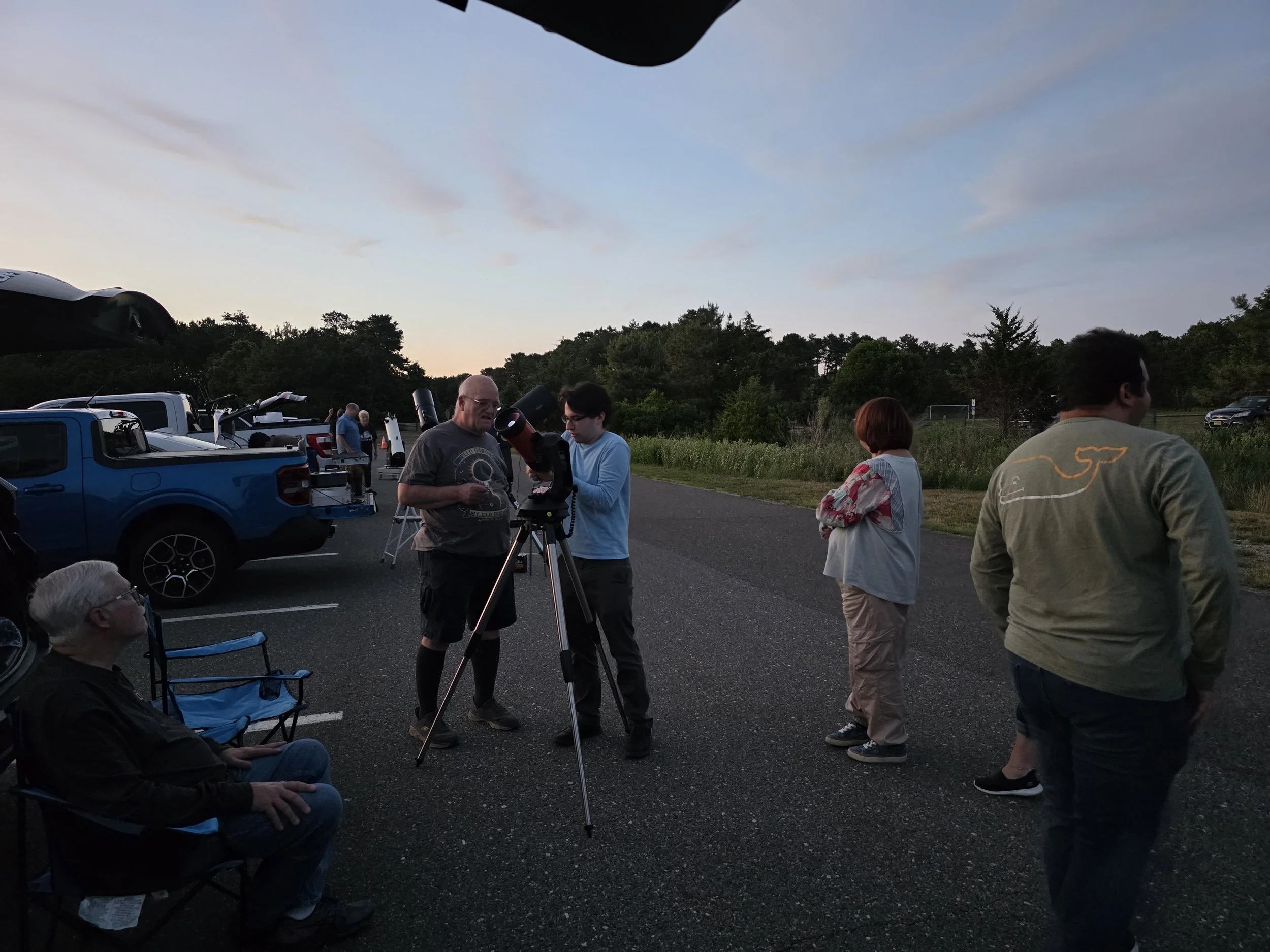
June 20 at Jake’s Branch County Park was a partial success.
We were able to get out and provide the public with some night sky observations. Assisting some new to the hobby and providing some discussions on observing and the importance of the night sky.
Not often said enough, I want to thank those members for lending a hand to the public that brings a telescope to a star party for the first time, whether they are a member or not.
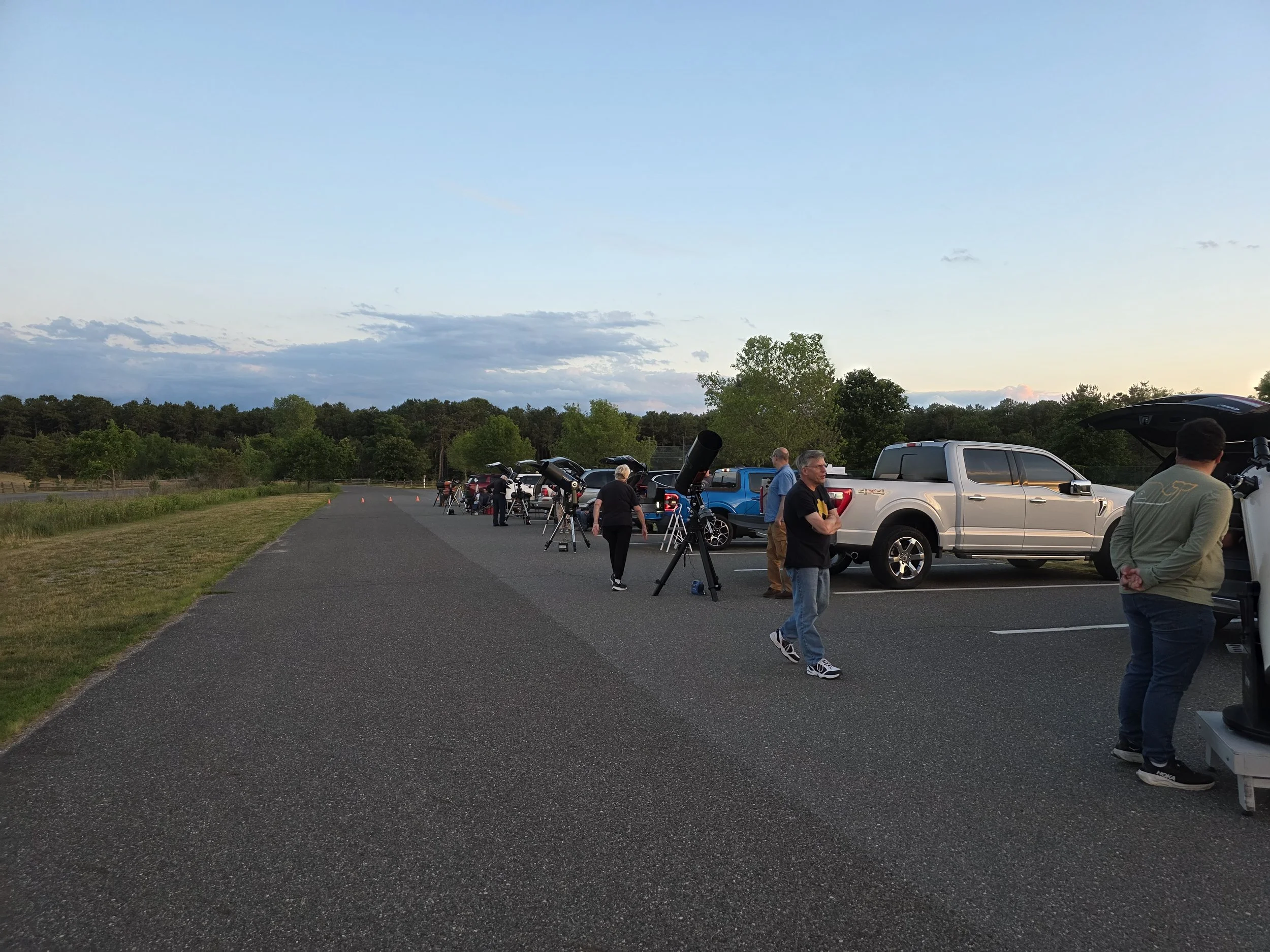
Sharing your astronomy experiences is vital because it sparks public curiosity, fosters a humbling global perspective, drives interest in STEM education, and, most importantly for the hobby, ignites an interest in others in joining us for future events or becoming members.
Unfortunately, the weather did change on us, so we had to wrap it up earlier than we wanted. But at least we did get some observing time in.
June ASTRA Meeting Summary
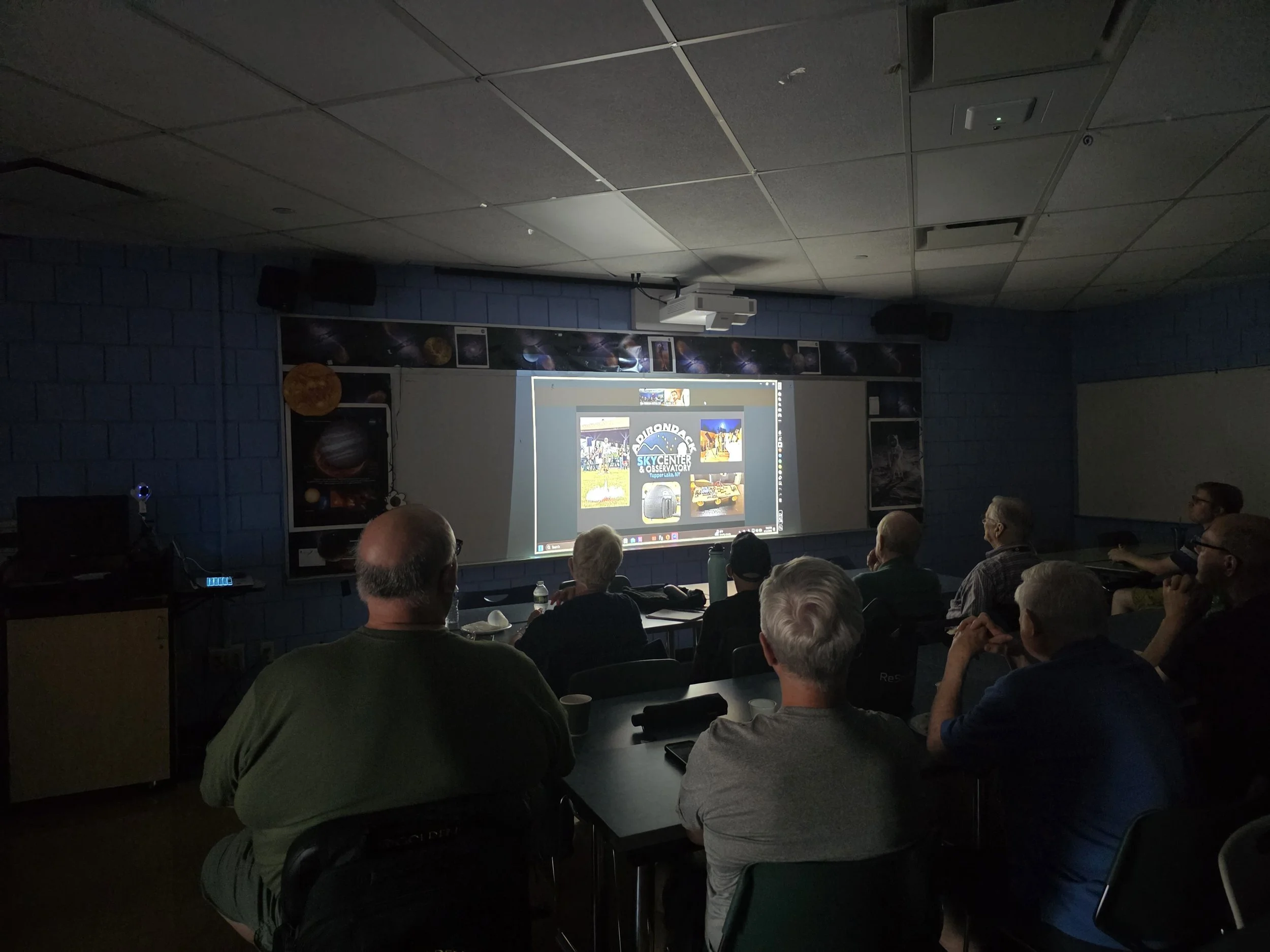
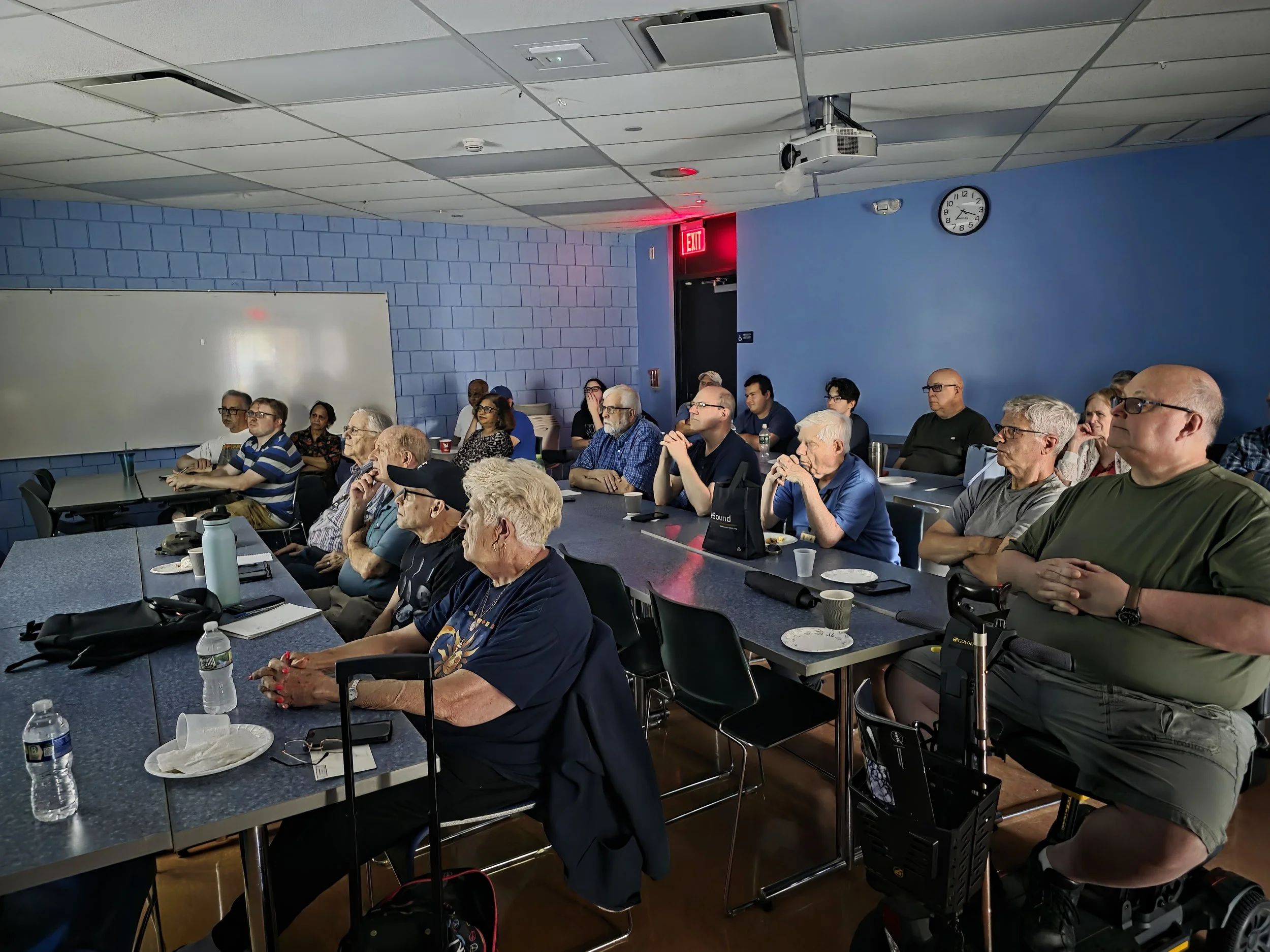
On June 12th, we had Simon Thill of the Adirondacks Sky Center and Observatory provide a remote presentation on “The Universe and Your Place Within it,” An approachable introduction to astronomy filled with awe and wonder. As a child, Simon Thill grew up stargazing under the clear skies of his hometown, Saranac Lake.
Motivated by these experiences, he is pursuing a career in astronomy outreach and research. He currently works at the Adirondack Sky Center & Observatory, where he organizes educational programming about astronomy and science.
Public Events and Presentations
No ASTRA presentations for June

AstroMag June 2026
A free online publication for Amateur Astrophotographers.
The Moon: Our Nearest Neighbor
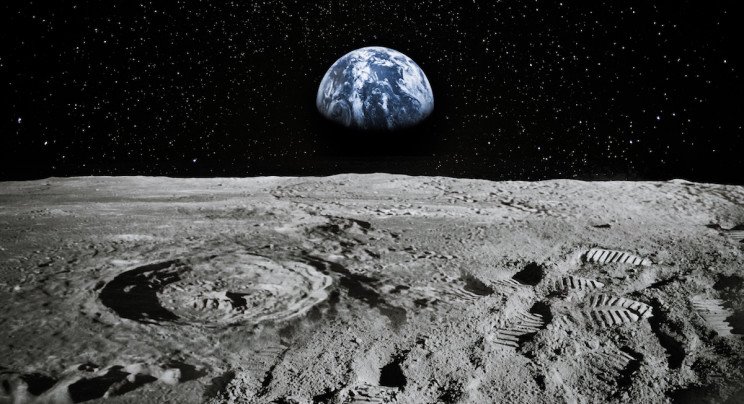
Let’s explore some interesting features, facts, or myths about our nearest neighbor, the Moon. Without it, life on Earth would be totally different, if not at all.
NASA News for the Moon
Note: This article is partially AI-generated.
NASA's Moon Base Program is accelerating with nearly $600 million in new contracts awarded to commercial landers, alongside new details about a repurposed nuclear-powered rover destined for the lunar south pole. Following the success of the crewed Artemis II lunar flyby in April 2026, international lunar exploration is advancing rapidly.
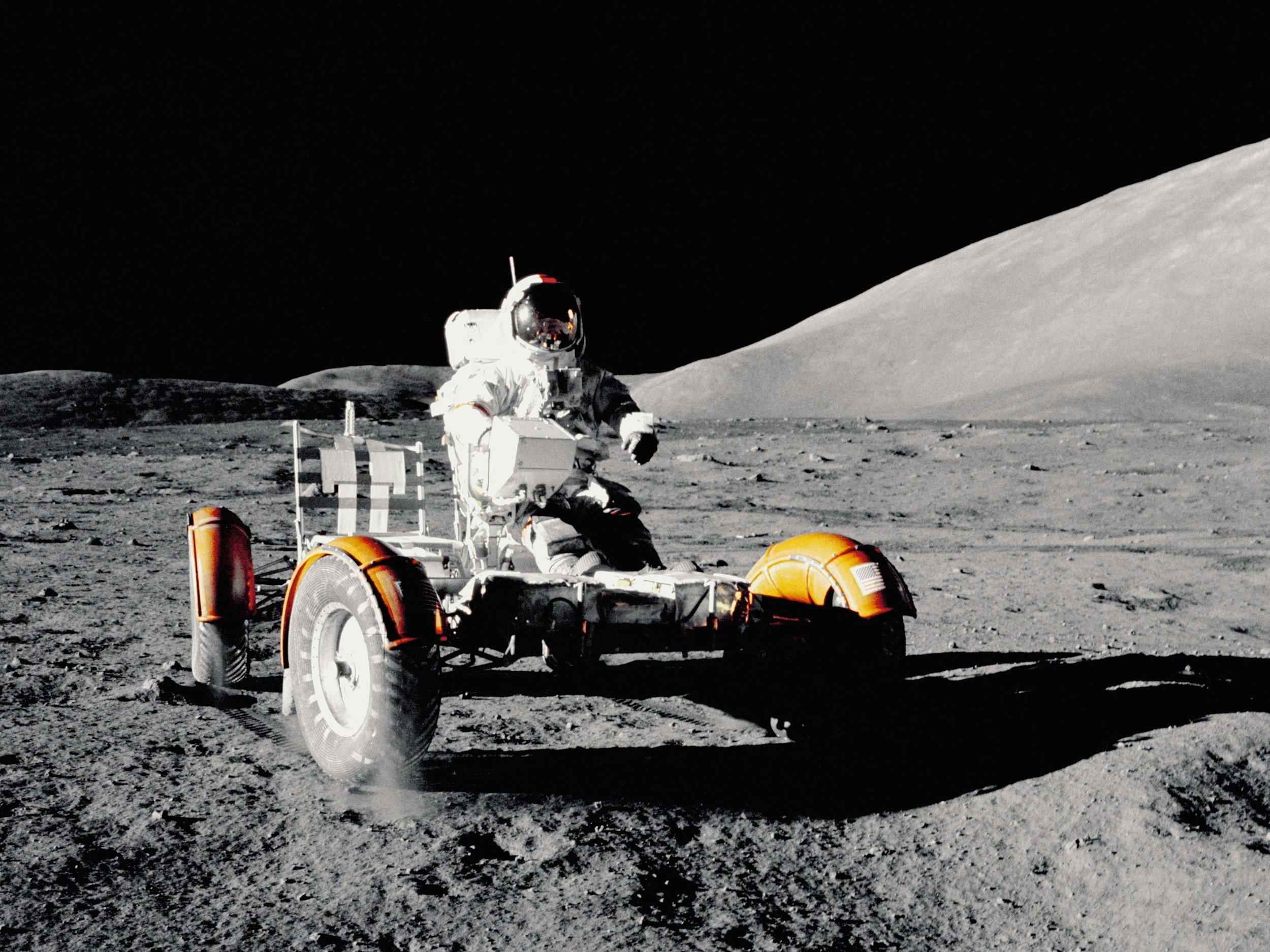
Commercial Lander Funding: On June 30, 2026, NASA awarded roughly $600 million to Astrobotic, Firefly Aerospace, and Intuitive Machines. These private partners will deliver four science payload missions to the lunar surface in late 2028.
Nuclear-Powered PROMISE Rover: NASA revealed it is adapting a spare, nuclear-powered Mars rover test article (based on the Curiosity/Perseverance design) for a lunar mission. Named PROMISE (Polar Rover for Observation, Mapping, and In-Situ Exploration), its Radioisotope Thermoelectric Generator (RTG) will allow it to survive freezing lunar nights at the south pole easily.
Artemis Roadmap Timeline: Following April’s successful crewed flyby, Artemis III is scheduled for 2027 to test docking procedures in Earth orbit. A crewed landing near the lunar south pole is targeted for Artemis IV as early as 2028.
Ref: NASA.Gov News
Ref: YouTube - NASA Moonbase Update
Ref: Firefly Aerospace

Outreach material below is distributed free for public outreach.
Astronomy for ASTRA Kids

NASA Science
For our young ASTRA members, NASA has online webpages for kids, an educational resource for fun learning, and arts & crafts.
How does GPS work?
Image by Quan-Yu Zang on Squarespace.
Around The Web
Smart Telescope, Smart Telescopes Everywhere, Oh My!!!
Smart telescopes will not completely replace traditional telescopes, but they are rapidly transforming the astronomy landscape. Smart models excel in user-friendly, automated astrophotography and in bypassing light pollution; traditional telescopes remain unmatched for tactile, real-time visual observing, higher-resolution planetary imaging, and customizable, modular gear setups.
The Enduring Appeal of Traditional Telescopes
Despite the rapid advancements in smart technology, traditional telescopes offer experiences and capabilities that automated units simply cannot replicate:
The "Live" Eyepiece Experience: Many astronomers deeply value looking directly through an eyepiece with their own eyes to see raw, unfiltered photons traveling from distant galaxies and planetary rings. [1]
Planetary and Lunar Detail: Traditional setups offer huge apertures for high-resolution visual and photographic observations of planets, which smart telescopes often struggle to capture sharply.
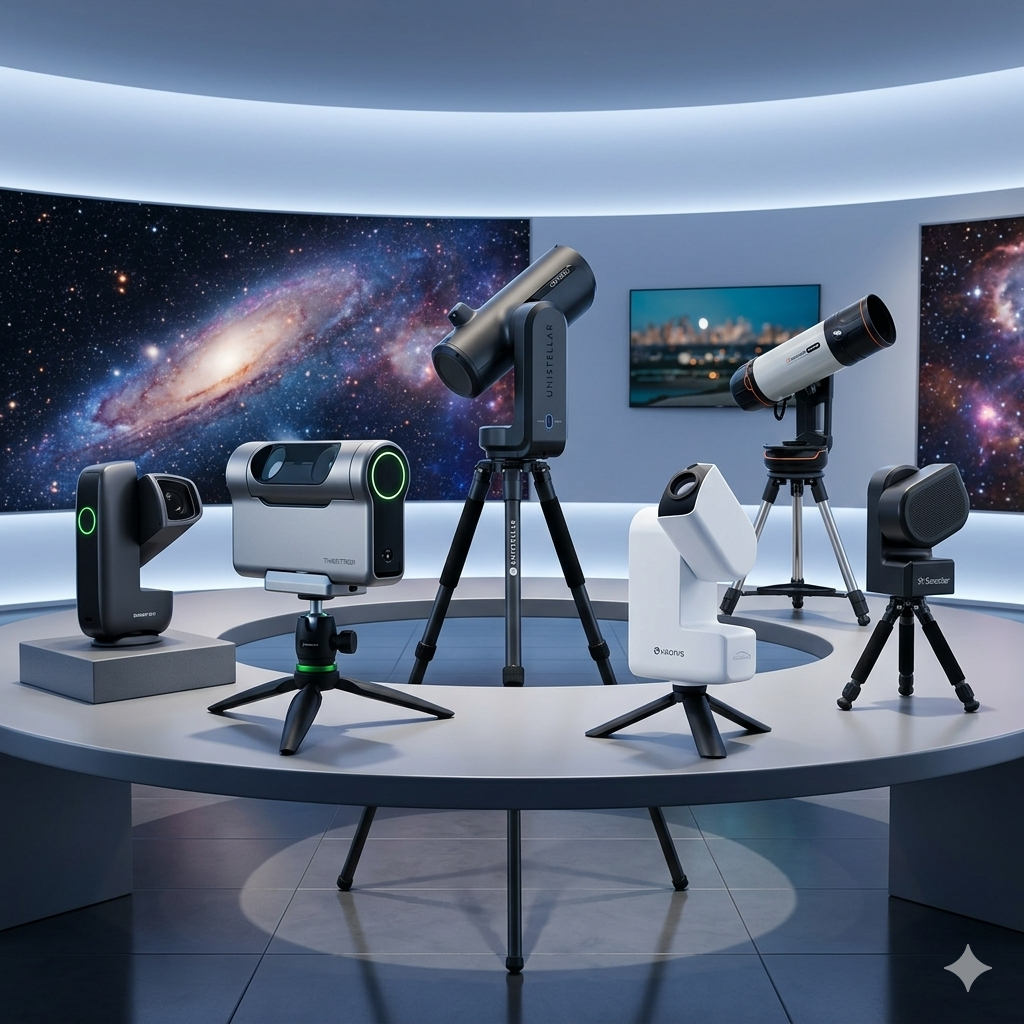
Other than a few, smart telescopes are highly portable, easy to set up, and budget-friendly. Because they weigh less, they pair easily with lighter mounts. Optically, their narrower apertures pierce through atmospheric turbulence more effectively, delivering steadier, high-contrast views of many deep-sky objects.
Why are Smart Telescopes Booming?
Smart telescopes combine the telescope, motorized mount, camera, and processing software into a single, automated unit. They take the complexity out of the hobby by automatically aligning, tracking, and "stacking" multiple exposures to reveal vibrant, detailed deep-space objects on your phone or tablet.
With all the Smart telescopes now available, the list is still growing:
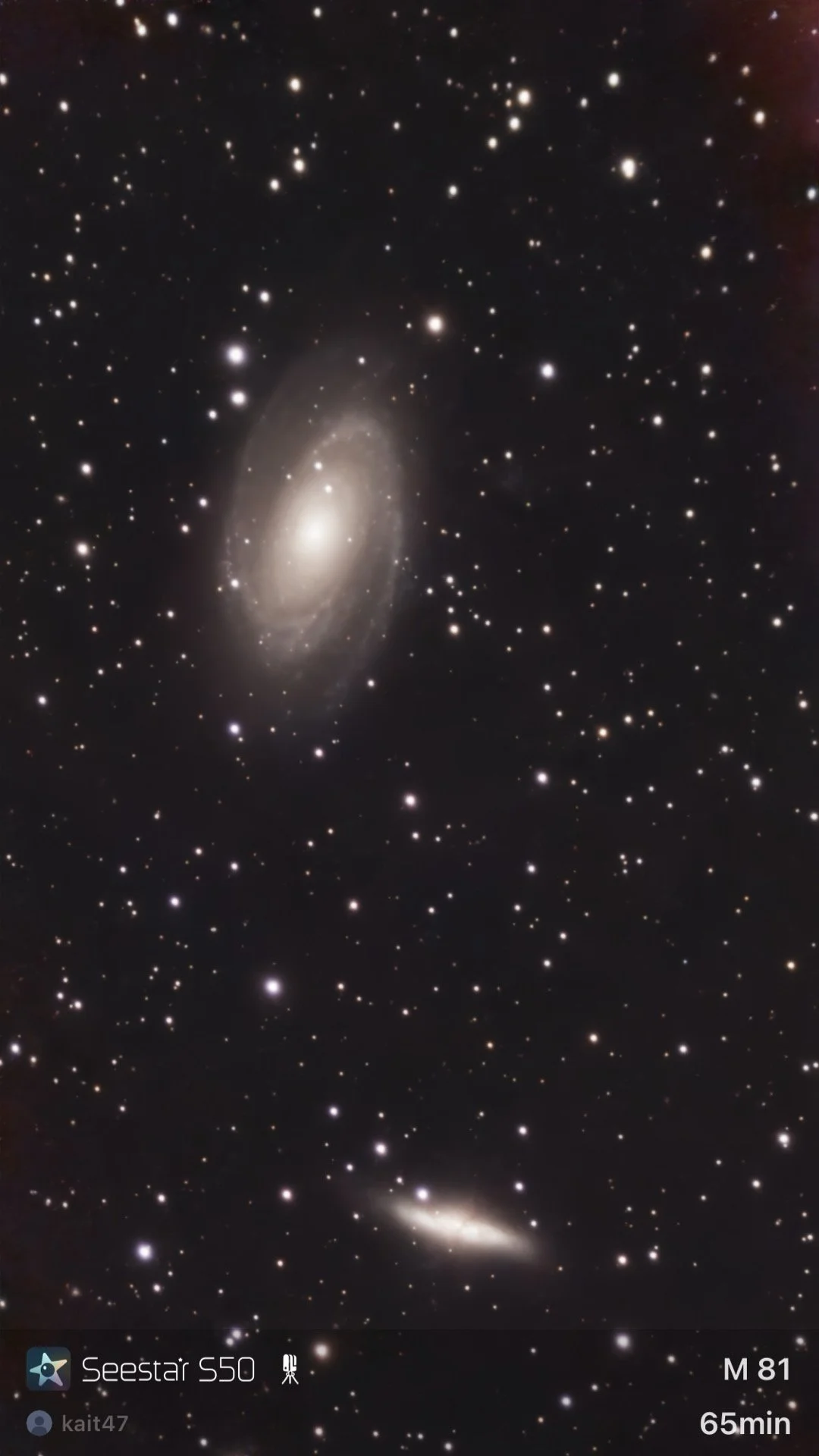
ZWO Seestar Series
Known for offering the most user-friendly and cost-effective ecosystem, these all-in-one units integrate the mount, camera, and filter wheel into a compact body.
ZWO Seestar S30 Pro
The top-tier compact model features a 4K dual-lens system, a large Sony IMX585 sensor, an 8-megapixel output, 128GB of internal storage, and a new equatorial mode tracking option.
ZWO Seestar S30
An ultra-portable, highly budget-friendly 30mm aperture model with a 2-megapixel sensor and a massive wide field of view.
ZWO Seestar S50
The highly successful original 50mm model. Note that while firmware updates keep it highly relevant with third-party software compatibility, it has officially been discontinued to make way for the newer S30 line.
Image provided by Kaitlyn Scrudato.
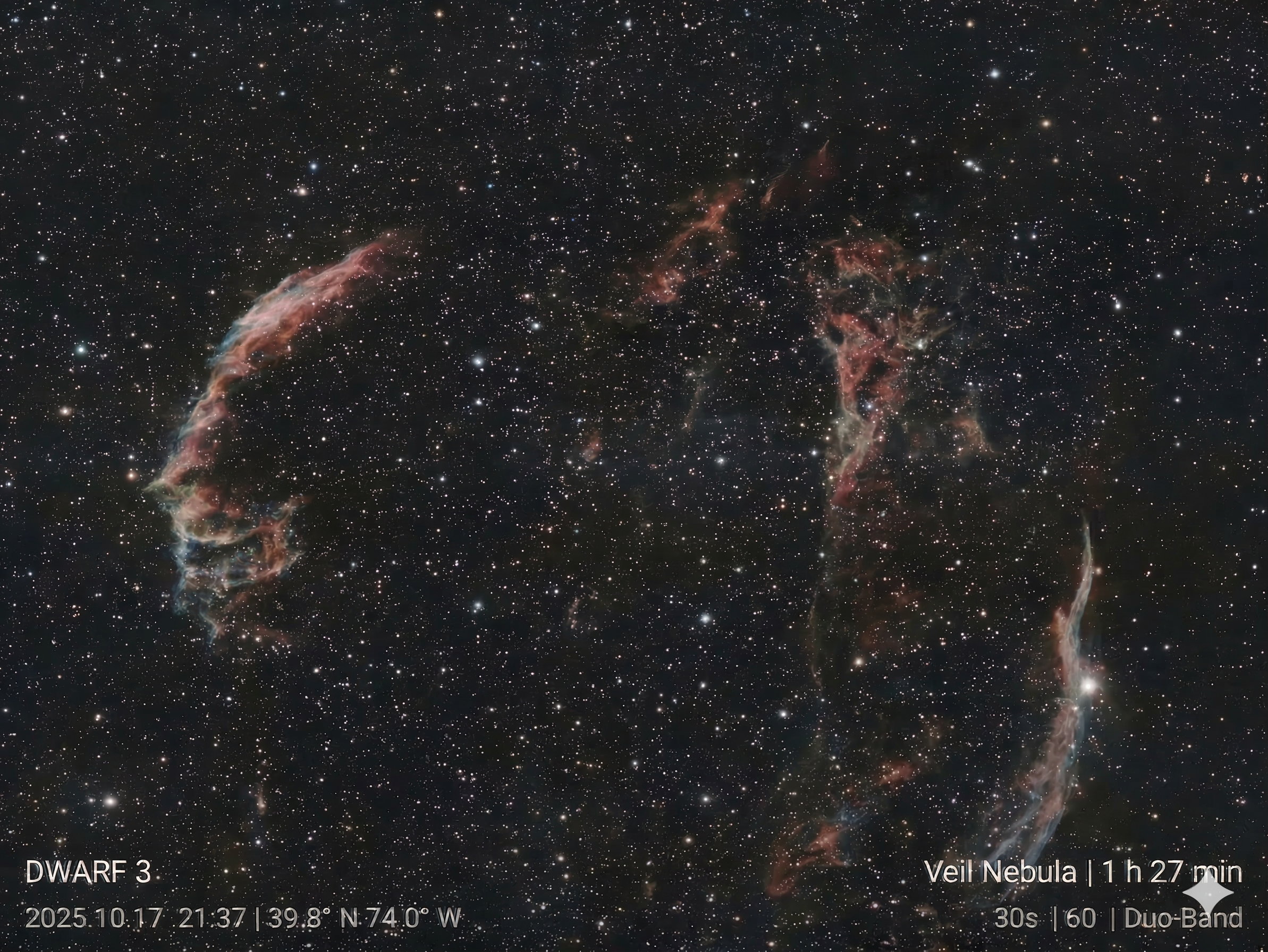
DWARFLAB Series
Focuses on book-sized, hyper-portable smart telescopes that pull double duty for both deep-sky astrophotography and daytime wildlife tracking.
DWARFLAB DWARF 3
The flagship ultra-portable model features a 35mm aperture, an upgraded Sony IMX678 sensor for 4K video, rapid image stacking, and enhanced target acquisition algorithms.
Image provided by Jim Webster.
DWARFLAB DWARF Mini
The absolute smallest and lightest smart telescope currently available on the market, built with a 30mm aperture and targeted at casual viewing.
DWARFLAB DWARF II
The predecessor model that introduced dual-camera tracking technology to the entry-level market. They are no longer in production since the Dwarf III came onto the market.
Vaonis Series
Vaonis populates the premium, design-forward category, producing sleek, egg-shaped home observatories that excel at mosaic capturing and advanced image processing.
Vaonis Vespera Pro
A high-resolution flagship telescope utilising a Sony IMX676 sensor with Starvis 2 technology, generating pristine image results through custom field correctors.
Vaonis Vespera II
An 8.3-megapixel automated refractor that provides deep image contrast, striking a balance between consumer portability and near-pro image quality.
Vaonis Hestia
A unique, purely mechanical travel-friendly lens unit that bypasses internal imaging sensors by leveraging your own smartphone's camera optics for automated target capture.
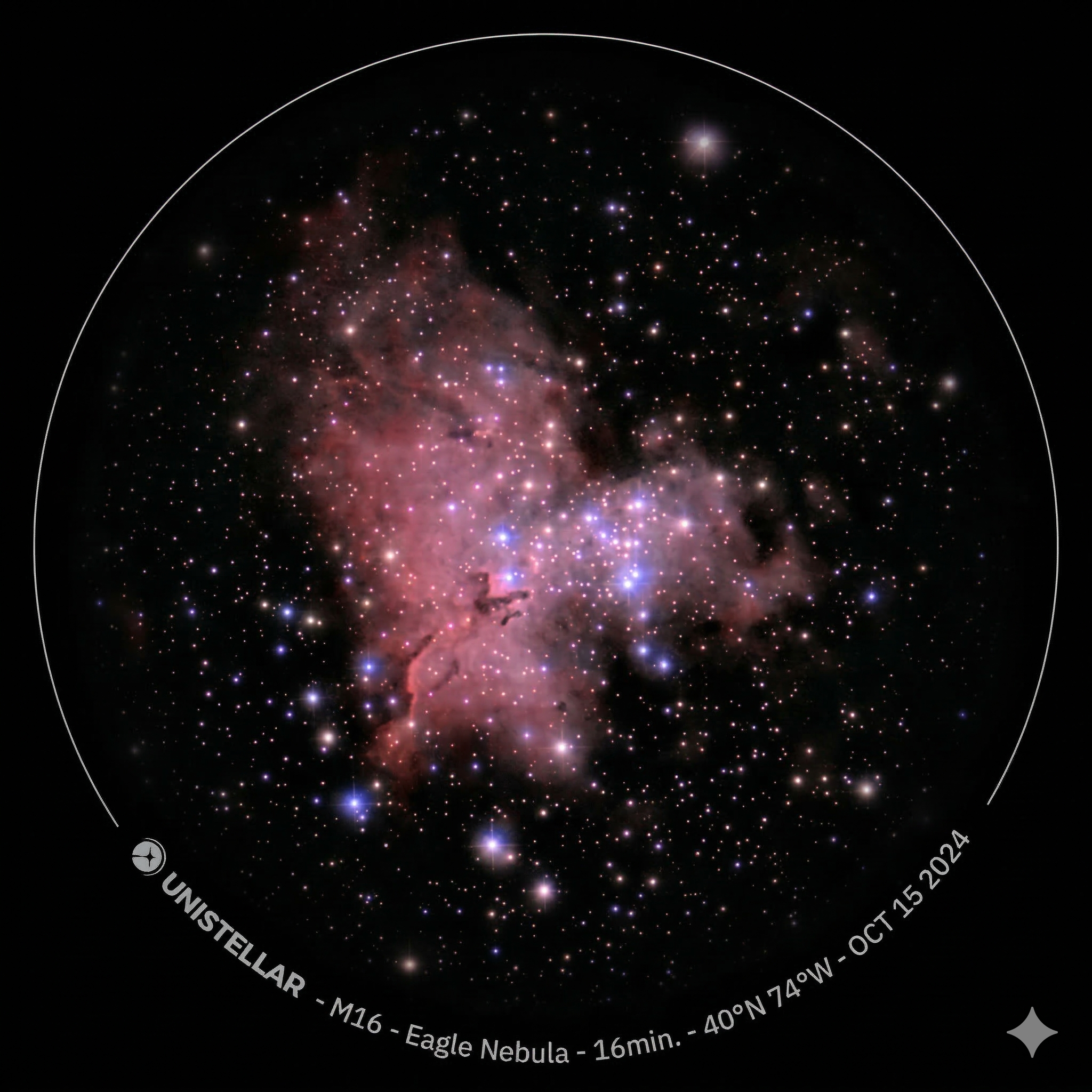
Unistellar Series
Unistellar occupies the high-end enthusiast space, offering advanced digital sensor arrays and a standout feature: integrated electronic eyepieces.
Unistellar has a unique feature in its involvement with citizen science that has a global reach. They are also more expensive than the SeeStar and Dwarf lines of Smart telescopes.
Unistellar Odyssey Pro
A highly automated system sporting an 85mm optical mirror alongside a high-contrast digital eyepiece custom-developed with Nikon.
Image Provided by Jim Webster.
Unistellar Odyssey
The baseline version of the Odyssey platform shares identical mirror optics and app automation but removes the physical electronic eyepiece.
Unistellar eVscope 2
A powerful 114mm consumer model featuring a dedicated micro-OLED digital eyepiece for highly immersive live-stack viewing.
Unistellar eQuinox 2
An eyepiece-free version of the eVscope 2 designed heavily around urban environments to mask light pollution when capturing nebulae and star clusters.
Celestron Series
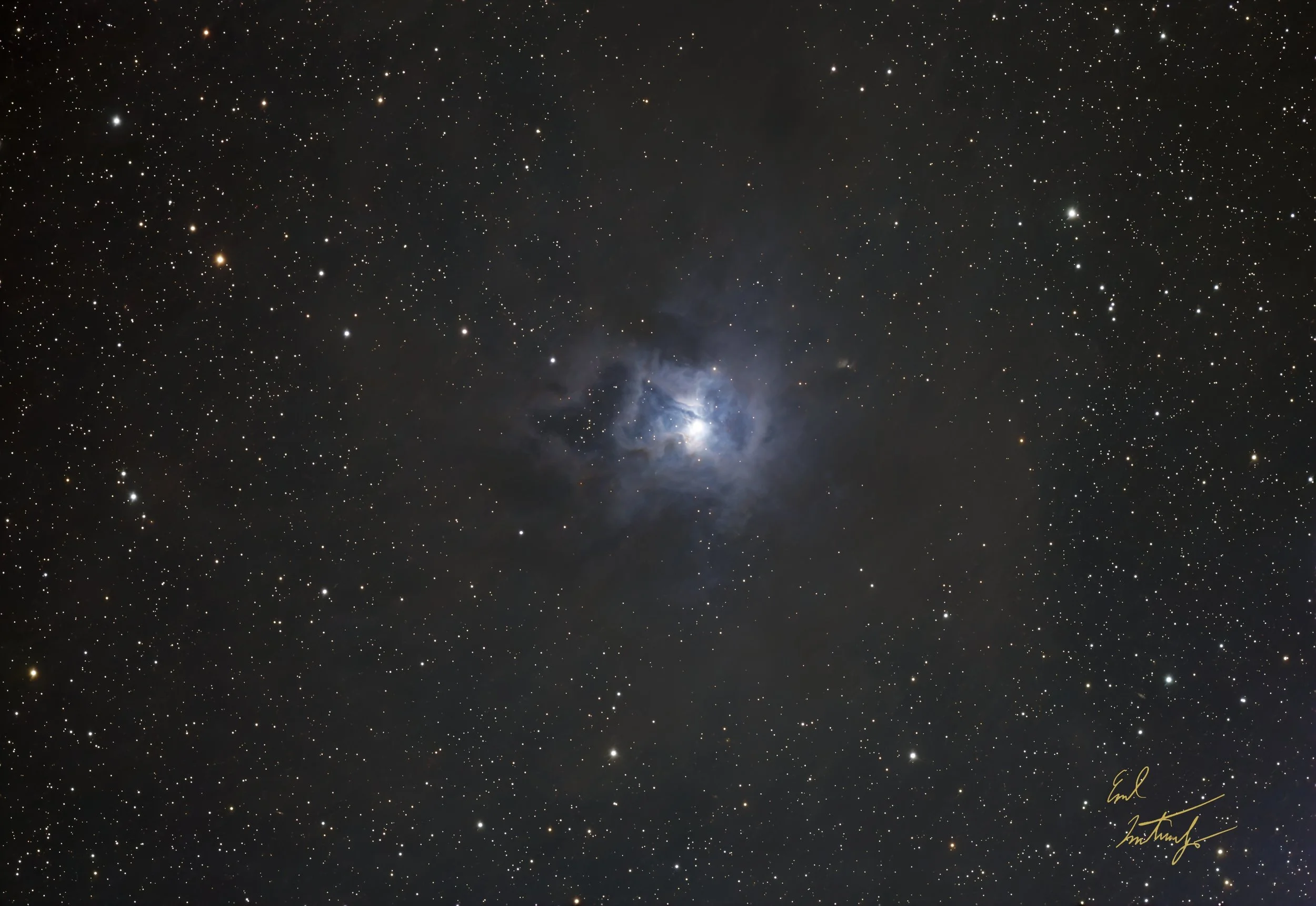
The legacy optics manufacturer enters the market with high-aperture, heavy-duty smart observatories meant for backyard setups.
Celestron Origin Mark II
A massive premium system utilizing ultra-fast 6-inch Rowe-Ackermann Schmidt Astrograph (RASA) optics. The upgraded Mark II is built with a Sony STARVIS 2 678C camera for exceptional light-gathering power and can handle advanced equatorial configurations.
Image provided by Earl Lautenschlager.
The Celestron Origin is the most expensive of the currently available smart telescopes; traditional astro-photographers will enjoy this one. Its modular design promises some potential upgrades, whereas the other Smart Telescopes are self-contained and can’t be upgraded, other than through software.
Astronomy Becomes Increasingly Available
Smart telescopes offer profound accessibility benefits that eliminate the physical and sensory barriers of traditional amateur astronomy. By replacing manual operation and tiny glass eyepieces with digital automation and screen-based viewing, they transform how individuals with physical or visual limitations experience the night sky.
1. Benefits for Individuals with Physical Disabilities (Handicapped)
Traditional telescopes require intense physical interaction, including standing for long periods, bending into awkward positions, and manually turning heavy equipment. Smart telescopes eliminate these demands through complete automation.
2. Benefits for the Visually Impaired
While "blindness" is a spectrum, traditional telescope eyepieces are notoriously difficult for anyone with less-than-perfect vision. They require precise eye relief, perfect focus, and a steady gaze. Smart telescopes bypass these limitations completely.
While consumer "smart telescopes" are commercial recreational electronics rather than regulated medical devices, their core mechanisms align precisely with established clinical paradigms in physical occupational therapy and low-vision ophthalmic rehabilitation. (National Library of Medicine)
Where the Future is Heading
The current consensus in the astronomy community is that smart telescopes will likely become the go-to standard for beginners and casual astrophotographers. However, for seasoned observers and dedicated planetary imagers, traditional telescopes—often augmented with their own modern add-ons—will continue to serve as the benchmark for optical power and versatility.
Additional Resource: Astro Backyard
Dark Sky News

Latest News:
DarkSky New Jersey has now become a 501c (3). This now opens the doors for bigger and better things for the movement, correcting light pollution in New Jersey.
Tall Pines Fire Fly Festival
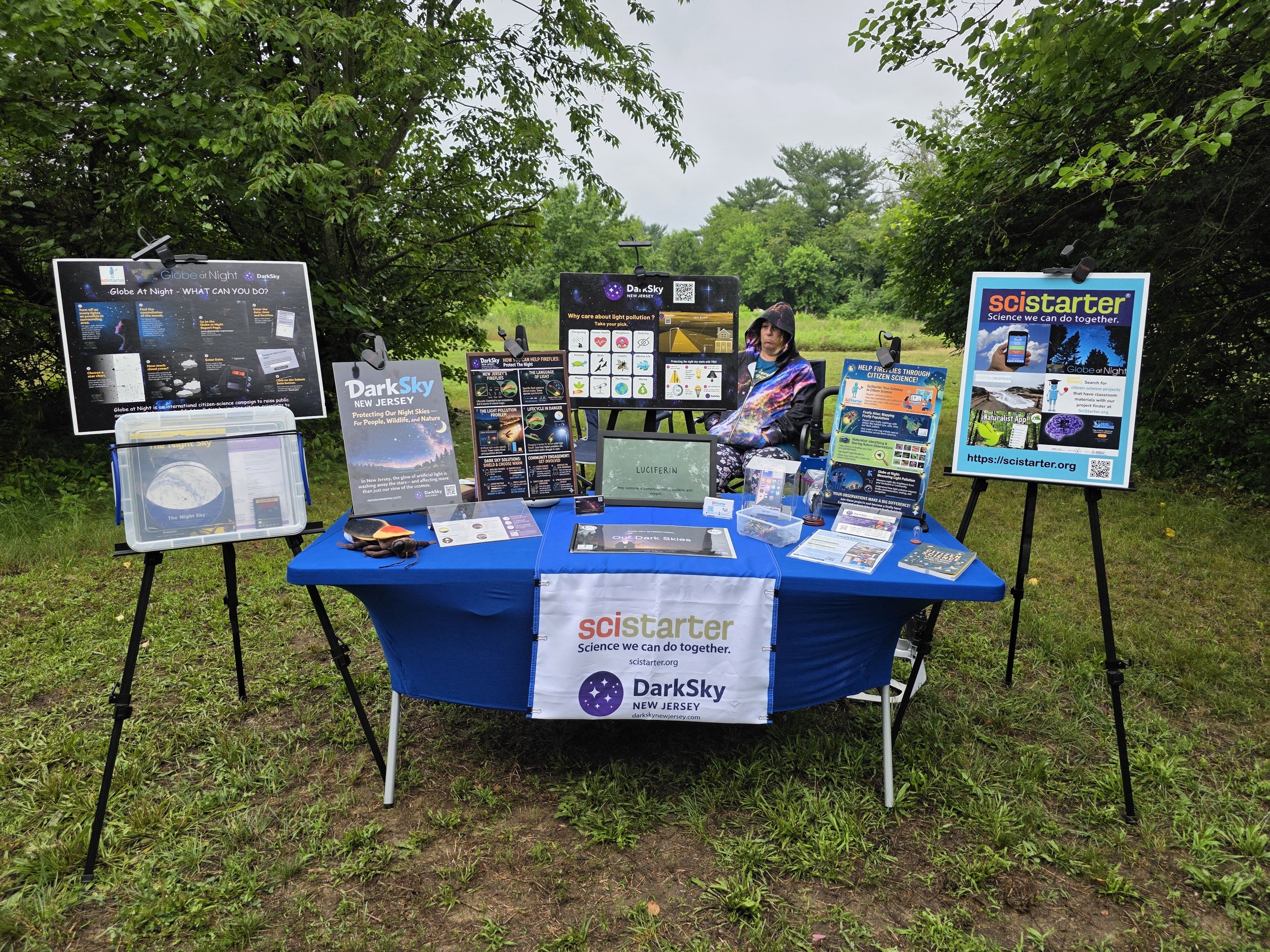
We had some minor ASTRA representation on June 27 at the Tall Pines State Preserve in South Jersey.
This event was for light pollution awareness and the impact on fireflies. The impact on fireflies and other environmental and astronomical impacts was presented with DarkSky New Jersey and SciStarter. 450+ were in attendance, and most stopped by our table.
On the lighter side of astronomy …


What’s Up:
Sky Watching Tips from NASA
Provided by NASA Jet Propulsion Laboratory. Is usually updated anywhere from the first day of the month to the fifth day of the month. Check back to this linked image if it hasn’t been updated yet.
For more go to NASA Jet Propulsion Laboratory webpage: What’s Up: Skywatching Tips From NASA

This article and images are distributed by NASA Night Sky Network
The Night Sky Network program supports astronomy clubs across the USA dedicated to astronomy outreach.
Visit nightsky.jpl.nasa.gov to find local clubs, events, and more!
NSN Articles have been suspended until further notice.
The articles below are from other free sources, including older NSN articles.
The intro for each is provided, but you will need to utilize the included link to view the full article.
Observing the Summer Milky Way
The summer Milky Way is the richest area of the sky for deep-sky viewing. Centered around the bright constellations Scorpius and Sagittarius, and soaring through the Summer Triangle (Cygnus, Aquila, Lyra), you can observe stellar nurseries (emission nebulae), ancient balls of stars (globular clusters), and dense star clouds with binoculars or a telescope.
For anyone getting started, binoculars are a good beginner step into the hobby and won’t break the bank. Summer is the absolute best time for binocular stargazing. You can easily spot bright nebulae, massive star clusters, and dense star clouds with a standard pair of 7x35 or 10x50 binoculars from a dark-sky location.
Equipment Comparison
Binoculars (e.g., 7x50, 10x50)
👍 Pros: Massive field of view, intuitive pointing, dual-eye comfort, highly portable.
👎 Cons: Low magnification limits detail, cannot resolve tight clusters, heavy to hold steady manually.
Small Telescopes (e.g., 70mm–102mm Refractor / 114mm Reflector)
👍 Pros: Interchangeable eyepieces adjust magnification, steadier tracking on mounts, resolve individual stars.
👎 Cons: Narrow field of view makes targets harder to find, longer setup times, bulkier transport.
Top deep-sky objects to target in the summertime include:
Nebulae (Glowing Gas Clouds)
The Lagoon Nebula (M8): Located in Sagittarius, this massive star-forming region is visible as a hazy patch to the naked eye under dark skies and looks spectacular in binoculars.
The Swan or Omega Nebula (M17): Also in Sagittarius, this bright emission nebula resembles a floating swan.
The Eagle Nebula (M16): Nestled in Serpens, this nebula contains the famous "Pillars of Creation" and an embedded star cluster.
The North America Nebula (NGC 7000): Located near Deneb in Cygnus, this vast emission nebula genuinely resembles its namesake on a dark night.
Globular and Open Star Clusters
The Hercules Cluster (M13): A massive, dense ball of roughly 500,000 ancient stars, visible in the constellation Hercules.
Wild Duck Cluster (M11): A stunning, compact open star cluster in the constellation Scutum that resembles a flock of ducks in flight.
Butterfly Cluster (M6) and Ptolemy's Cluster (M7): Two bright, loose open clusters located near the stinger of Scorpius.
Planetary Nebulae and Remnants
The Ring Nebula (M57): A glowing, distinct "donut" of gas in the constellation Lyra, left behind by a dying star.
The Dumbbell Nebula (M27): Located in Vulpecula, this is one of the brightest and largest planetary nebulae in the night sky, perfect for small telescopes.
The Veil Nebula (NGC 6992): A massive, intricate supernova remnant in Cygnus.
Resource: The Best Deep Sky Objects in the Summer Night Sky
Resource: Astronomy.com: Summer Observing Targets for Small Telescope
Resource: Insight Observatory: Observing the Summer Milky Way with Binoculars

Let’s Explore Space
The Latest News on Astronomy and Sky Watching — By StarWalk Astronomy App - Sky Tonight

Tonight’s Sky: No longer posting
October 2024 was the last updated posting of Tonight’s Sky. It is still available via YouTube.
Linked is the twelve-month playlist on YouTube.
Any suggested replacements, let me know.
Visit the STScI, which produced Hubblesite.org video overviews for Tonight’s Sky.
They can be found both on Facebook and stsci.edu.
Submissions Welcome
Members are invited to submit articles, photos, news, or stories for inclusion with Astral Projections Online. Please contact the ASTRA Webmaster.