Check our Website for updated content at www.astra-nj.com
Club Presentations Wanted:
Does anyone have any astronomy items of interest to share with the membership?
Please let us know at Club Contacts. For 2026, we still have some open slots.
Club dues and membership.
If you renew after March 31, you will be renewed as a new member.
Forms can be found on the website or here.
ASTRAL PROJECTIONS ONLINE (APO for short) is an email-linked publication for members only. If you exit APO to the club website or other resources you will need to use the emailed link again to get back to it. If you wish to retain a copy please bookmark or refer back to the email. We will make all efforts to post by the first week of the month.
Submissions Welcome: Members are invited to submit articles, photos, news, or stories for inclusion with Astral Projections Online. Please contact the ASTRA Webmaster.
Event Calendar
Event Cancellations: Members will receive email notifications of event cancellations.
Upcoming June ASTRA Meeting
Friday, June 12, 2026, at 7:00 PM EST at Novins Planetarium
Upcoming Public Star Parties
June 20, 2026 - Jake’s Branch - 9 PM
July 18 - Jake’s Branch - 9 PM
Upcoming Public, County & State Park Presentations 2026
Public Outreach Presentations: If any member wishes to support ASTRA outreach efforts with the public, please let Vinny, Ro, or Jim know of any interest. Additional help for these events is always appreciated.
None at this time.
County and State Park presentations require a registration fee; call the hosting park to reserve.

Website Updates …
Please visit our club website. We continue to have additional updates, if some content would be useful to members please let us know.
"Under the longest days of June 2026, the twilight does not merely fade—it becomes a stage. As the Summer Solstice opens the season, the cosmos offers its own twilight symphony, where Jupiter and Venus dance in the fading dusk, reminding us that even the shortest summer nights are painted with starlight."
Gemini AI generated

ASTRA Meeting - June 12 at 7 PM
For the June meeting at the planetarium, we will meet in the meeting room at 7 PM.
Simon Thill of the Adirondack Sky Center, the Associate Astronomy Outreach Coordinator, will present:
"The Universe and Your Place Within It"
Please support Novins Planetarium, patronizing their shows, who has supported us since the beginning of ASTRA.
Event Reports
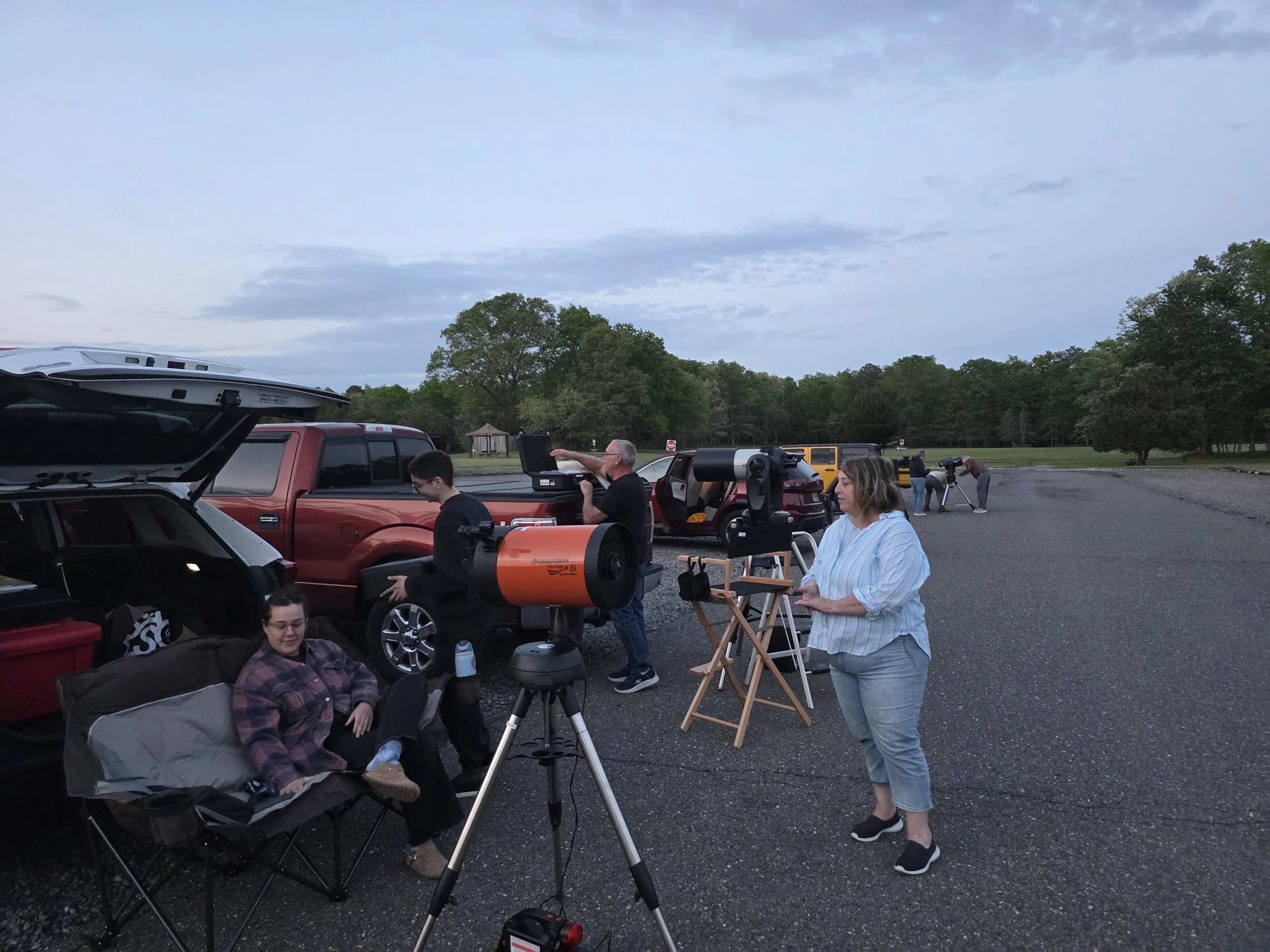
Early on May 16 at Patriots Park, it was a bit worrisome, but it quickly became mostly cloudless and dry.
We had a good turnout of the membership for this event. Unfortunately, the public turnout wasn’t there. In the end, it all worked out for us to get out there, shake the cobwebs off our telescopes, and have a good time.
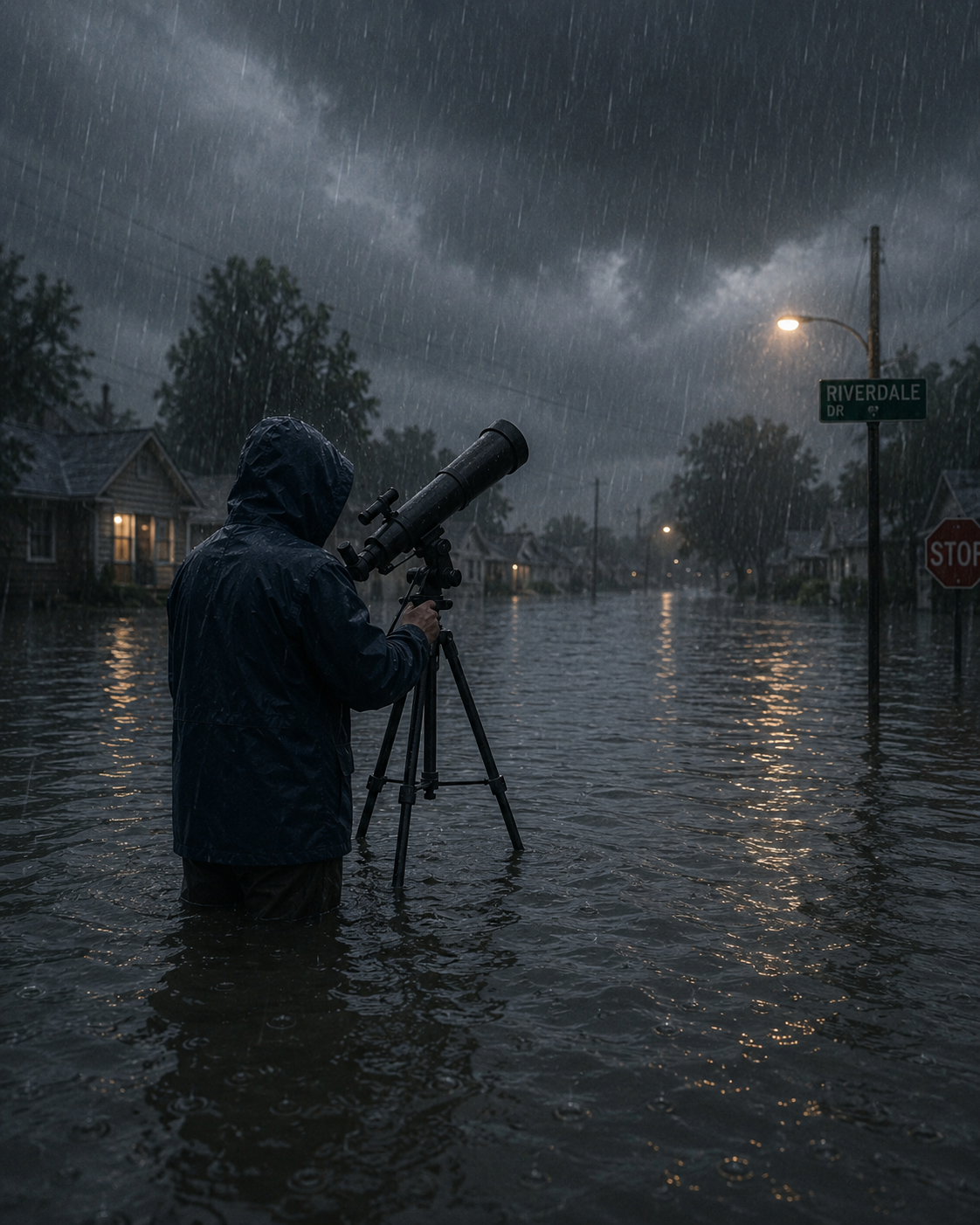
Our May 23 star party was canceled due to the weather.
May ASTRA Meeting Summary
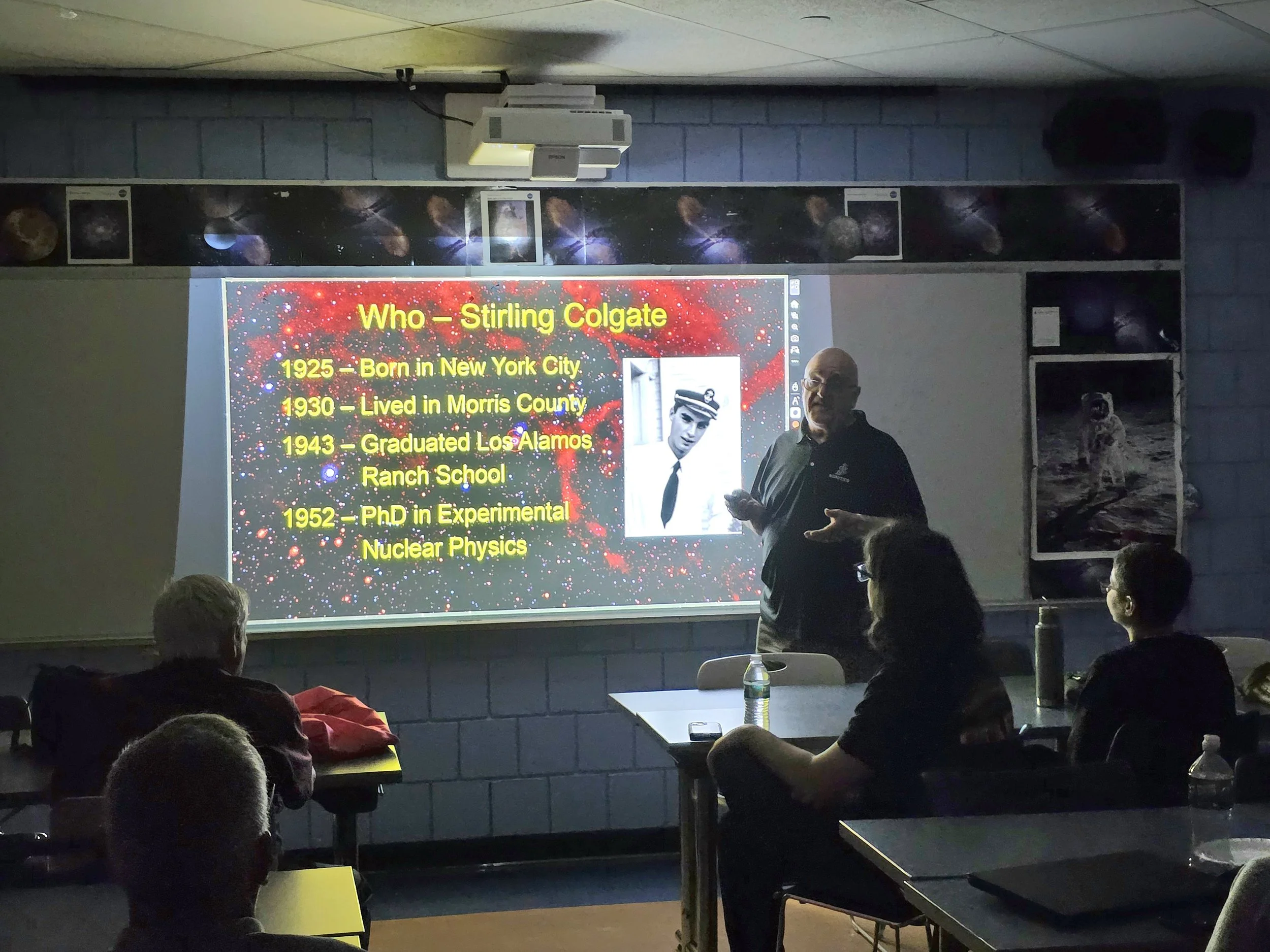
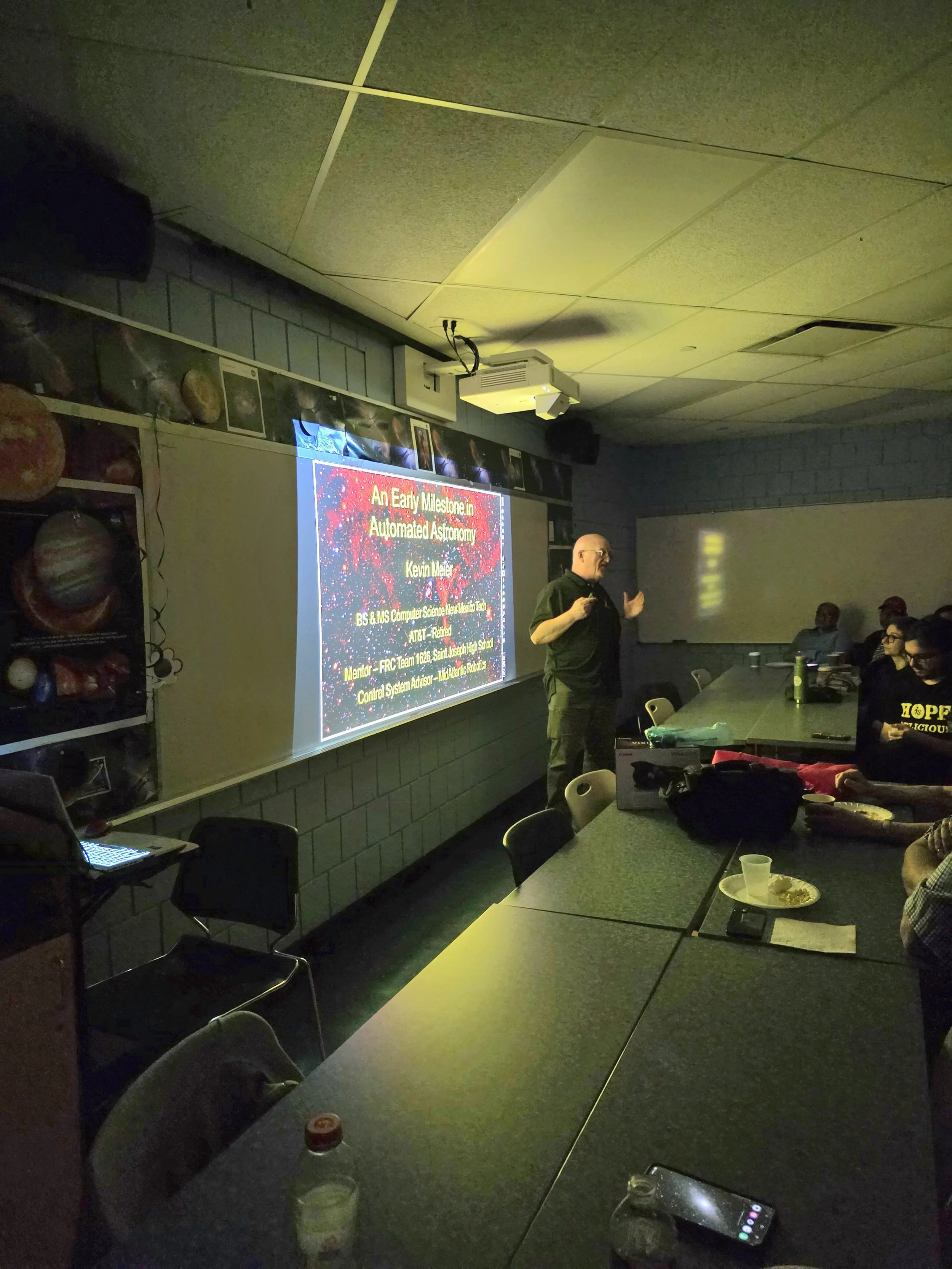
Kevin Meier spoke on an early milestone in automated astronomy and the direct involvement he had with some of the big names in astronomy.
Public Events and Presentations
We had three events for April:
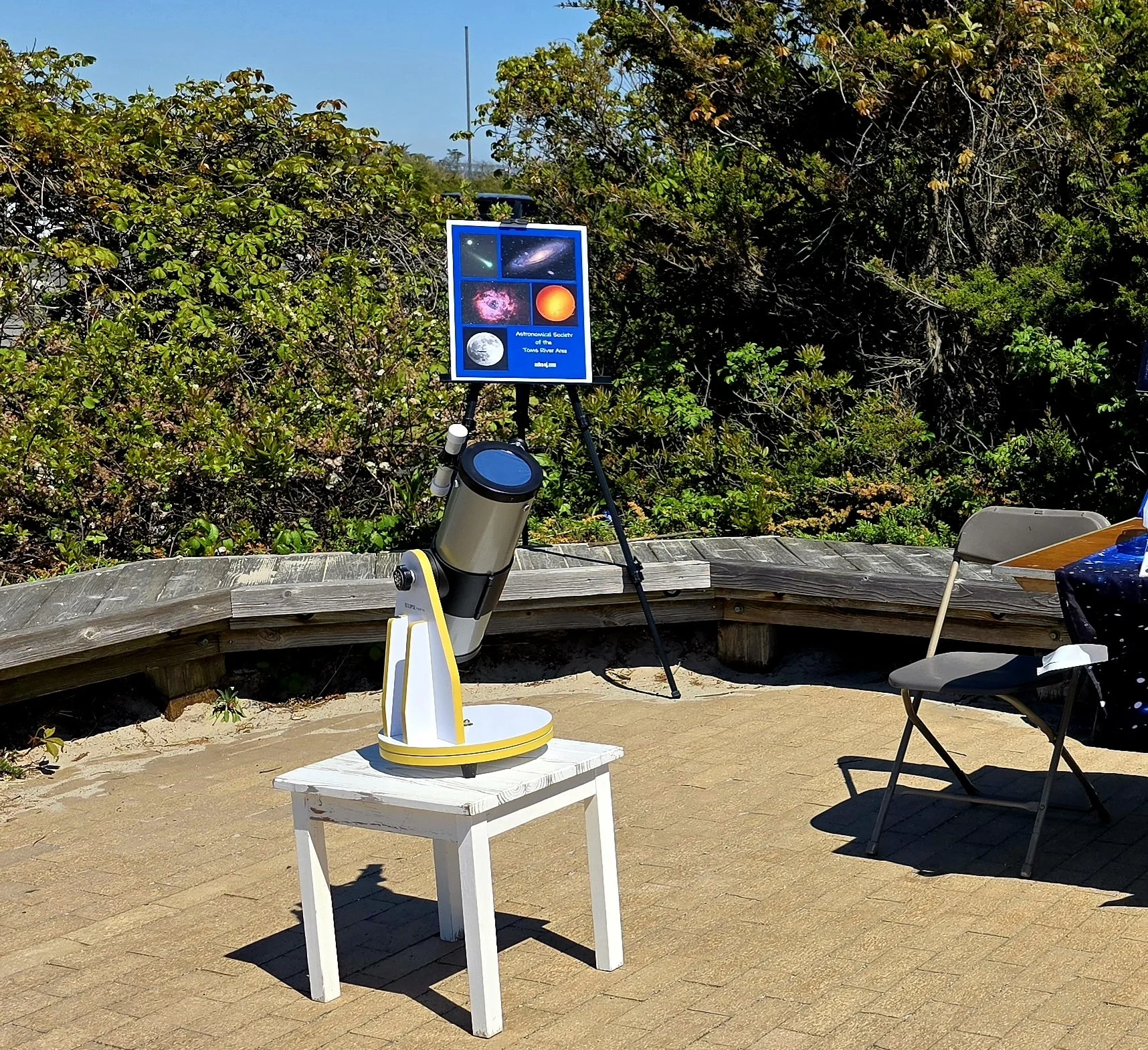
May 16 was Ocean Fun Day at IBSP.
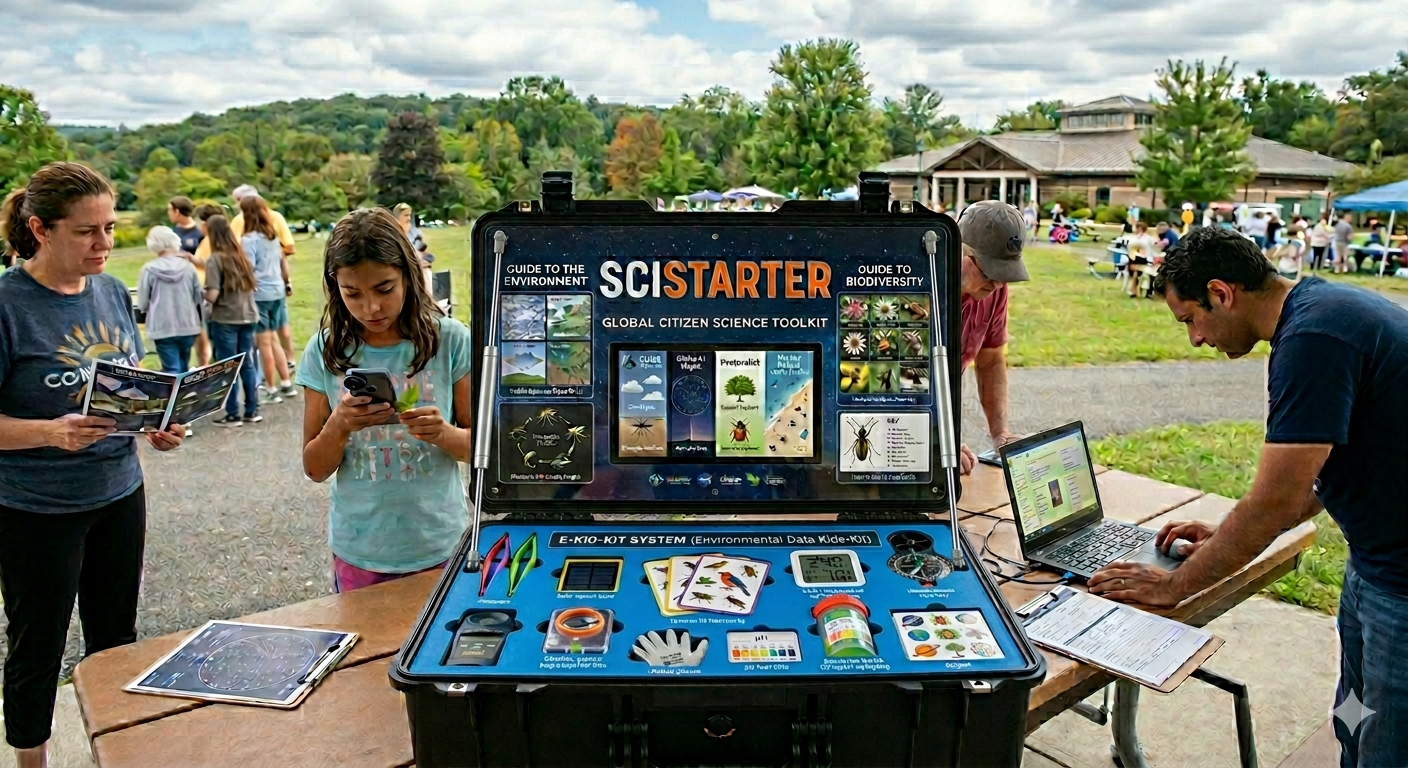
Jim and Gloria were vendor participants for SciStarter and DarkSky. Kevin Eek provided his solar telescope as well. We had a good turnout for this windy day. Unfortunately, we had to put the telescope away early.
Some of the kids were unruly, and parental supervision was lacking. We will need to reassess if it is worth the risk to the gear at this otherwise good event.

AstroMag May 2026
A free online publication for Amateur Astrophotographers.
The Moon: Our Nearest Neighbor
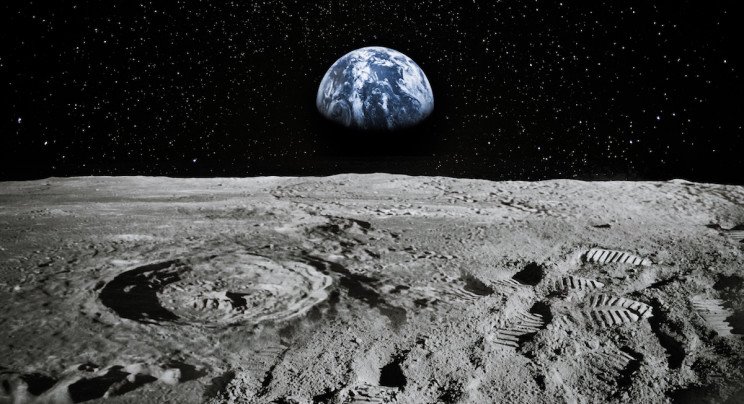
Let’s explore some interesting features, facts, or myths about our nearest neighbor, the Moon. Without it, life on Earth would be totally different, if not at all.
Moon observation challenge for June.
Note: This article is partially AI-generated.
June 2026 offers an exceptional lineup of lunar events, highlighted by a rare daylight lunar occultation of Venus, a Super New Moon, and a Full Micro Strawberry Moon. Whether you are tracking major phases, hunting for planet alignments, or celebrating with themed jewelry, the Moon takes center stage this month.
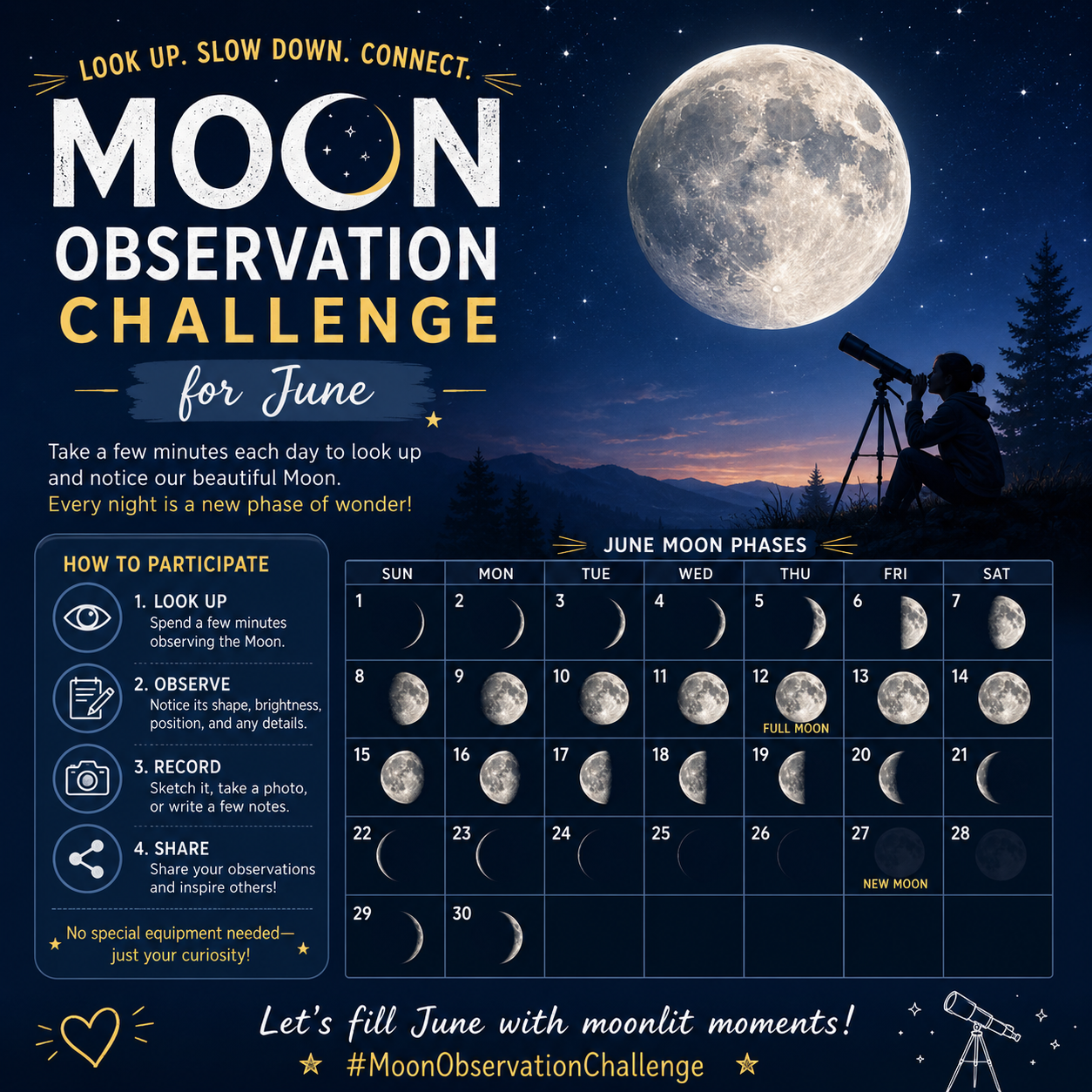
Challenge 1: The NASA "Moon Joy June" Challenge (Beginner)
NASA is hosting an art and observation initiative where you log or create pieces based on weekly prompts.
The Task: Spend time sketching the Moon's phase or creating art based on NASA's weekly themes: Launch (June 1–7), Moon (June 8–14), Crew (June 15–21), and Earth (June 22–30).
How to Share: Post your sketches or creations on Instagram via the @NASAArtemis "Add Yours" story feature, or on Threads/Tumblr using the hashtag #ArtemisArtShow.
Challenge 2: The Earthshine Tracking Challenge (Intermediate)
This challenge tests your ability to observe the "dark" nightside of a crescent Moon.
The Task: From June 16 to June 20, locate the razor-thin waxing crescent Moon in the western twilight. Use binoculars to see if you can resolve the ghost-like outline of the unlit portion of the Moon.
The Science: This phenomenon is earthshine—sunlight reflecting off Earth's oceans and clouds back onto the Moon. Your goal is to track it each night until the increasing lunar glare completely washes out the earthlit details.
Challenge 3: The Daytime Venus Occultation (Advanced)
This is an elite, highly time-sensitive visual challenge requiring precise timing and extreme safety caution.
The Task: On June 17, the Moon will pass directly in front of Venus. For observers across parts of the United States and Canada, this event occurs during full daylight hours.
The Goal: Use a telescope or high-end binoculars to locate the pale crescent Moon in the daytime sky, and watch the brilliant white dot of Venus completely disappear behind the lunar limb and reappear later.
⚠️ CRITICAL SAFETY WARNING: Because this occurs during the day, never point binoculars or a telescope anywhere near the Sun without proper solar filters. Doing so will cause permanent eye damage.
Ref: NASA Moon Joy
Ref: NASA International Observe the MoonRef: Sky and Telescope
Ref: NASA What’s Up

Outreach material below is distributed free for public outreach.
Astronomy for ASTRA Kids

NASA Science
For our young ASTRA members, NASA has online webpages for kids, an educational resource for fun learning, and arts & crafts.
Where do old satellites go to die?
Image by Quan-Yu Zang on Squarespace.
Around The Web
Dark Sky News

Latest News:
DarkSky New Jersey has now become a 501c (3). This now opens the doors for bigger and better things for the movement, correcting light pollution in New Jersey.
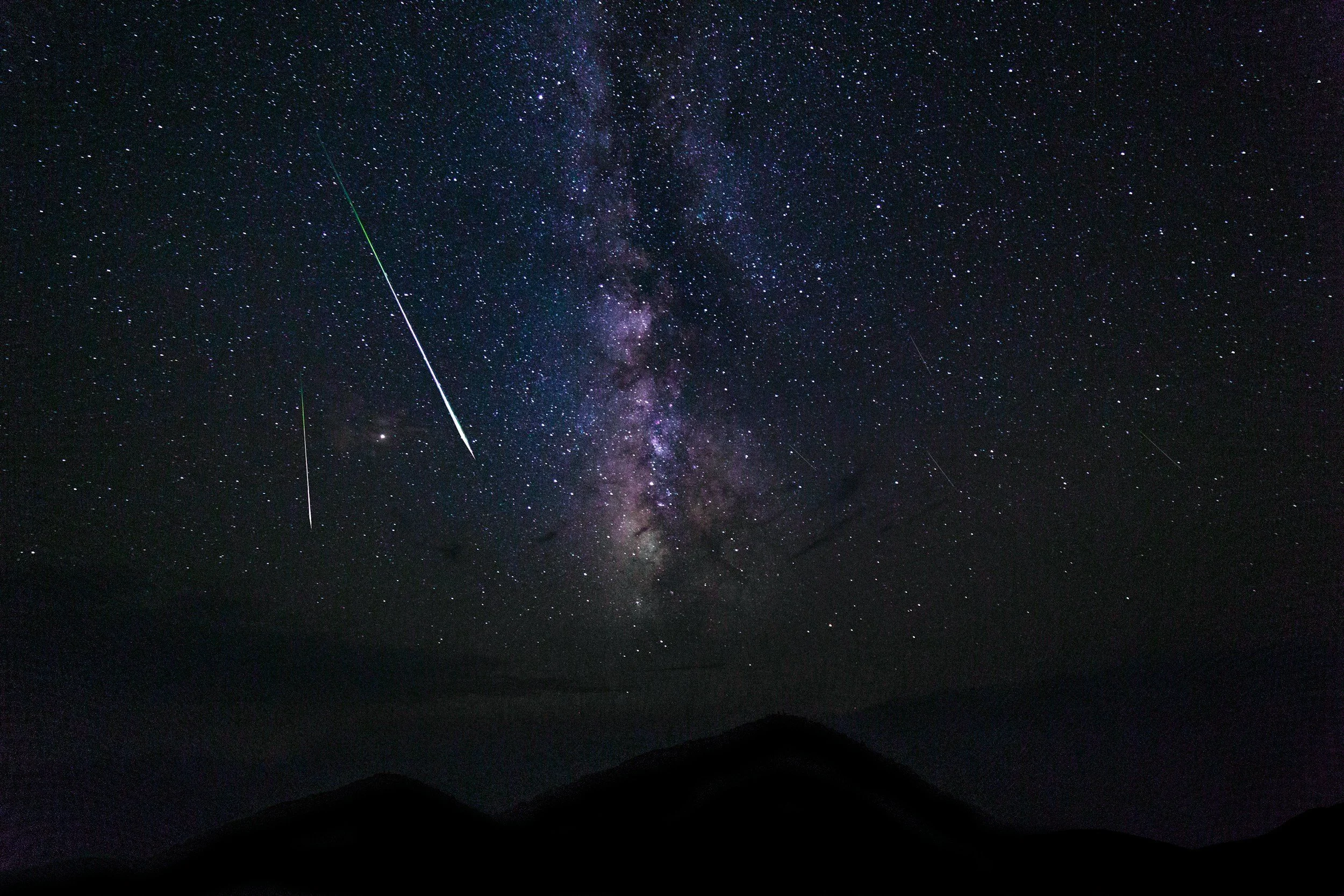
Astrophotography Timelapse - Milky Way, Aurora, and Perseid Meteor Shower
In honor of International Dark Sky Week, Matt Dieterich shared his astrophotography time-lapse to raise awareness for night sky education and conservation efforts to limit light pollution. www.MattDieterich.com
Squarespace Stock image:
Austin Human@xohumanox
On the lighter side of astronomy …
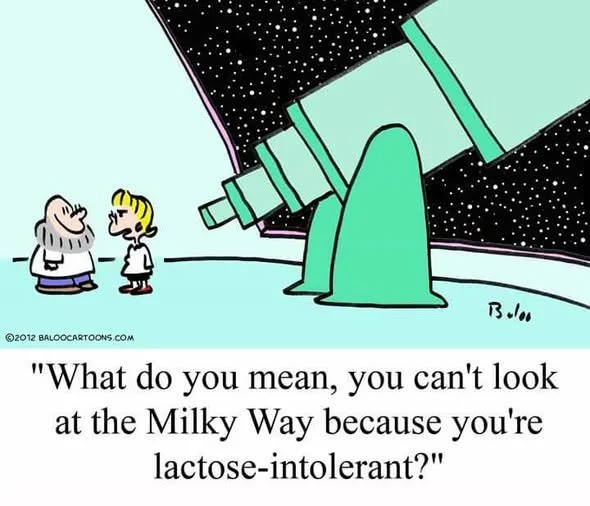
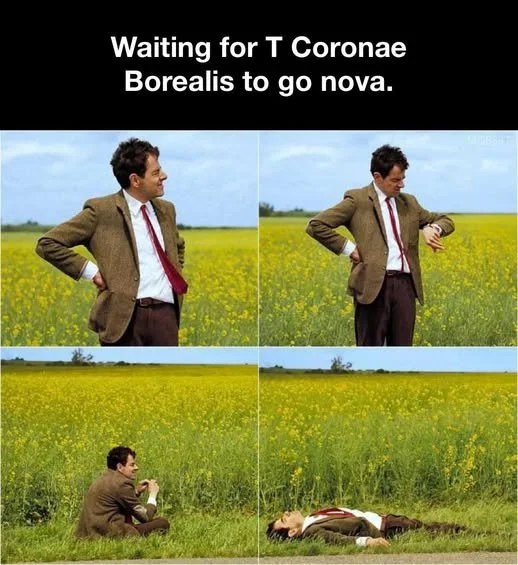

What’s Up:
Sky Watching Tips from NASA
Provided by NASA Jet Propulsion Laboratory. Is usually updated anywhere from the first day of the month to the fifth day of the month. Check back to this linked image if it hasn’t been updated yet.
For more go to NASA Jet Propulsion Laboratory webpage: What’s Up: Skywatching Tips From NASA

This article and images are distributed by NASA Night Sky Network
The Night Sky Network program supports astronomy clubs across the USA dedicated to astronomy outreach.
Visit nightsky.jpl.nasa.gov to find local clubs, events, and more!
NSN Articles have been suspended until further notice.
The articles below are from other free sources, including older NSN articles.
The intro for each is provided, but you will need to utilize the included link to view the full article.
Asteroid Apophis
In April 2029, asteroid Apophis will make one of the closest approaches by a large asteroid ever observed in recorded history.
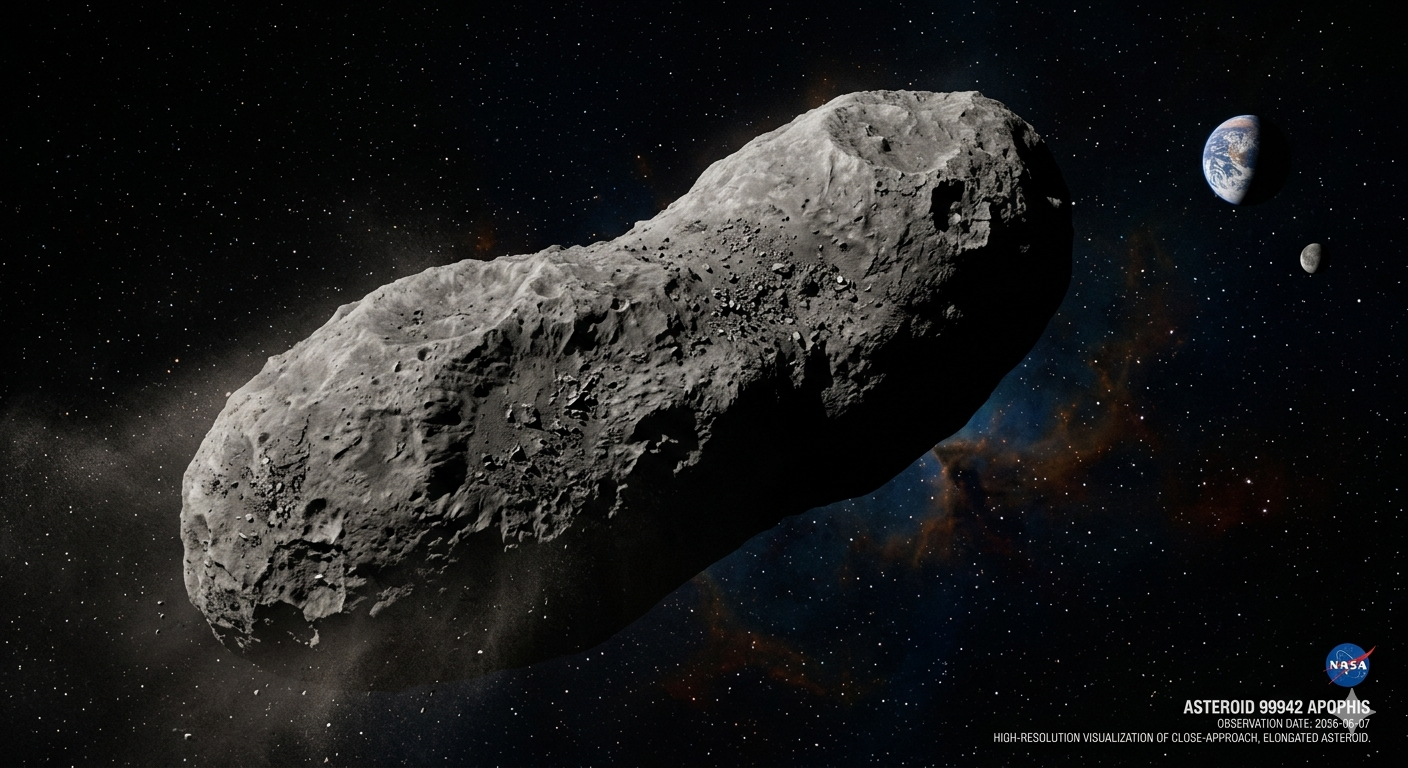
On Friday, April 13, 2029, the near-Earth asteroid 99942 Apophis will safely pass within 31,600 kilometers (19,600 miles) of Earth's surface. This is a historically rare event, as an asteroid of this size—roughly 340 meters (1,100 feet) wide—comes this close to Earth only once every few thousand years.
Key Facts About the Flyby
Zero Impact Risk: Although its discovery in 2004 initially triggered impact concerns, newer radar and tracking data have entirely ruled out any collision risk with Earth or the Moon for at least the next 100 years.
Image: Gemini AI generated
Closer Than Satellites: At its closest point, Apophis will fly beneath Earth's high-altitude geostationary satellites, which orbit at roughly 36,000 kilometers (22,236 miles).
Visible to the Naked Eye: For a few hours, about two billion people across Europe, Africa, and western Asia will be able to see the asteroid as a fast-moving, star-like point of light without telescopes or binoculars.
Orbits Will Shift: Earth's gravitational pull will squeeze and stretch the asteroid, potentially triggering "asteroid quakes" or landslides. This interaction will permanently widen Apophis's orbit around the Sun, shifting it from the "Aten" group of asteroids to the "Apollo" group.
Scientific Missions
Because this provides an unprecedented "natural laboratory," space agencies are already positioning hardware to watch the encounter unfold in real time:
NASA's OSIRIS-APEX: The redirected spacecraft will rendezvous with Apophis immediately after the flyby. It will use its thrusters to stir up surface rocks, allowing scientists to analyze the material directly underneath.
ESA's Ramses Mission: The European Space Agency plans to accompany the asteroid before and during the flyby to observe exactly how Earth's tidal forces alter its shape and spin state.
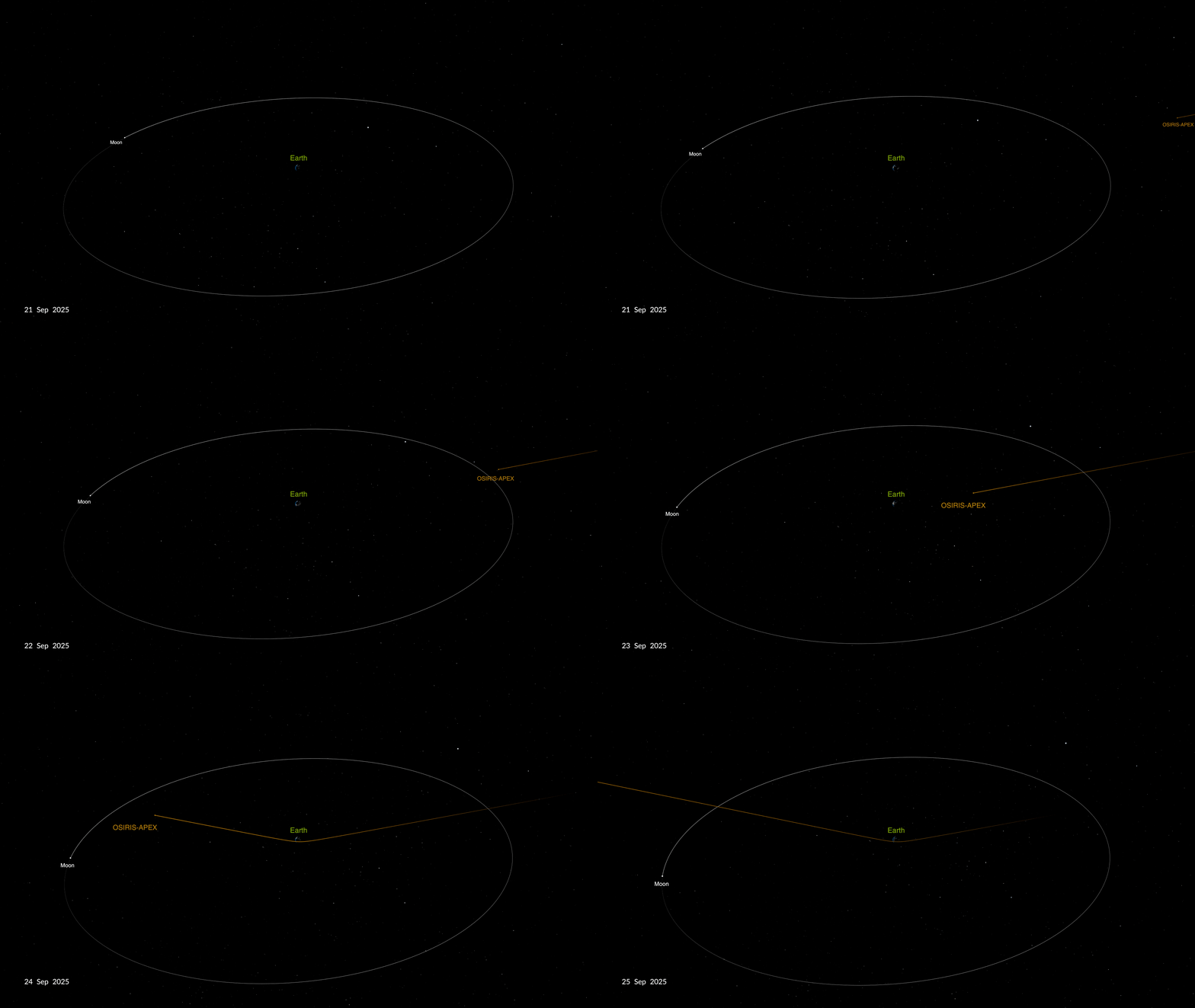
Destination Apophis: Inside the 2029 Close Encounter
On Friday, April 13, 2029, humanity will witness an unprecedented cosmic event as the massive near-Earth asteroid 99942 Apophis streaks across the night sky. Measuring roughly 340 meters (1,115 feet) wide, this skyscraper-sized rock will pass within 31,600 kilometers (19,600 miles) of our planet's surface.
This historic distance places Apophis closer to Earth than our own geostationary communication satellites, making it visible to the naked eye for billions of people across Europe, Africa, and western Asia. While its discovery in 2004 initially sparked global concern over a potential collision, NASA's Center for Near-Earth Object Studies (CNEOS) has successfully used radar mapping to rule out any impact risks for at least the next century.
Inquiry to the ASTRA membership
Image: Gemini AI generated
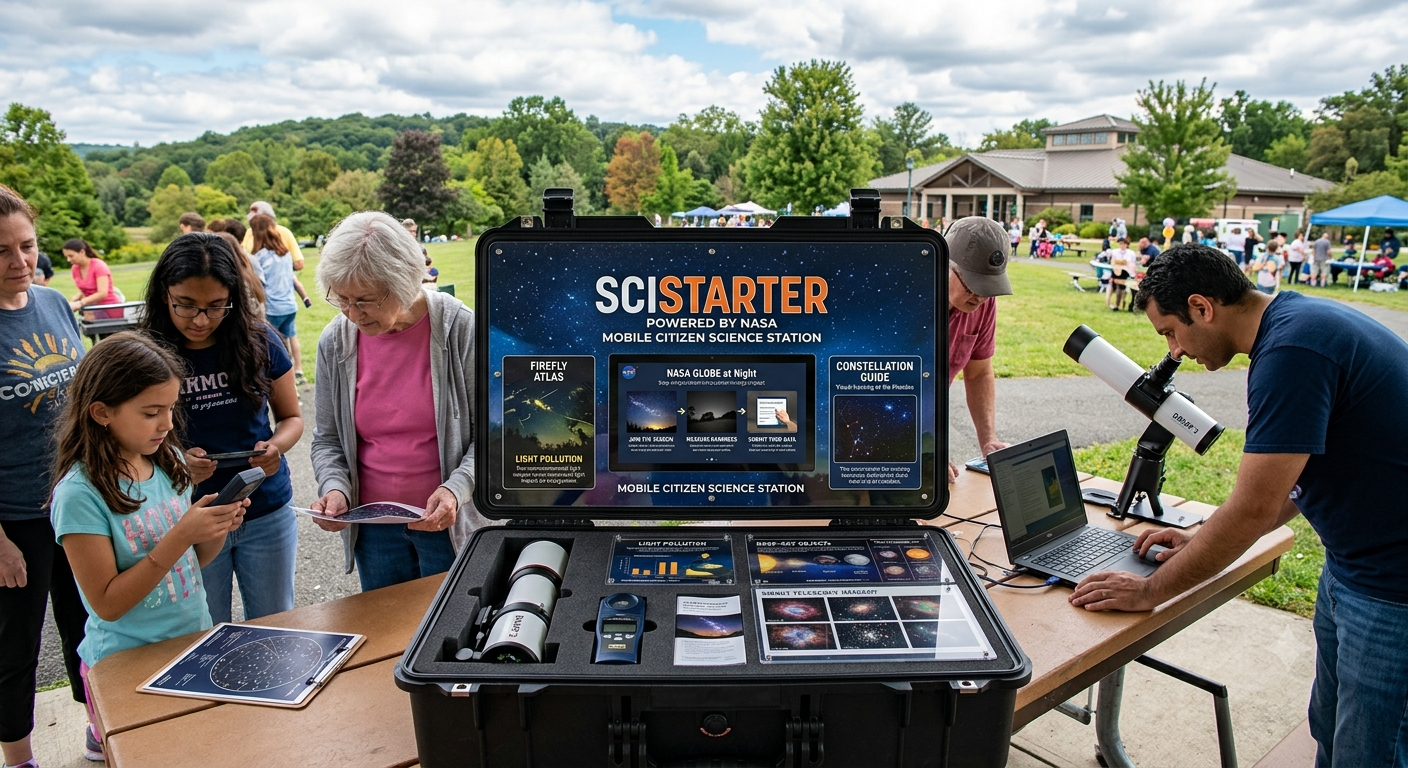
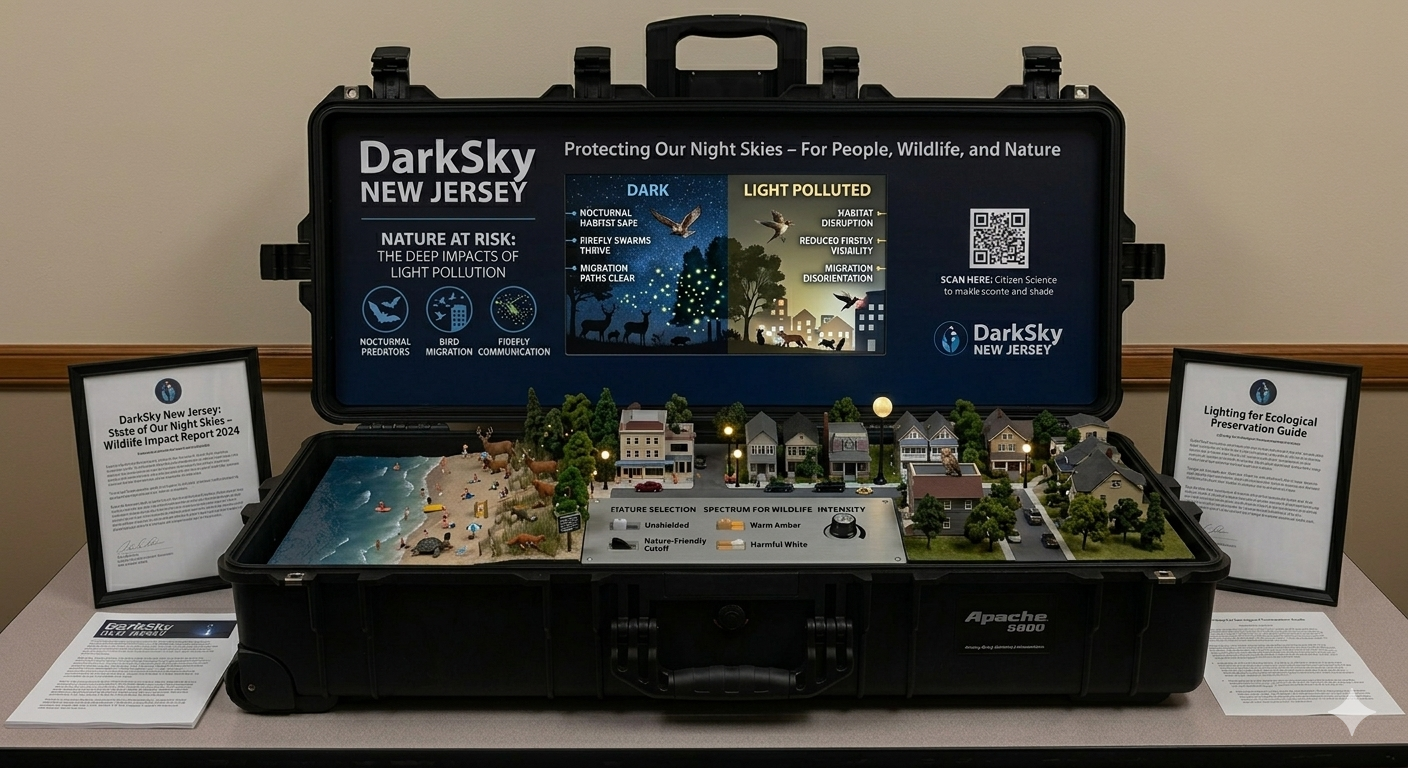
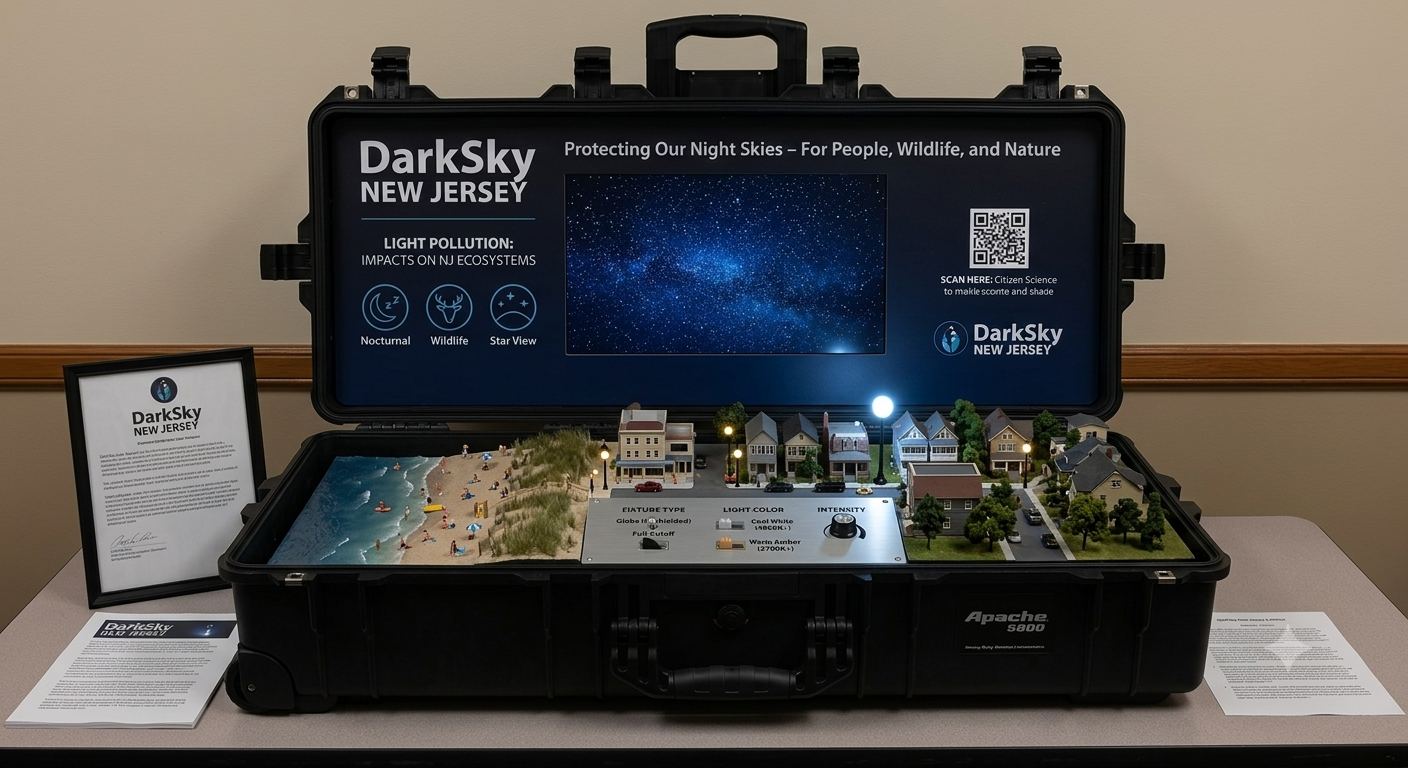
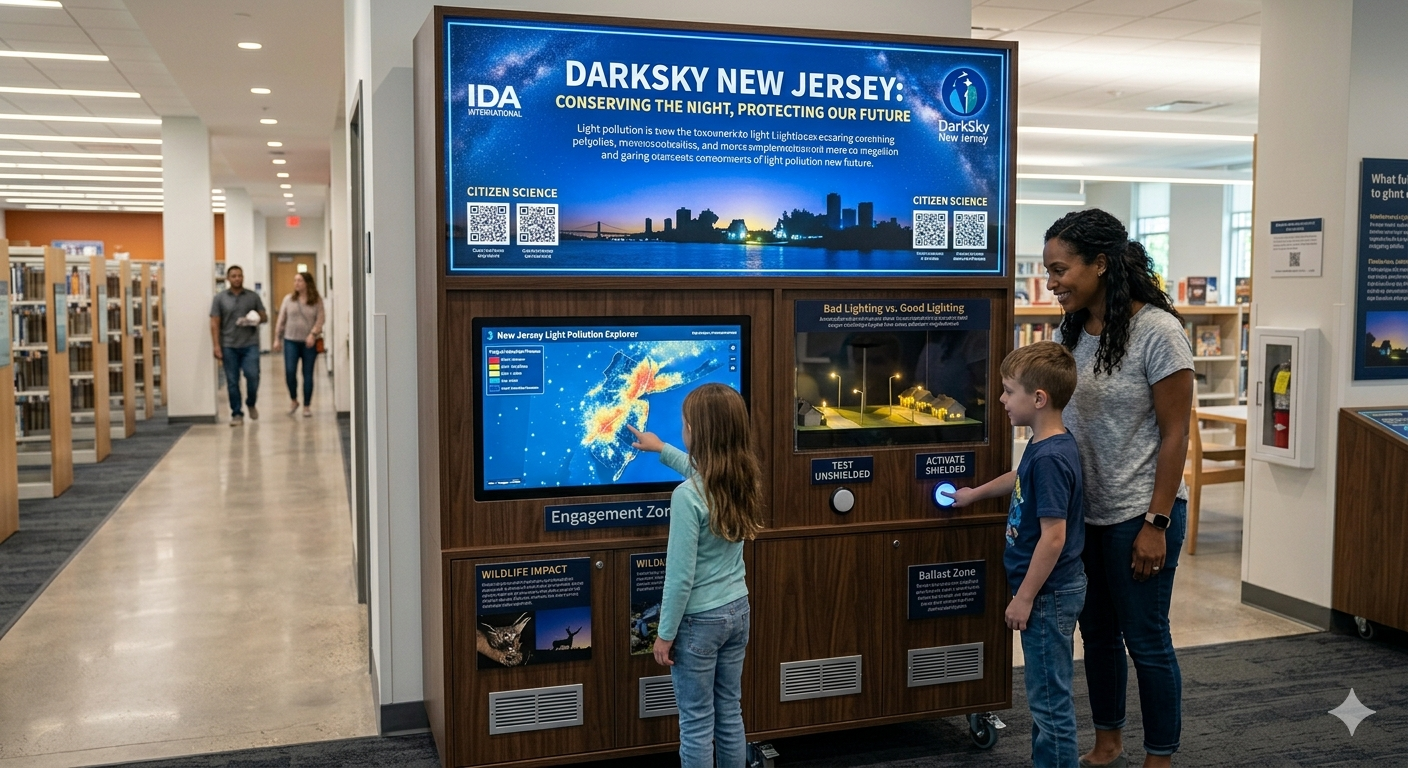
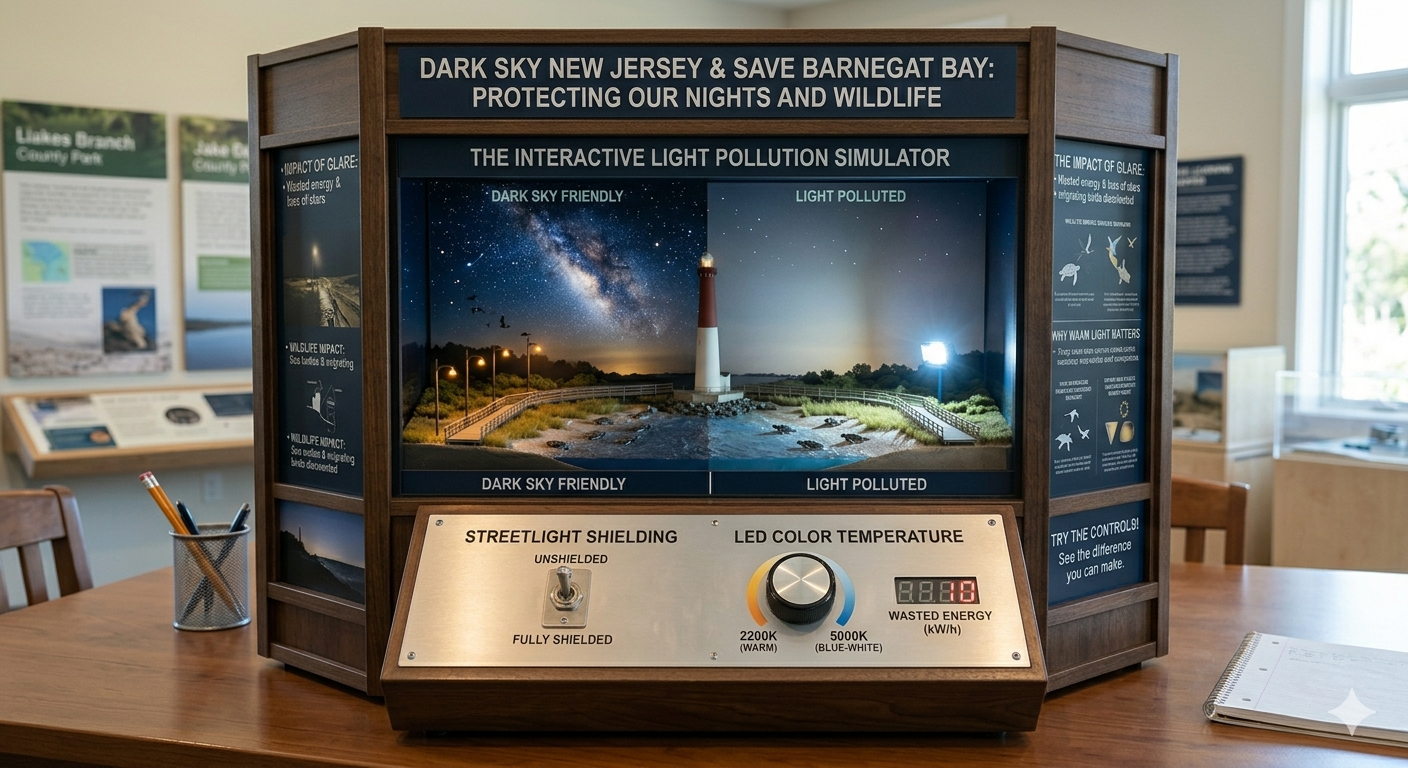
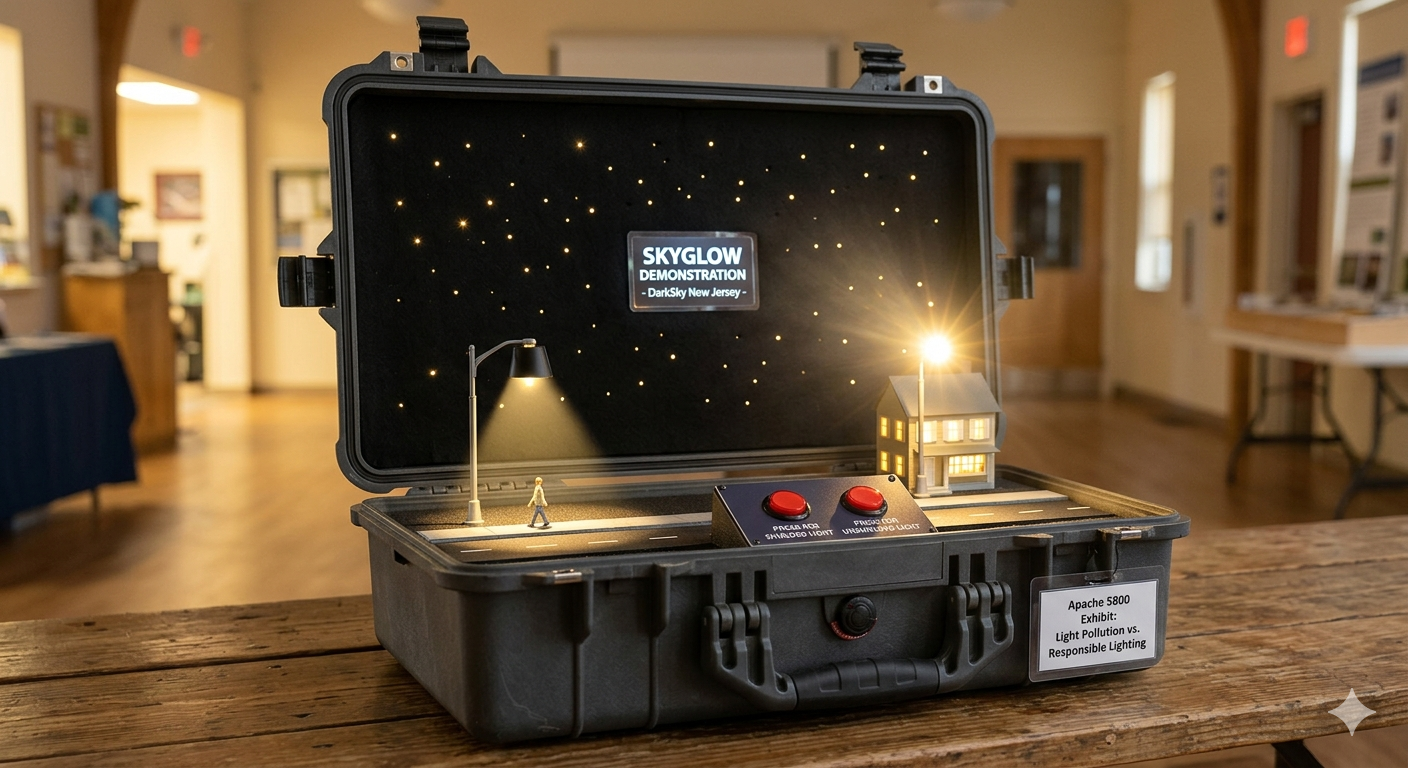
Is there anyone interested in creating or partnering with an interactive kit for ASTRA Astronomy Outreach? It’s been something Jim Webster has been playing with for Astronomy, DarkSky New Jersey and SciStarter. 3D printing is one of the needed resources. I have generated the parts list, wiring diagrams, and estimated cost for home-made and professional services. For DarkSky New Jersey exhibit cases, I am hoping that, with some potential grants, we can get those made.
SciStarter members have embraced the effort and are working on creating them for citizen science outreach.
Both Save Barnegat Bay and Novins Planetarium are also interested in Light Pollution exhibits. The outcome for them will take some time, if at all; time will tell.

Let’s Explore Space
The Latest News on Astronomy and Sky Watching — By StarWalk Astronomy App - Sky Tonight

Tonight’s Sky: No longer posting
October 2024 was the last updated posting of Tonight’s Sky. It is still available via YouTube.
Linked is the twelve-month playlist on YouTube.
Any suggested replacements, let me know.
Visit the STScI, which produced Hubblesite.org video overviews for Tonight’s Sky.
They can be found both on Facebook and stsci.edu.
Submissions Welcome
Members are invited to submit articles, photos, news, or stories for inclusion with Astral Projections Online. Please contact the ASTRA Webmaster.