Check our Website for updated content at www.astra-nj.com
Club Presentations Wanted:
Does anyone have any astronomy items of interest to share with the membership?
Please let us know at Club Contacts. For 2026, we still have some open slots.
Club dues and membership.
If you renew after March 31, you will be renewed as a new member.
Forms can be found on the website or here.
ASTRAL PROJECTIONS ONLINE (APO for short) is an email-linked publication for members only. If you exit APO to the club website or other resources you will need to use the emailed link again to get back to it. If you wish to retain a copy please bookmark or refer back to the email. We will make all efforts to post by the first week of the month.
Submissions Welcome: Members are invited to submit articles, photos, news, or stories for inclusion with Astral Projections Online. Please contact the ASTRA Webmaster.
Event Calendar
Event Cancellations: Members will receive email notifications of event cancellations.
Upcoming November ASTRA Meeting
ASTRA's next meeting will be Friday, November 13, 2026, at 7:00 PM EST.
Upcoming Public Star Parties
November 7 - Patriots Park - 6 PM
November 14 - Jake’s Branch - 6 PM
Upcoming Public, County & State Park Presentations 2026
Public Outreach Presentations: If any member wants to support ASTRA's public outreach efforts, please let Vinny, Ro, or Jim know. Additional help for these events is always appreciated.
None for now.
County and State Park presentations require a registration fee; call the hosting park to reserve.

Website Updates …
Please visit our club website. We continue to have additional updates, if some content would be useful to members please let us know.
"Astronomy compels the soul to look upward and leads us from this world to another."
— Plato

ASTRA Meeting - Nov 13 at 7 PM
Guest Speaker: Steve Conard - The New Horizons mission. A review of the LORRI instrument and our observations of Jupiter, Pluto, and Arrokoth.
What it was like to be part of that mission for over 20 years.
Please support Novins Planetarium, patronizing their shows, who has supported us since the beginning of ASTRA.
Event Reports
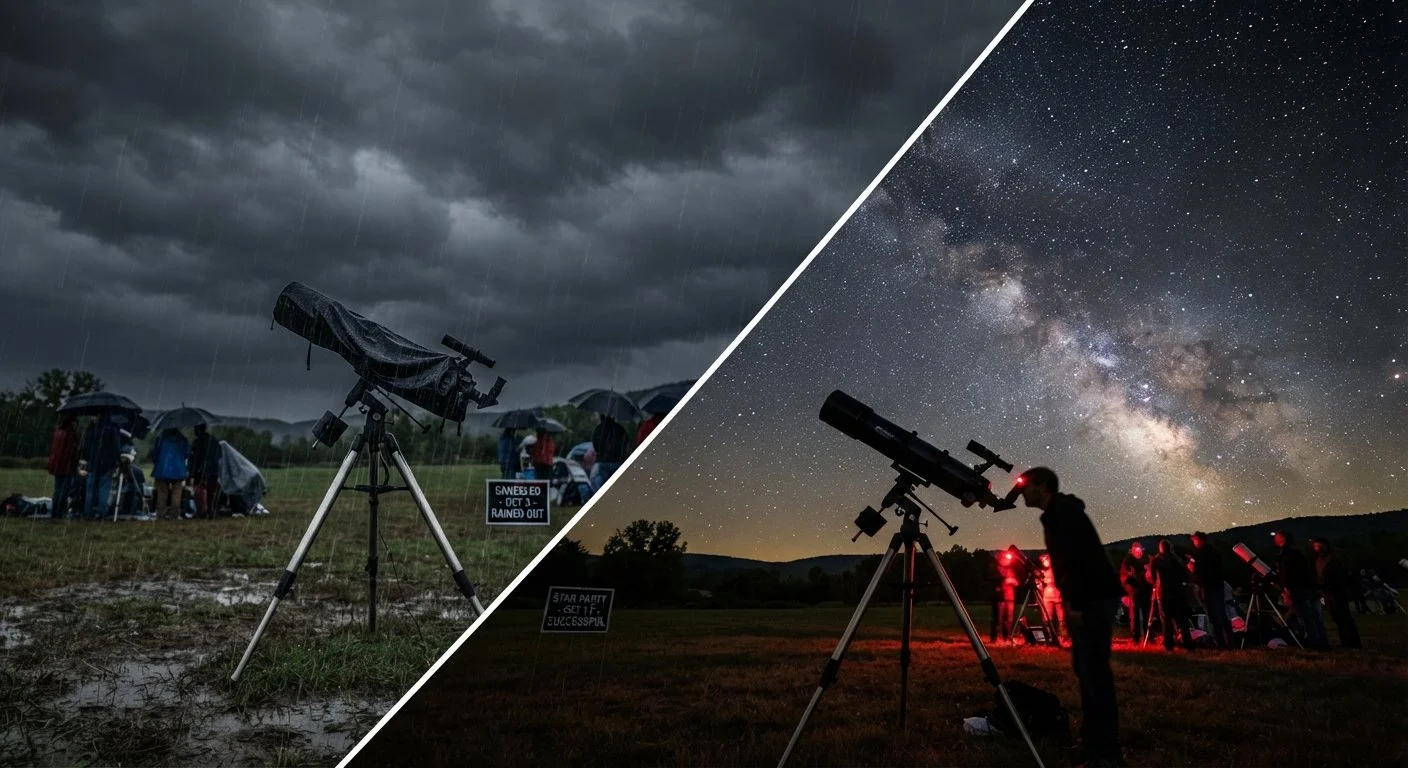
ASTRA’s Star Party at Island Beach State Park for the Environmental Committee was canceled due to the weather. October 17 went okay for a time for us at Jacks Branch. But the clouds were a problem. Let’s hope November proves to be better for us.
Image created on Google AI.
October ASTRA Meeting Summary
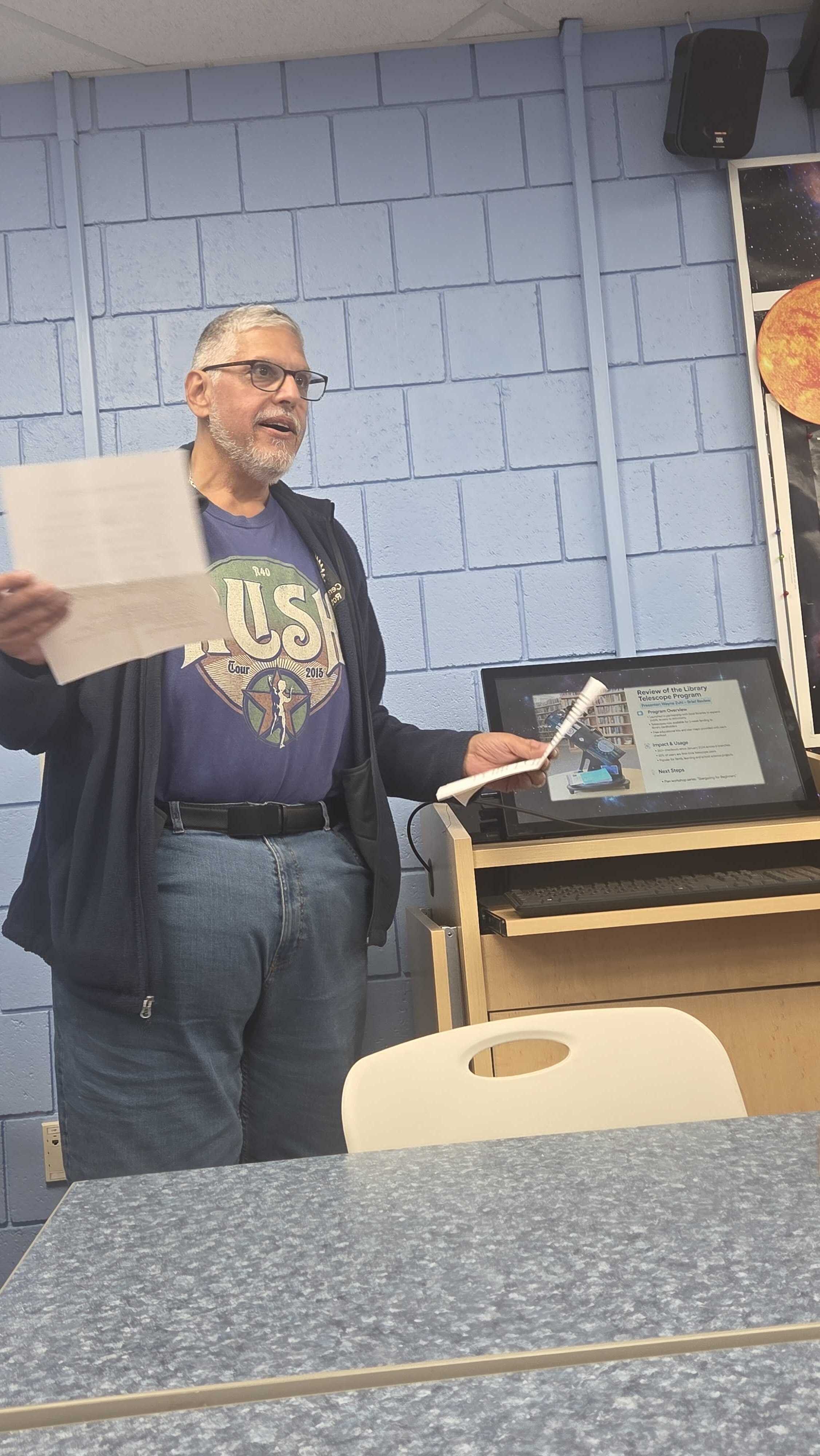
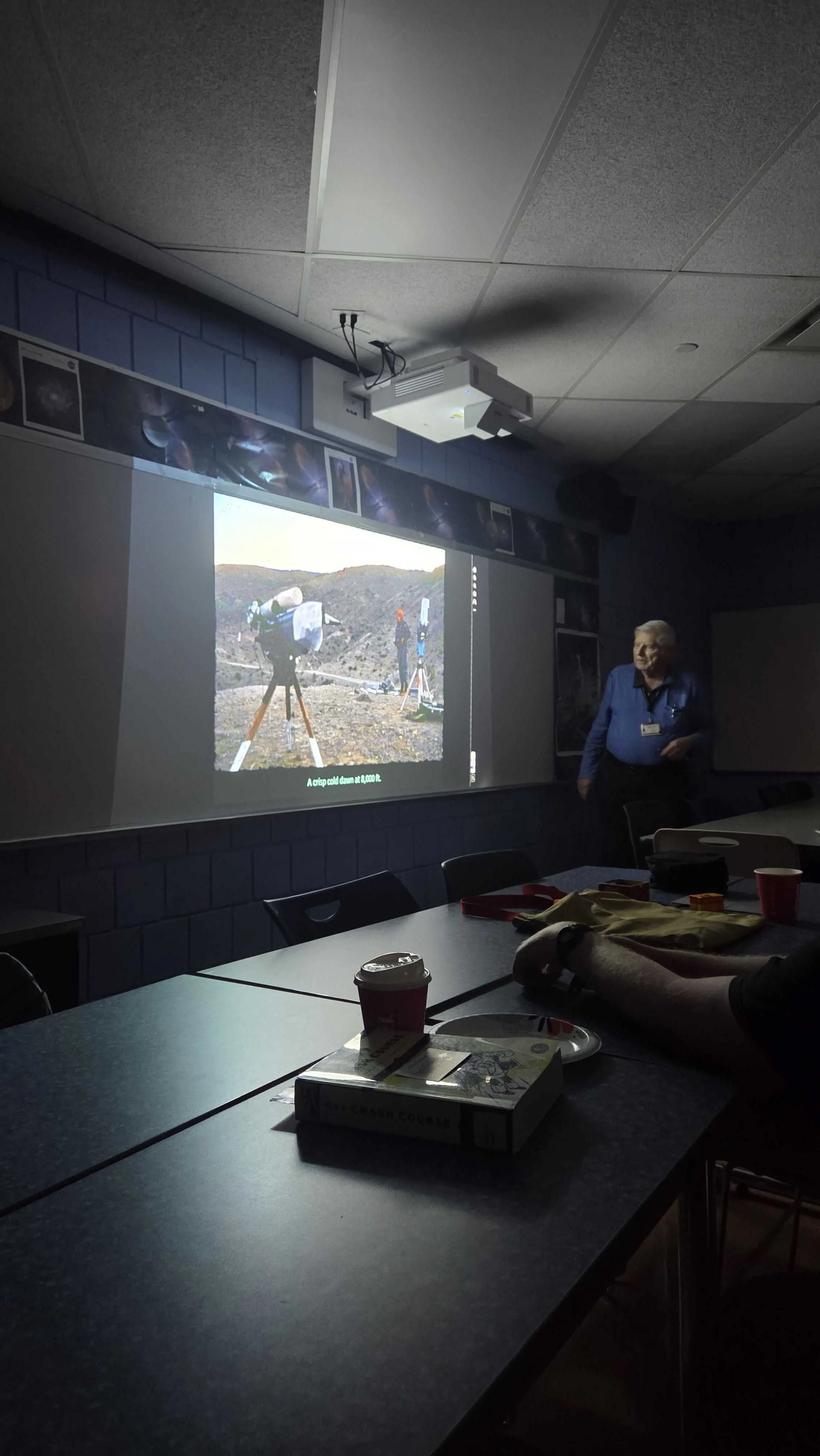
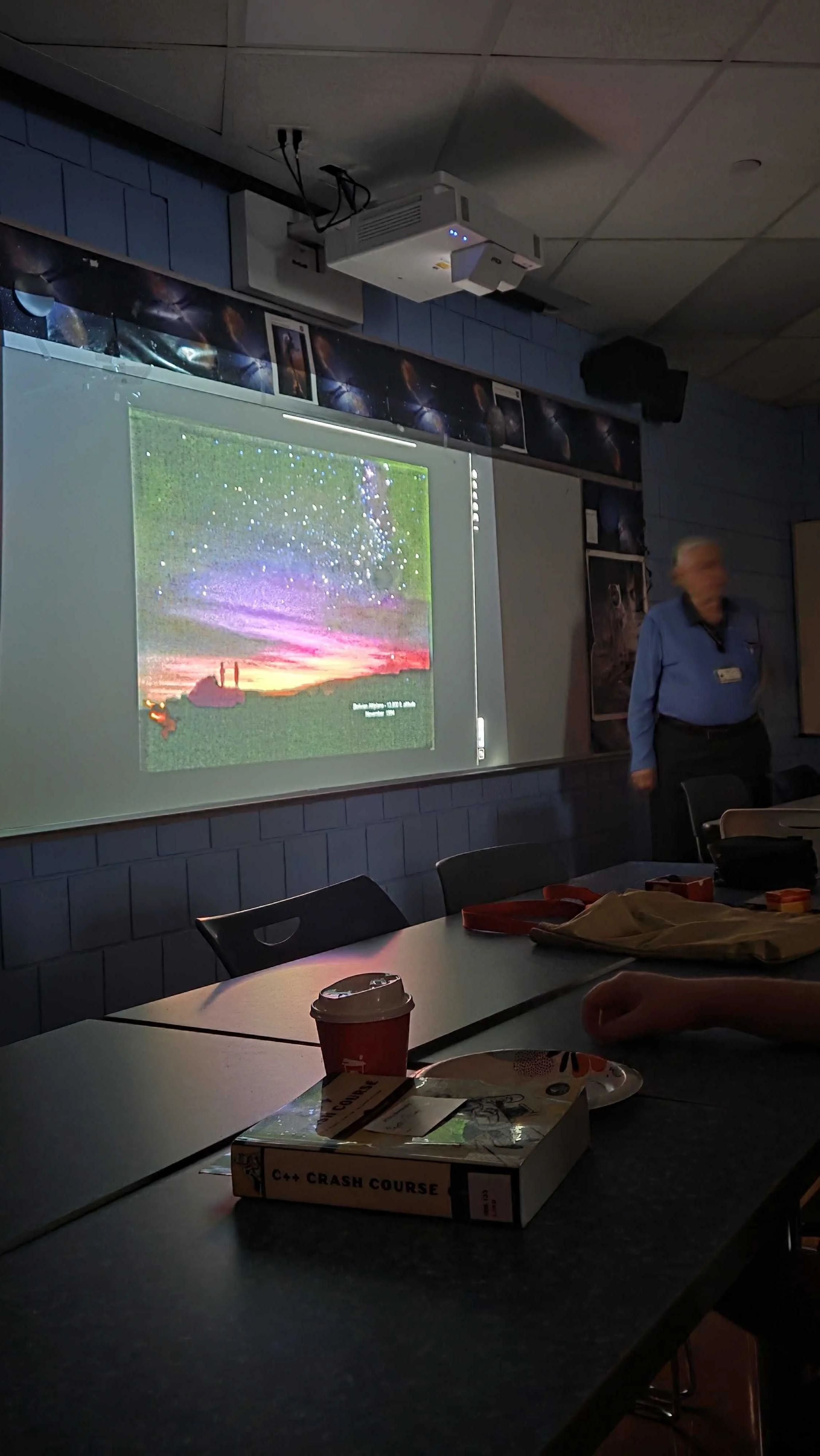
At the November ASTRA meeting, we had a presentation from member Phil Zollner on Film Astrophotography before we went digital.
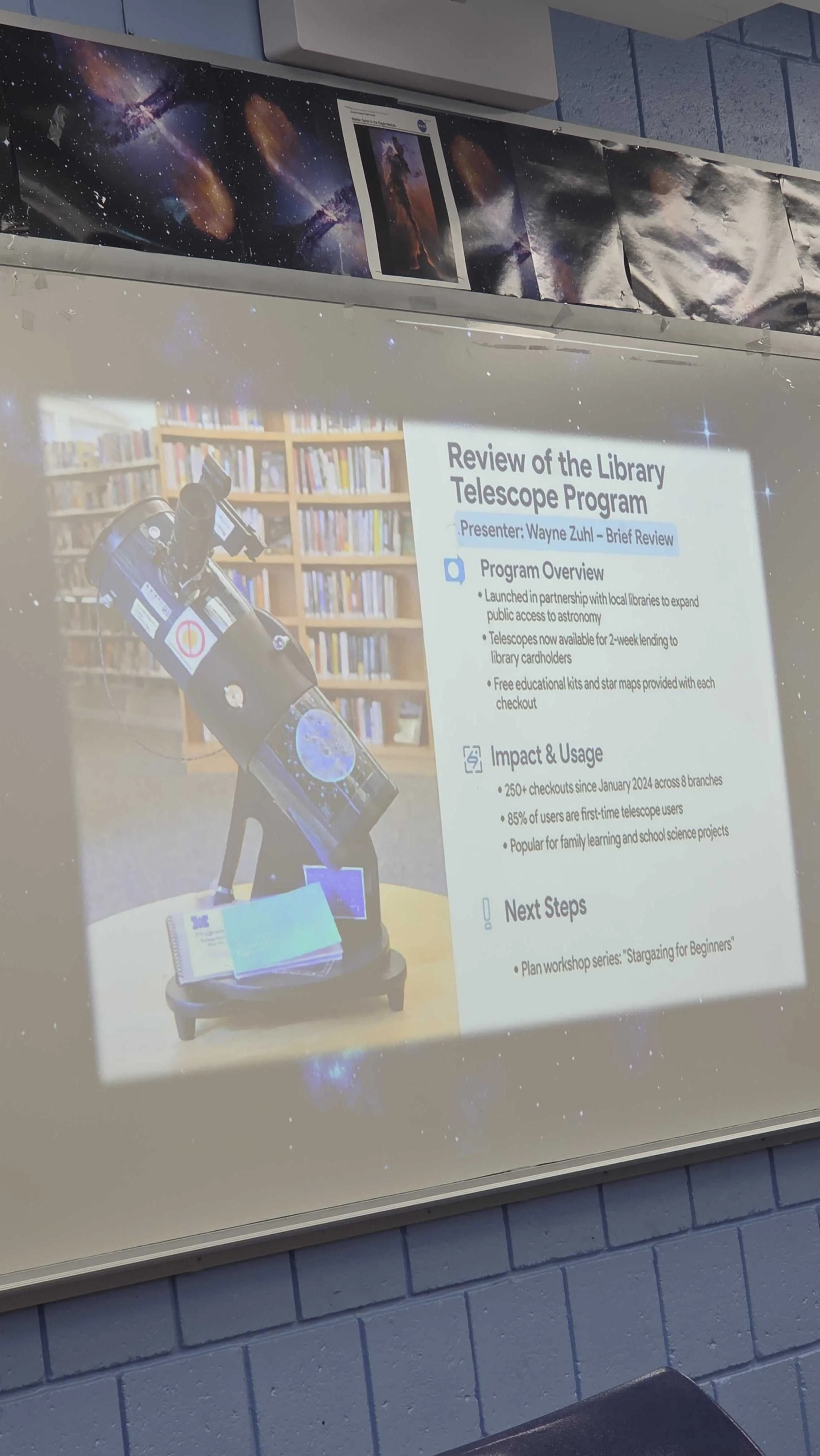
Member Wayne Zuhl provided a review on the Library Telescope Program, Wayne Zuhl. There is interest in the program, and we will be taking a deeper look at. The Library Telescope Program is a global community-driven initiative that partners astronomy clubs and non-profits with public libraries to allow patrons to check out high-quality telescopes just like books.
Public Events and Presentations
None for now.
Share Your Passion: Call for 2027 Club Presenters!
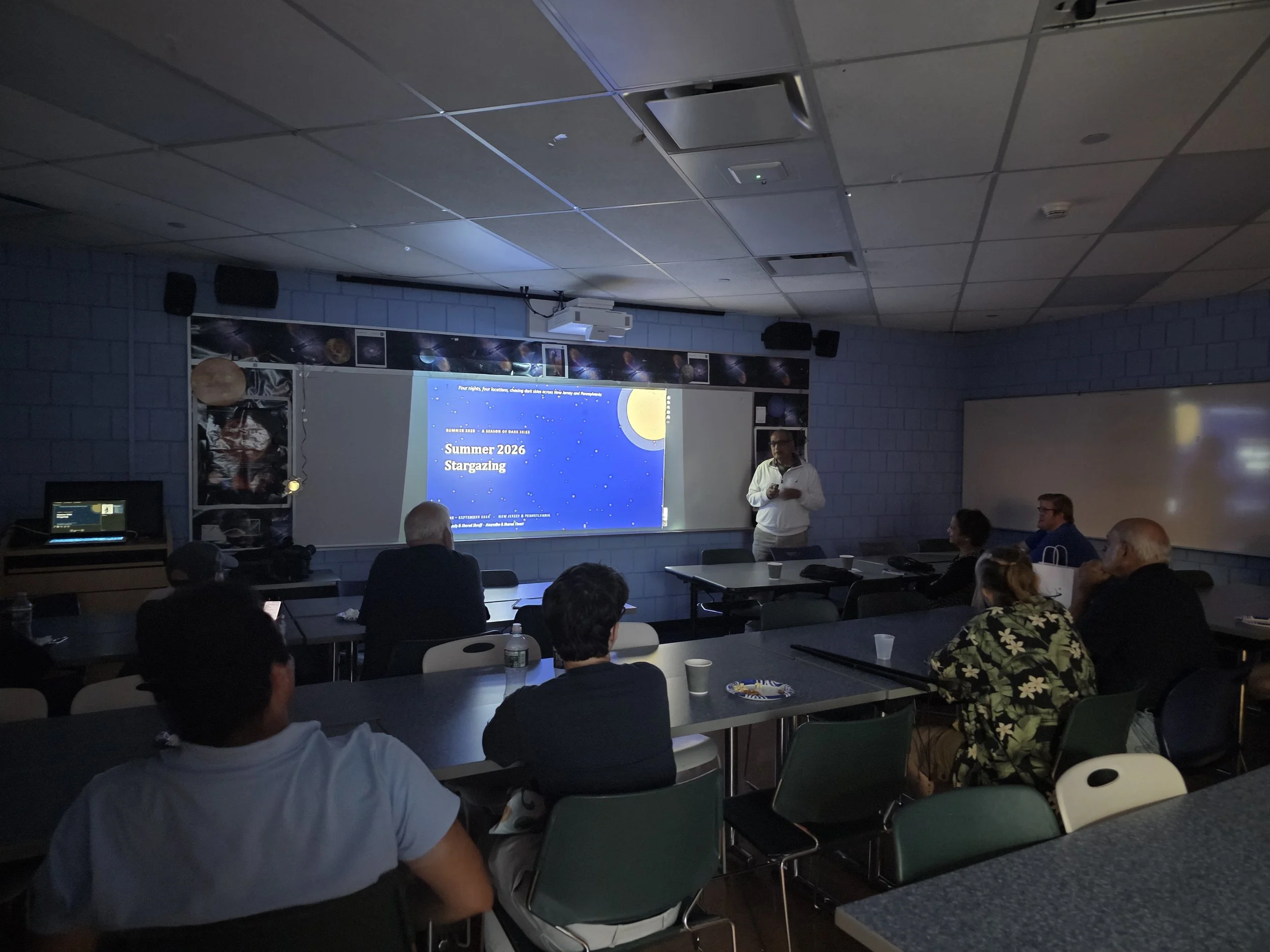
Looking Ahead to 2027
As we plan our calendar for an incredible new year of astronomy, we want to feature the brilliant minds of our own members. ASTRA-NJ thrives on our members' shared knowledge, experiences, and passion. Whether you are a seasoned observer, an astrophotography enthusiast, or just deeply fascinated by a specific cosmic mystery, we want to hear from you in 2027!
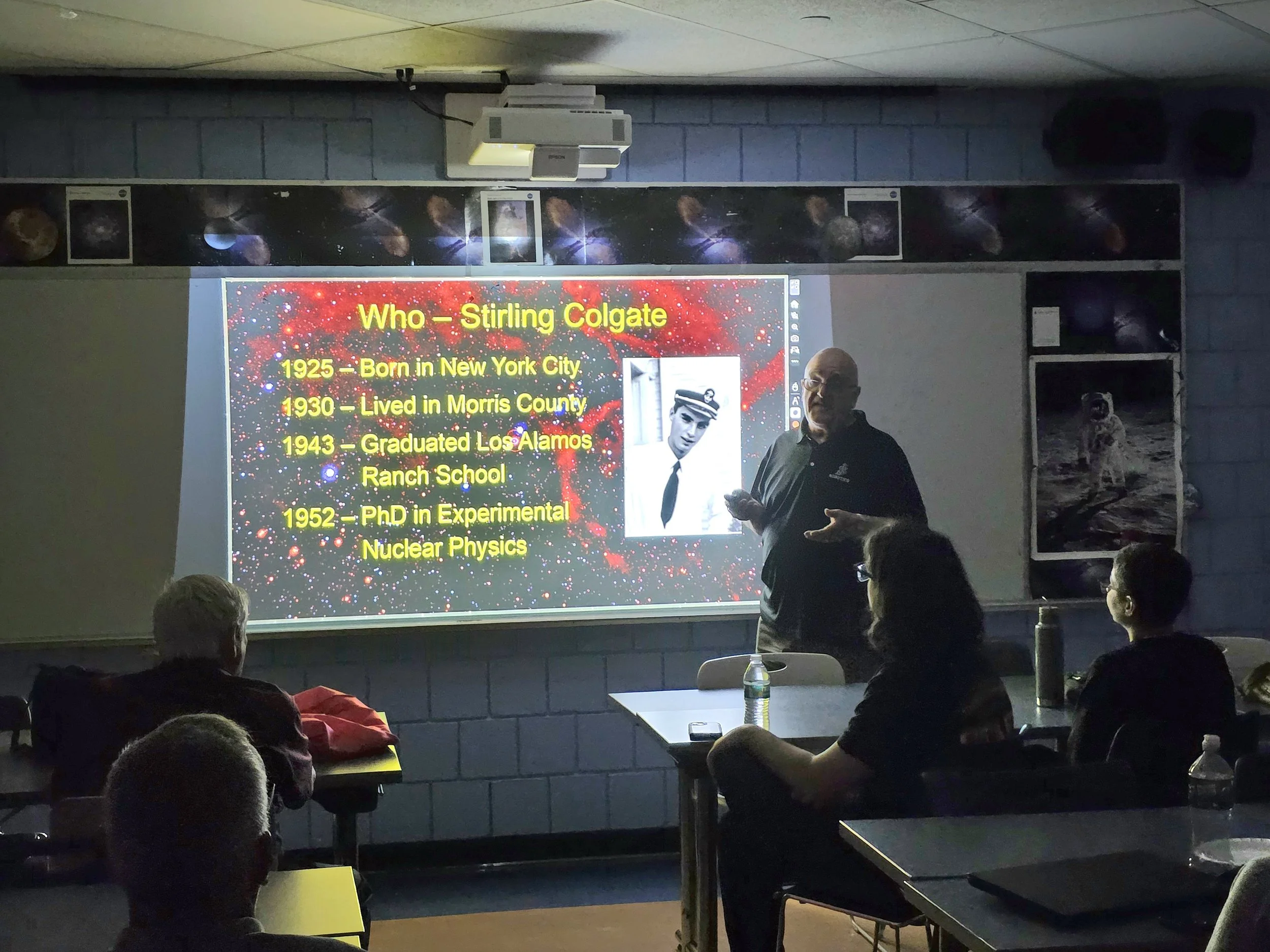
Why Present?
Presenting at our club meetings can be incredibly rewarding. It is a relaxed, friendly environment filled with supportive peers who share your exact interests.
It’s the perfect opportunity to practice public speaking, spark a fascinating discussion, and give back to the club that keeps our eyes on the skies.

Presentation Topics We Love
Don’t worry about needing a PhD—our members love practical, engaging, and diverse topics. Consider sharing your insights on:
Astrophotography: Show off your latest setups, image processing workflows, or gear tips.
Observing & Equipment: Guide us through collimating a telescope, navigating star maps, or choosing the best eyepieces.
Space Science & History: Dive into a specific nebula, the physics of black holes, historical astronomers, or updates on current space missions.
Citizen Science: Share your experiences with light pollution advocacy, variable star observing, or tracking exoplanets.
Please let one of your Board members know if you have an interest in presenting a topic of interest you have in 2027.

AstroMag October 2026
A free online publication for Amateur Astrophotographers.
The Moon: Our Nearest Neighbor
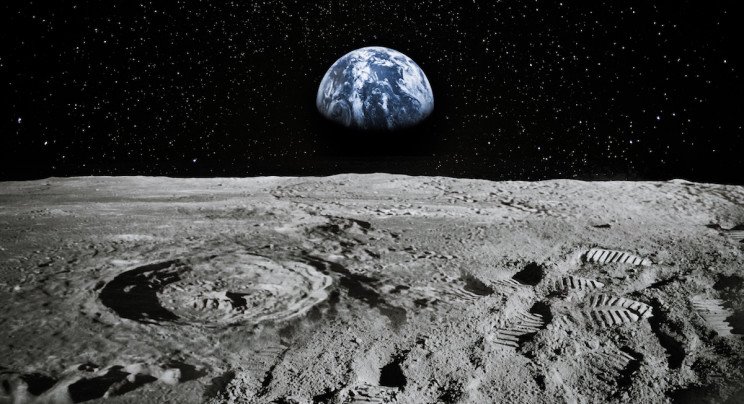
Let’s explore some interesting features, facts, or myths about our nearest neighbor, the Moon. Without it, life on Earth would be totally different, if not at all.
Exploring Posidonius: The Spectacular Floor-Fractured Crater of Mare Serenitatis
Note: This article is partially AI-generated and verified by Google Gemini
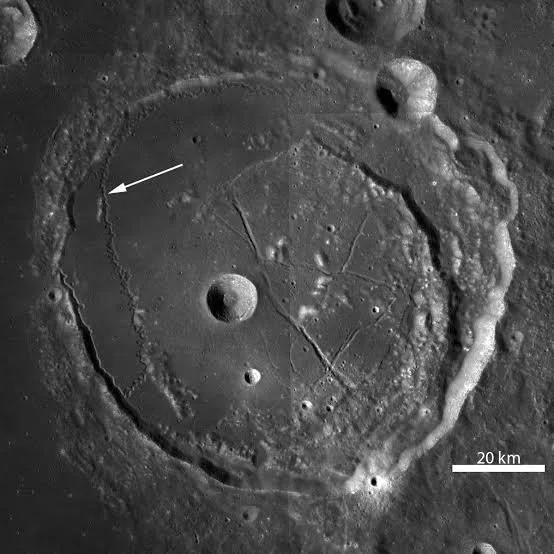
The Posidonius Crater (LRO view). Source: NASA Science
Perched dramatically on the northeastern edge of the Mare Serenitatis (Sea of Serenity) at coordinates 31.8°N, 29.9°E, Posidonius is one of the most fascinating and visually unique impact structures on the Moon. Named after the ancient Greek philosopher and geographer Posidonius of Apamea, this "walled plain" spans nearly 95 to 100 kilometers in diameter, making it a prime target for amateur astronomers and professional lunar geologists alike.
Location: Northeastern edge of Mare Serenitatis / southern border of Lacus Somniorum
Coordinates: 31.88° N, 29.99° E
Diameter: ~95 km (some studies cite up to 112 km including outer margins)
Age: Upper Imbrian period (estimated ~3.72 billion years old)
Classification: Floor-Fractured Crater (FFC) / Class-III FCC
Geological Highlights & Features
Unlike standard bowl-shaped impact craters, Posidonius is classified as a Floor-Fractured Crater (FFC). Its evolution tells a complex story of impact, subsequent volcanic flooding, and tectonic uplift:
The Lava-Flooded Floor: After the initial impact carved out the basin, basaltic lava flows flooded the interior. The level of this internal lava rose so high that it nearly breached the western rim, leaving the interior appearing relatively flat and bowl-like.
Intricate Rilles (Fractures): A network of winding sinuous rilles and linear grabens cross-cuts the interior floor. These formed as magma pushed upward from beneath, causing the floor to fracture and lift.
The Moat and Terraced Walls: The eastern inner walls feature heavy slumping and terracing, while a distinct "moat" of dark mare basalt separates parts of the outer rim from the uplifted central terrain.
Prominent Interior Craters: The interior hosts Posidonius A (an 11 km impact crater near the center) along with other notable peaks and ridges, such as the peak associated with Posidonius Y.
Observing Tips for Astronomers
If your blog post targets stargazers, note that Posidonius is best observed roughly 5 to 6 days after a New Moon (near the lunar terminator). At this phase, low-angle sunlight casts sharp shadows across the crater, beautifully accentuating its complex interior rilles, crumpled walls, and central floor structures.
Sources & References for Further Reading
The Cambridge Photographic Moon Atlas – Chapter 21 (Posidonius).
Lunar Reconnaissance Orbiter (LRO) & Apollo 15/17 Mission Imagery – NASA/GSFC/Arizona State University.
Research Publication: An Investigation on the Morphological and Mineralogical Characteristics of Posidonius Floor-Fractured Lunar Impact Crater Using Lunar Remote Sensing Data (MDPI Remote Sensing).
NASA Planetary Data System (PDS) & USGS Gazetteer of Planetary Nomenclature.

Outreach material below is distributed free for public outreach.
Astronomy for ASTRA Kids

NASA Science
For our young ASTRA members, NASA has online webpages for kids, an educational resource for fun learning, and arts & crafts.
Highlighting NASA for Kids
NASA resources for elementary school students can be found at NASA KIDS SCIENCE. A place for learning, games, and video resources.
Sky and Telescope has resources for Kids as well, tailored for homeschooling.
Image by Quan-Yu Zang on Squarespace.
Around The Web

Did you know ASTRA member Wayne Zuhl is the host of The AstroGuy Podcast? From curious beginners using small telescopes or binoculars to seasoned amateur astronomers.
Regular monthly sky guides ("What's up in the skies?"), deep dives into celestial objects (like comets and lunar features), space program updates, and interviews.
Where to Listen & Follow
Official Website & Guides: The AstroGuy Podcast Official Website for free monthly field guides and PDFs.
Audio & Video Platforms:
Community: The AstroGuy Podcast Facebook Group to connect with Wayne and other listeners.
We will be linking the AstroGuy Podcast to our club webpage to bring more amateur astronomers to the resources he created for all of us. … Thanks, Wayne.
Dark Sky News

Latest News:
DarkSky New Jersey has now become a 501c (3). This now opens the doors for bigger and better things for the movement, correcting light pollution in New Jersey.
Recent article on light pollution, DarkSky Hopewell and DarkSky New Jersey: Princeton Magazine.
The Night Sky for November 2026
Sky & Telescope Astronomy Podcast
A new episode of the S&T Podcast is usually available on the fifth day of the month.
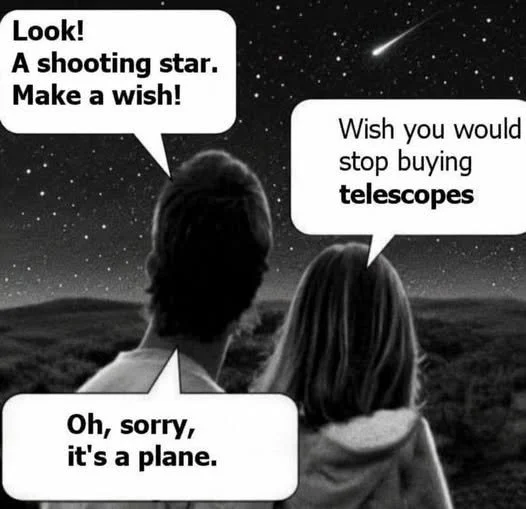
On the lighter side of astronomy …

What’s Up:
Sky Watching Tips from NASA
Provided by NASA Jet Propulsion Laboratory. Is usually updated anywhere from the first day of the month to the fifth day of the month. Check back to this linked image if it hasn’t been updated yet.
For more go to NASA Jet Propulsion Laboratory webpage: What’s Up: Skywatching Tips From NASA

This article and images are distributed by NASA Night Sky Network
The Night Sky Network program supports astronomy clubs across the USA dedicated to astronomy outreach.
Visit nightsky.jpl.nasa.gov to find local clubs, events, and more!
November’s Night Sky Notes: Light-Day Away
By Kat Troche
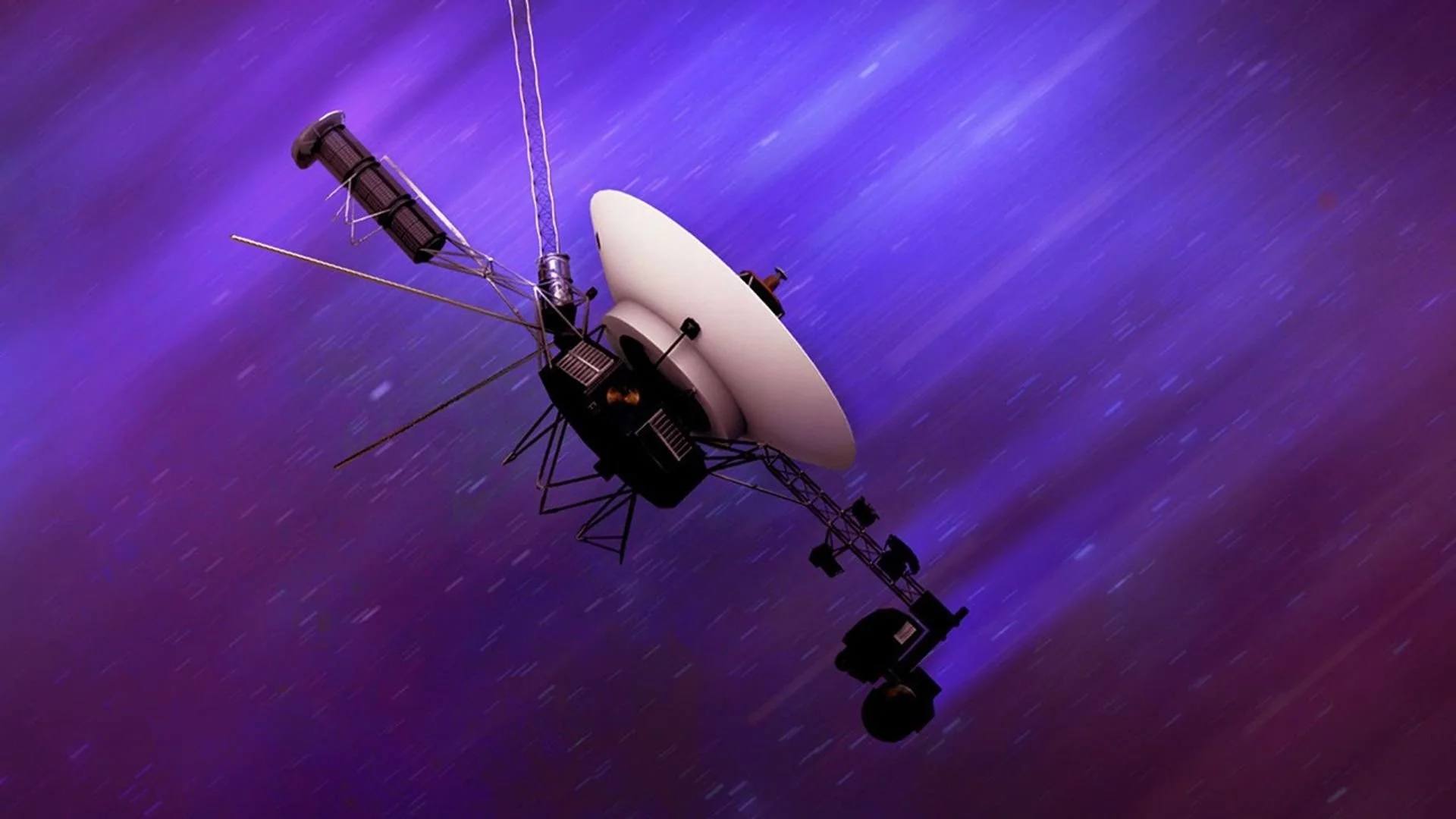
A travel poster of The Grand Tour. Credit: NASA/JPL
Twin Travelers
In 1977, NASA launched twin spacecraft Voyager 1 and 2, taking advantage of a once-every-175-year planetary alignment of the four largest planets in our solar system: Jupiter, Saturn, Uranus, and Neptune. Using six gravity assists between them, this Grand Tour gave us up-close views of the gas and ice giants, including several moons. By the 1980s, the two probes went their separate ways at Saturn. As Voyager 2 continued toward Uranus and Neptune, Voyager 1 grabbed one more portrait of the solar system (excluding Mercury and Mars), including a final image of the pale blue dot we call home.
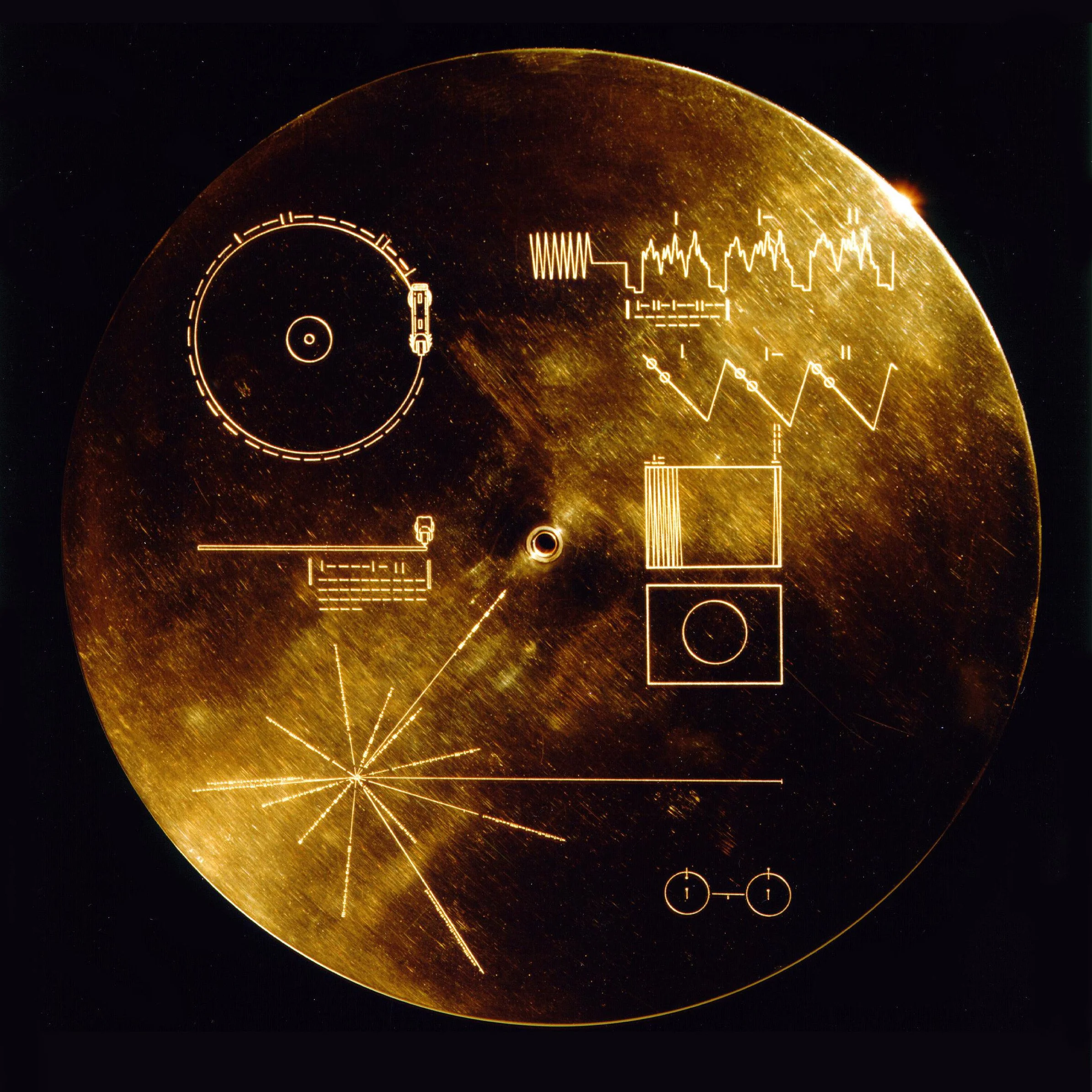
The Golden Record cover shown with its extraterrestrial instructions. Credit: NASA/JPL-Caltech
Playlist
“Hello from the children of planet Earth.”
Every good road trip needs some music to match. In this case, each craft carries the Golden Record, a 12-inch phonograph record with spoken greetings in 55 languages, 27 musical tracks, 116 images, and other sounds from Earth. Each record is protected by an outer cover featuring etchings showing our Sun's location relative to 14 pulsars, along with instructions on how to play it. The design used various metals to protect the information encoded from space radiation: the record used copper and gold plating, and the cover used aluminum. The cover was electroplated with an ultra-pure sample of the isotope uranium-238. Uranium-238 has a half-life of 4.468 billion years.
Are We There Yet?
Did you know that a light-minute is a measure of distance, not time? In August 2012 and November 2018, Voyager 1 and 2 crossed the heliopause, the boundary where the Sun’s solar wind meets the interstellar medium. Using NASA’s Deep Space Network, Earth communicates with both spacecraft and tracks each on its journey. At the time of this article, the Canberra antenna tracked Voyager 1 at 25.80 billion km, or just over 16 billion miles.
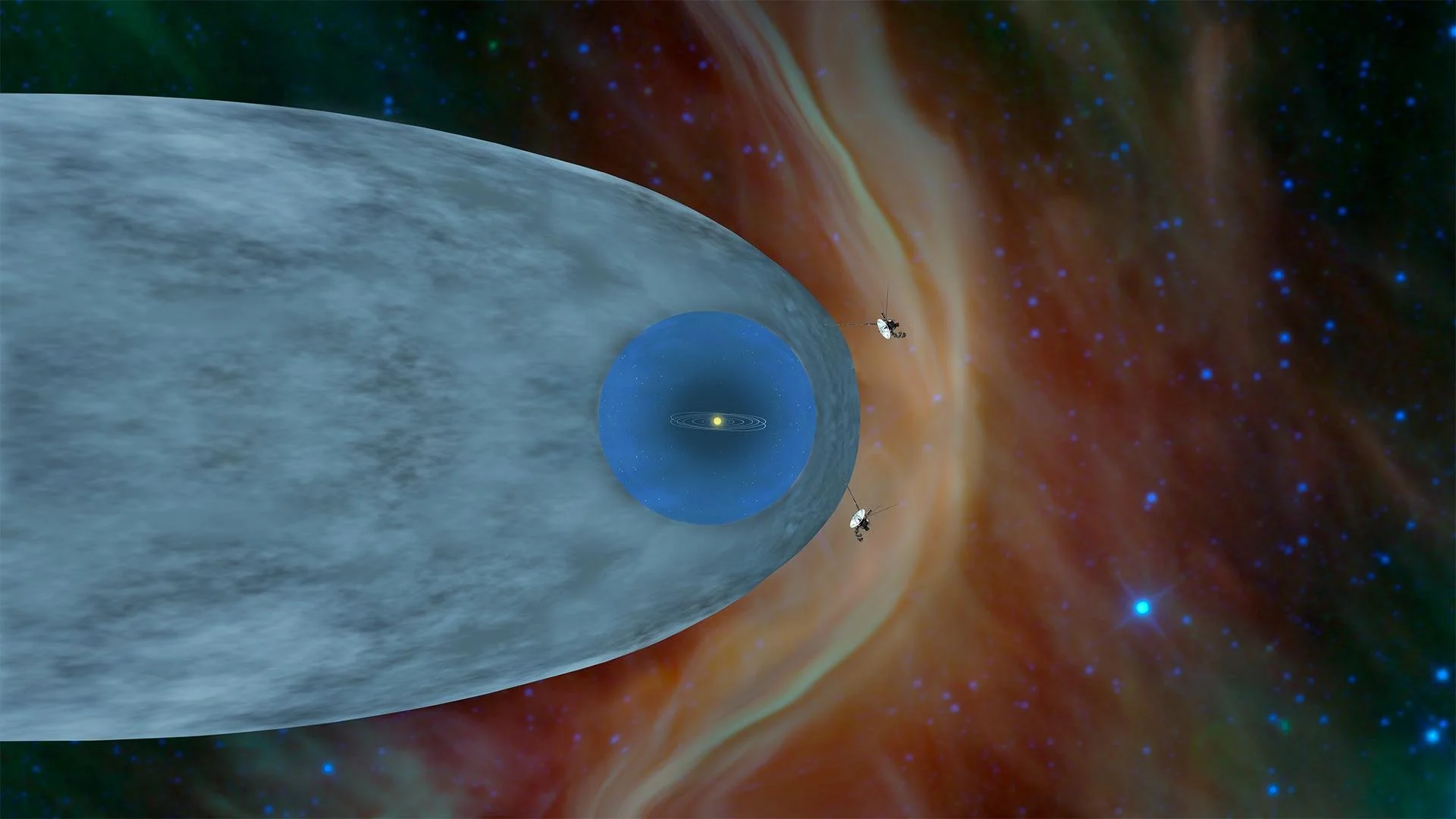
This illustration shows the positions of NASA's Voyager 1 and Voyager 2 probes outside the heliosphere, a protective bubble created by the Sun that extends well past Pluto's orbit. The red wave in front of the light blue heliopause is the bow shock. Credit: NASA/JPL-Caltech.
On November 18, 2026, 49 years after its launch, Voyager 1 will cross the one-light-day mark, 16.1 billion miles from the Sun. You may have heard the term light-year in your favorite sci-fi movie or show, or when stargazing and referring to an object outside of our solar system. This video best demonstrates the different distances between the inner solar system, outer solar system, and beyond, using light measurements. Additionally, track each Voyager spacecraft here.
You can get a real understanding of what a gravity assist might be like with our Gravity Assist activity and learn what it’s like to measure a “light minute” with our Measuring a Kid Minute activity guide!
Wishing all our ASTRA members a Happy Thanksgiving and Clear Skies.
Did you know the first Thanksgiving was in 1621?
For the Wampanoag people, who had inhabited the coastal ecosystems of present-day Massachusetts for thousands of years, tracking the sky was deeply intertwined with an ecological calendar. Long before European instruments arrived, Indigenous science relied on meticulous naked-eye astronomy:
Image by Jim Webster using Meta.AI
Deep-Sky Objects in November
Chasing Starlight Through the NJ Crisp: A November Deep-Sky Guide
As the autumn chill settles across the Garden State, November brings some of the sharpest, most transparent night skies of the year. The heavy, humid haze of summer gives way to crisp air, offering backyard astronomers and astrophotographers a brilliant window into the deep cosmos.
Whether you are setting up gear in a suburban backyard or heading out to dark-sky pockets near the coast and the pines, November delivers an incredible transition sky—showcasing majestic late-fall galaxies overhead alongside early-arising winter nebulae just as the night deepens.
Highlights of the November Deep-Sky Tour
1. The Crown Jewels of Autumn Galaxies
The Andromeda Galaxy (M31): Sitting 2.5 million light-years away, our neighboring spiral galaxy is an unmistakable naked-eye smudge under rural skies and a sweeping vista in binoculars or wide-field telescopes. Look for its bright core and tiny satellite companions, M32 and M110.
The Triangulum Galaxy (M33): A gorgeous face-on spiral in Triangulum. Because of its low surface brightness, it demands dark skies—making a trek toward New Jersey's protected open spaces well worth the effort to trace its faint spiral arms.
2. Dazzling Star Clusters
The Double Cluster in Perseus (NGC 869 & NGC 884): A breathtaking pairing of two open clusters packed with hundreds of blazing blue-white stars and striking orange supergiants. They fit entirely within a low-power eyepiece field.
The Pleiades (M45): Climbing high into the east by mid-evening, the Seven Sisters are unmistakable. Binoculars reveal a cascade of diamond-blue stars, while long-exposure imaging uncovers the ethereal blue reflection nebulosity woven through the cluster.
3. Harbingers of Winter
The Great Orion Nebula (M42): Though traditionally a winter icon, Orion breaches the eastern horizon late in the evening by November. Even in a modest scope, M42’s glowing emerald-tinted gas clouds, dark dust lanes, and the embedded Trapezium cluster make it the premier diffuse nebula in the sky.
Practical Tip for New Jersey Observing in November
Fight the Dew: Temperatures drop fast once the sun goes down, and New Jersey's coastal humidity can fog up optics quickly. Keep dew shields and heating strips ready.

Let’s Explore Space
The Latest News on Astronomy and Sky Watching — By StarWalk Astronomy App - Sky Tonight

Tonight’s Sky: No longer posting
October 2024 was the last updated posting of Tonight’s Sky. It is still available via YouTube.
Linked is the twelve-month playlist on YouTube.
Any suggested replacements, let me know.
Visit the STScI, which produced Hubblesite.org video overviews for Tonight’s Sky.
They can be found both on Facebook and stsci.edu.
Submissions Welcome
Members are invited to submit articles, photos, news, or stories for inclusion with Astral Projections Online. Please contact the ASTRA Webmaster.