Astral Projections Online October 2026
Check our Website for updated content at www.astra-nj.com
Club Presentations Wanted:
Does anyone have any astronomy items of interest to share with the membership?
Please let us know at Club Contacts. For 2026, we still have some open slots.
Club dues and membership.
If you renew after March 31, you will be renewed as a new member.
Forms can be found on the website or here.
ASTRAL PROJECTIONS ONLINE (APO for short) is an email-linked publication for members only. If you exit APO to the club website or other resources you will need to use the emailed link again to get back to it. If you wish to retain a copy please bookmark or refer back to the email. We will make all efforts to post by the first week of the month.
Submissions Welcome: Members are invited to submit articles, photos, news, or stories for inclusion with Astral Projections Online. Please contact the ASTRA Webmaster.
Event Calendar
Event Cancellations: Members will receive email notifications of event cancellations.
Upcoming October ASTRA Meeting
ASTRA's next meeting will be Friday, October 9, 2026, at 7:00 PM EST.
Upcoming Public Star Parties
October 3 - Island Beach State Park Area 2 - 8 PM
Seaside Park Environmental Committee
October 17 - Jake’s Branch - 7 PM
November 7 - Patriots Park - 6 PM
November 14 - Jake’s Branch - 6 PM
Upcoming Public, County & State Park Presentations 2026
Public Outreach Presentations: If any member wants to support ASTRA's public outreach efforts, please let Vinny, Ro, or Jim know. Additional help for these events is always appreciated.
None for now.
County and State Park presentations require a registration fee; call the hosting park to reserve.

Website Updates …
Please visit our club website. We continue to have additional updates, if some content would be useful to members please let us know.
"We are so small between the stars, so large against the sky." — Leonard Cohen"
Leonard Cohen was a Canadian singer-songwriter, poet, and novelist

ASTRA Meeting - October 9 at 7 PM
Starting in September, we are back at Novins Planetarium at 7 PM.
ASTRA Member Phil Zoher will present his experiences with “Film Astrophotography”
Time permitting, we will have a secondary presentation.
Please support Novins Planetarium, patronizing their shows, who has supported us since the beginning of ASTRA.
Event Reports
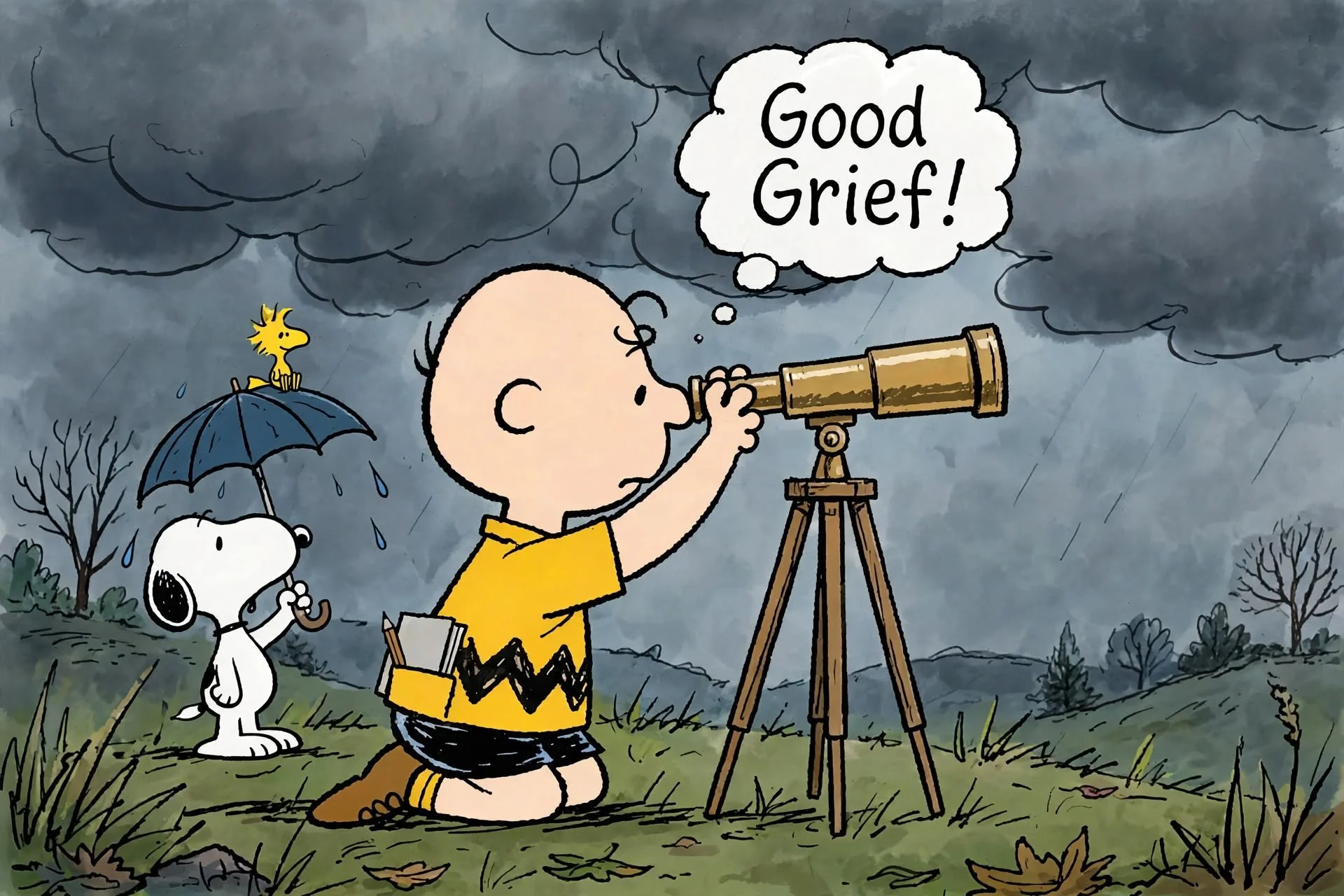
ASTRA’s Star Party at Jakes Branch on September 19 was canceled due to cloud cover. Let’s hope October has better conditions for us.
Image created on Meta.AI
September ASTRA Meeting Summary
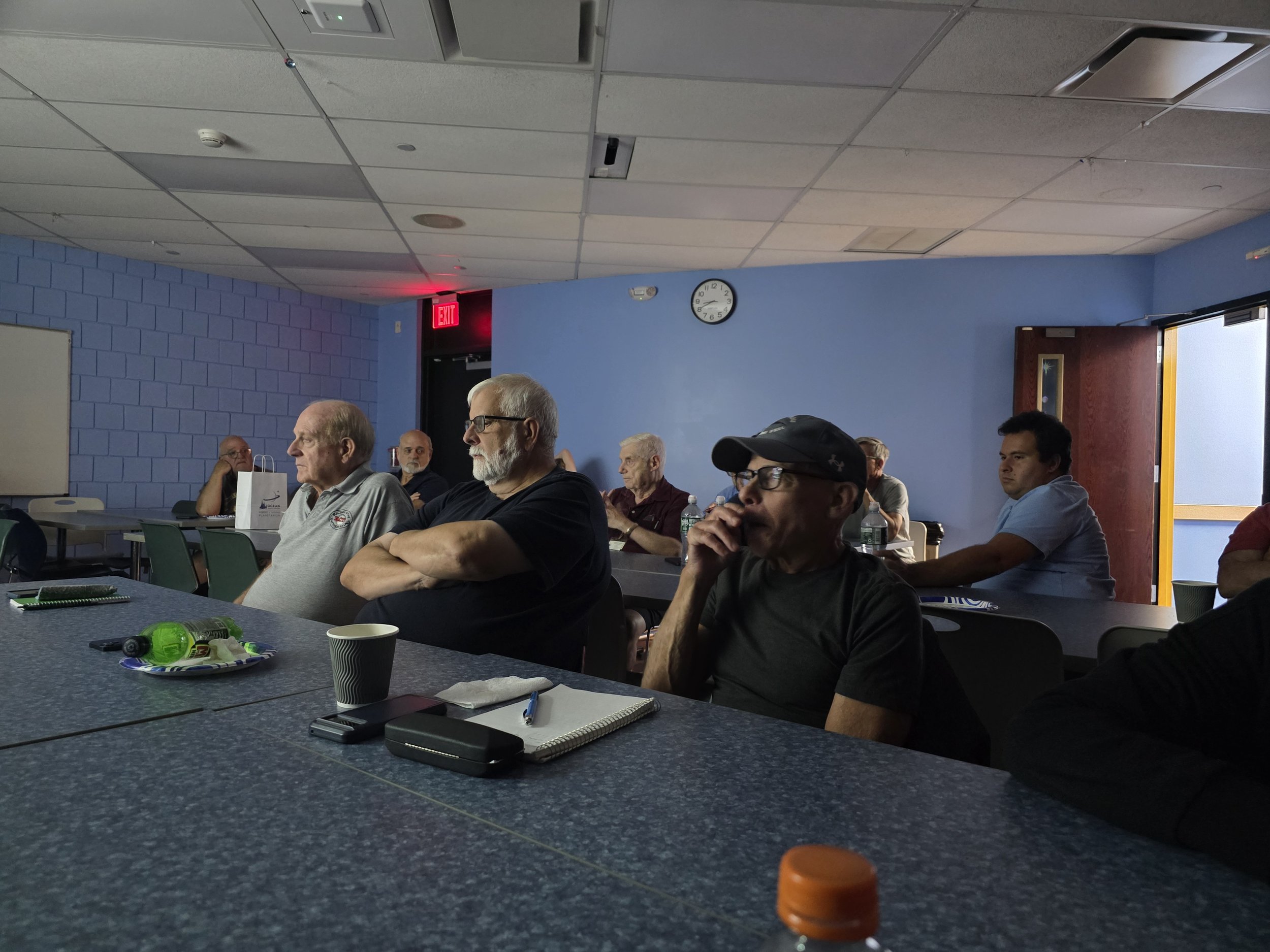
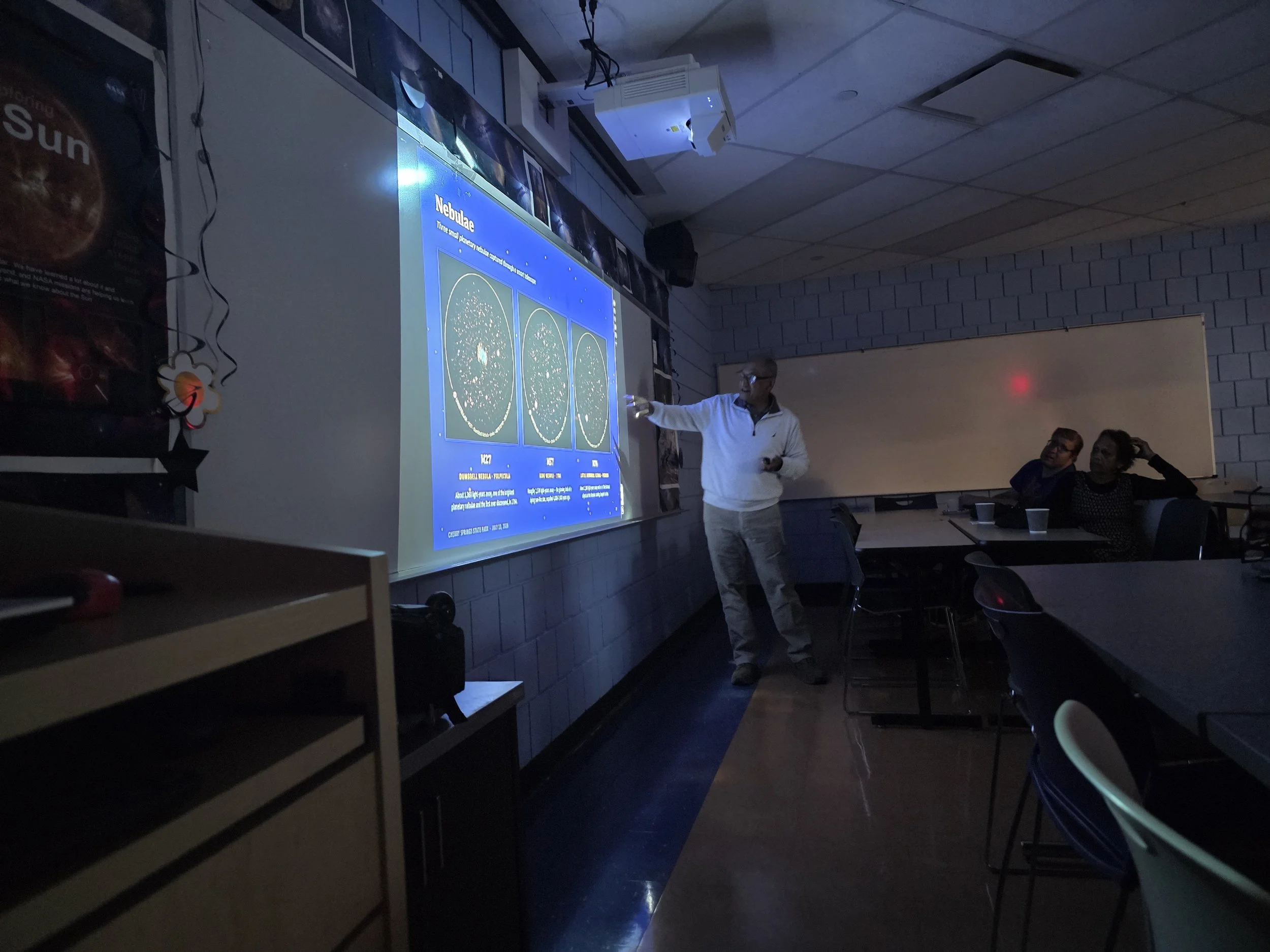
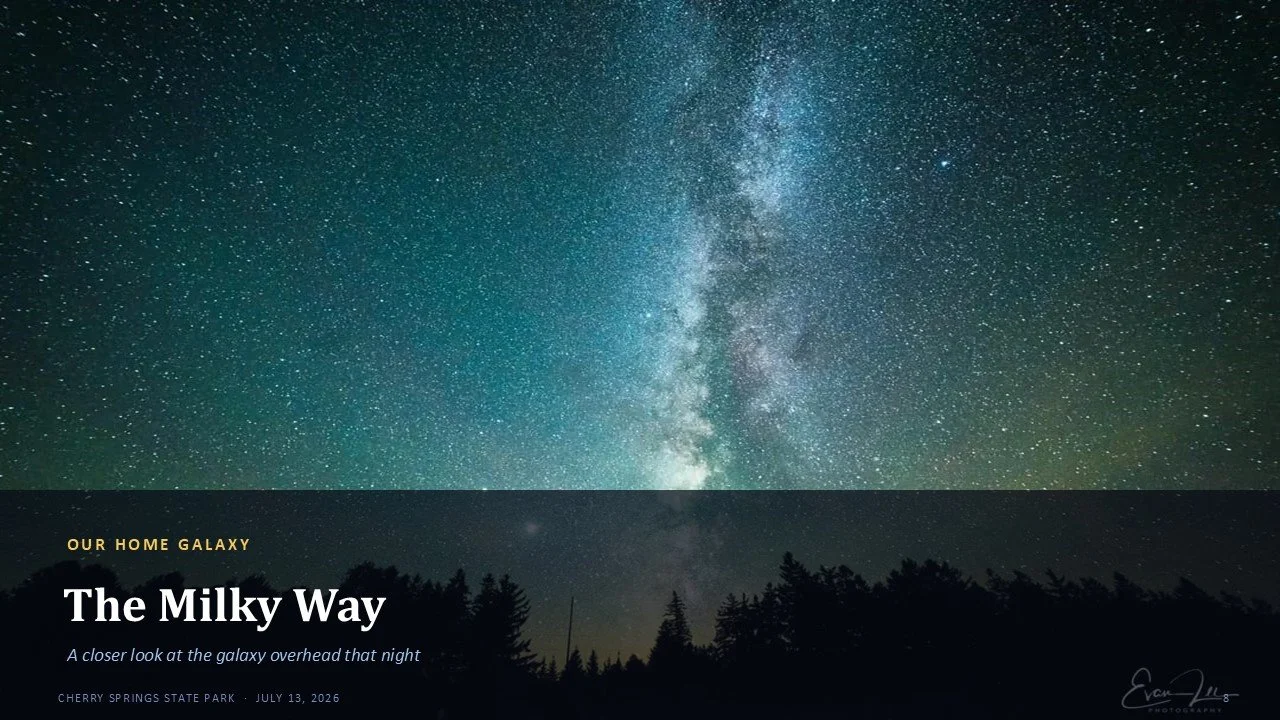
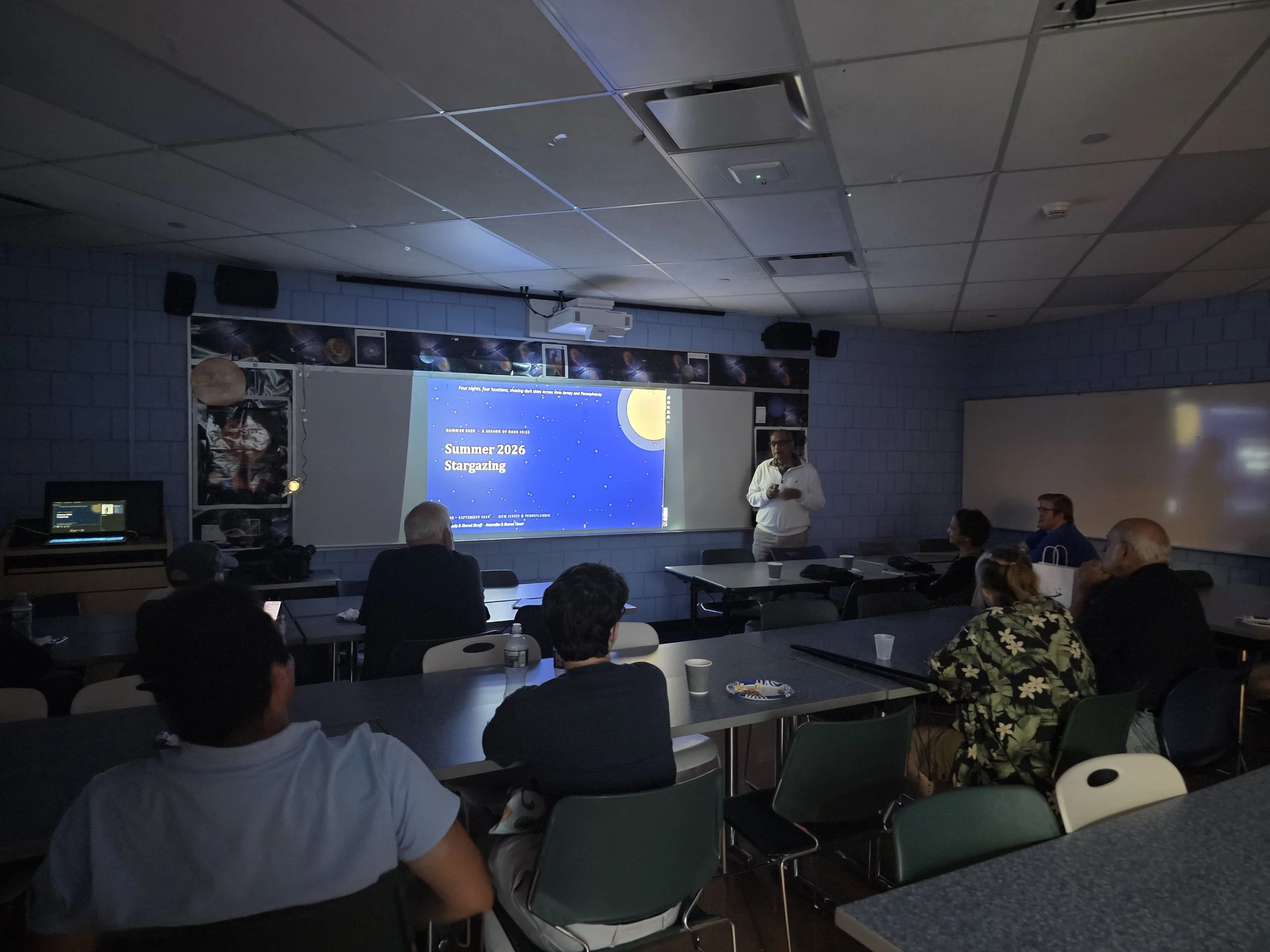
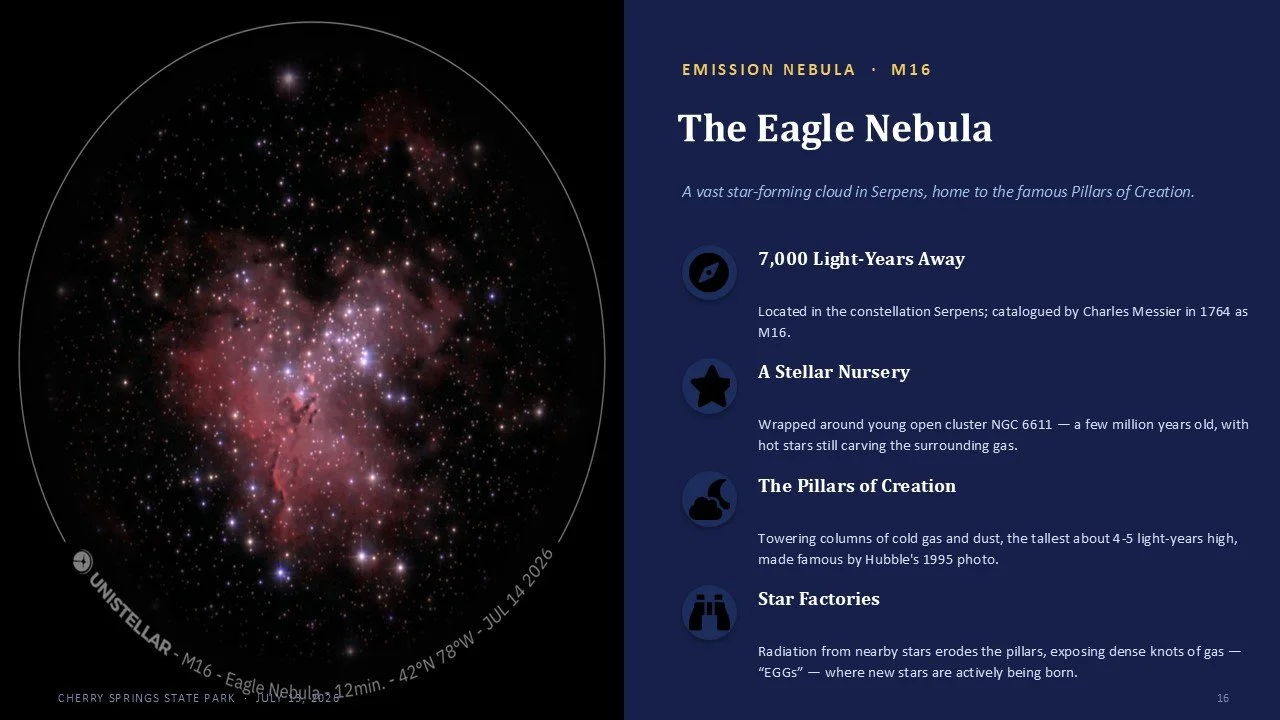
At September ASTRA, member Sharad Shroff presented an overview of his summer observations with his wife, Sandy. His review covered a trip to Cherry Springs State Park and introduced deep-sky images he captured with his new Odyssey Pro Smart Telescope.
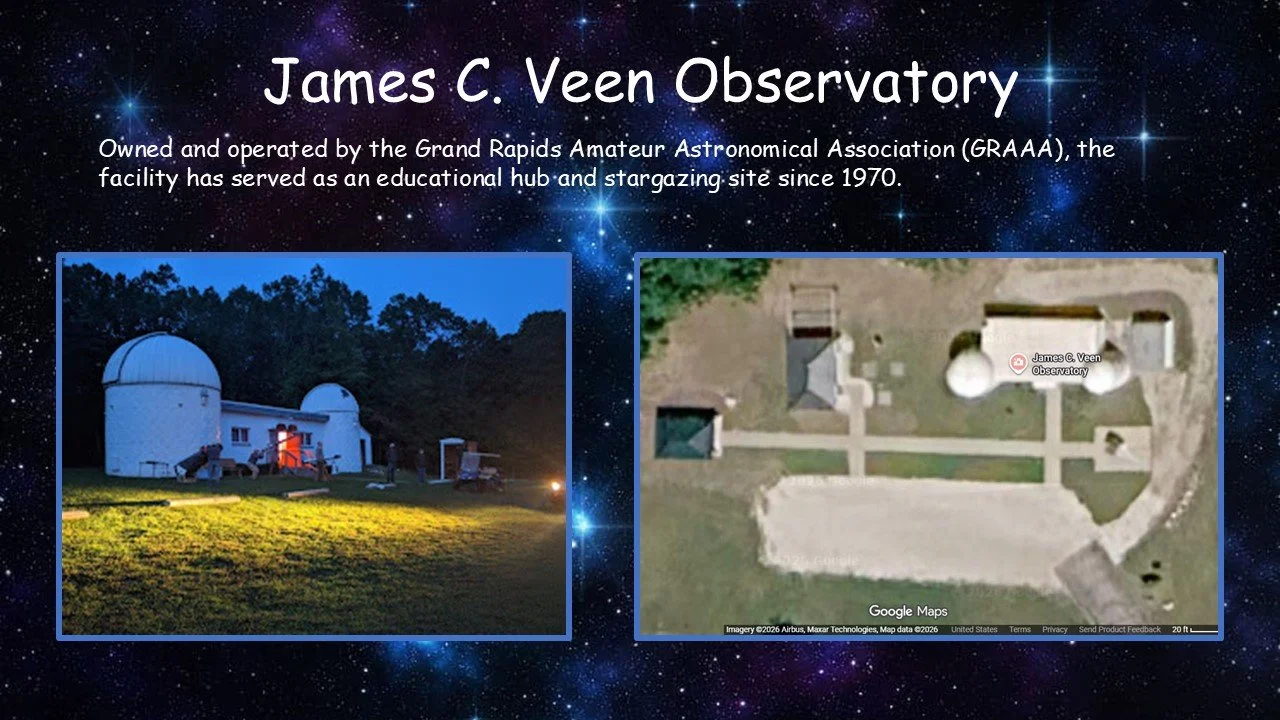
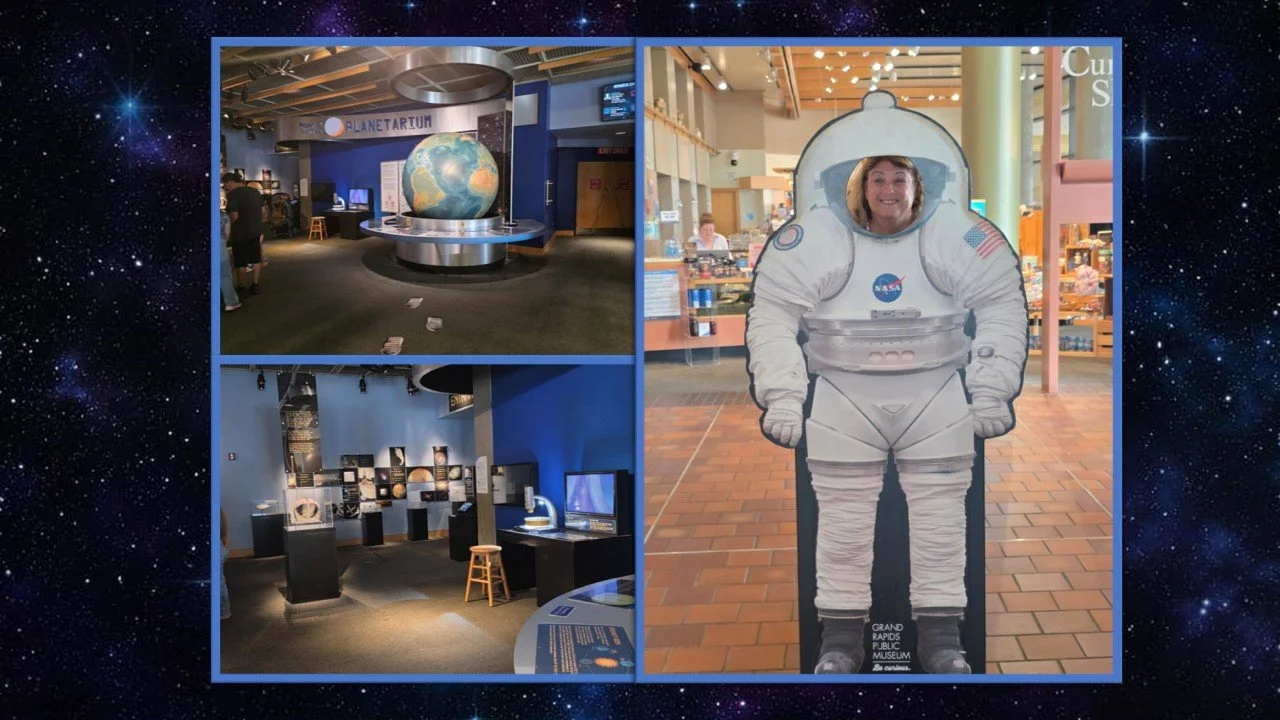
Jim Webster provided a short review of Gloria and his trip to Grand Rapids, Michigan. The trip included visiting the Roger B. Chaffee Planetarium and the James C. Veer Observatory.
Additional reviews were related to members’ experiences with the recent partial Solar and Lunar Eclipses.
Public Events and Presentations
Cancelled September events due to Jim Webster having the Flu.

AstroMag August 2026
A free online publication for Amateur Astrophotographers.
The Moon: Our Nearest Neighbor
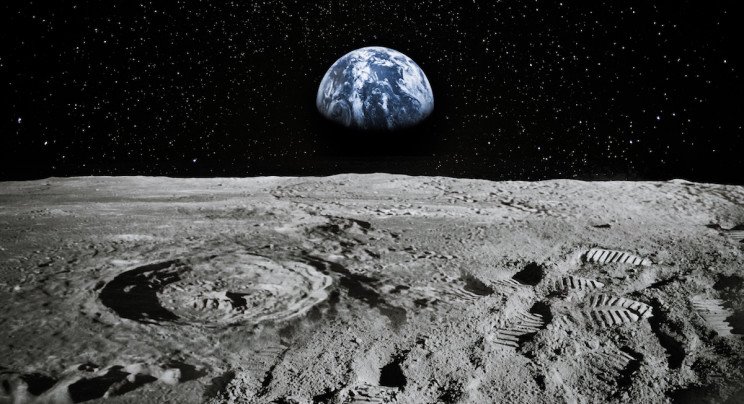
Let’s explore some interesting features, facts, or myths about our nearest neighbor, the Moon. Without it, life on Earth would be totally different, if not at all.
The Moon's Brightest Spot: Aristarchus Crater
Note: This article is partially AI-generated using Meta.AI.
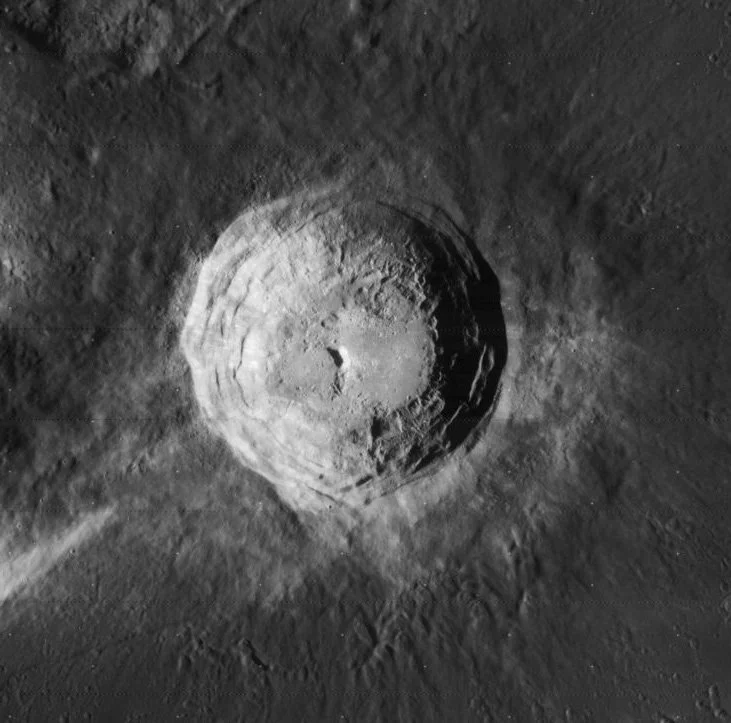
The Aristarchus Crater
A 40km jewel on the Aristarchus Plateau — history, geology. Brighter than its surroundings by a factor of two, it has startled observers for centuries.
Naming & Historical Context
Aristarchus of Samos (310–230 BC) — the Greek astronomer who first proposed a heliocentric system — lends his name to the brightest large crater on the Moon. It is a fitting tribute: Aristarchus was the first to argue that the Sun was the center, and his namesake is the first lunar feature to catch the eye in Earthshine.
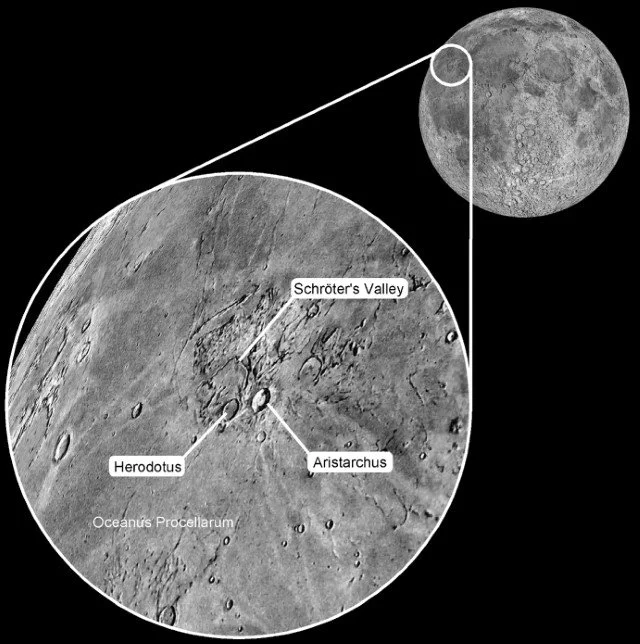
Aristarchus Crater & Schröter’s Valley
Aristarchus is exceptionally young and stands out as the most reflective, brightest feature on the lunar near side. Right next to it is Schröter’s Valley, the Moon's largest winding volcanic rille, resembling a giant cosmic tadpole carved into the plateau.

The name was formalized by Giovanni Riccioli in 1651 in Almagestum Novum, his influential lunar nomenclature that survives today. Riccioli, a Jesuit astronomer, mapped the Moon with Francesco Grimaldi and assigned names of philosophers and scientists to prominent craters. Before Riccioli, Michael van Langren (1645) called it “Balthasaris Citterae” after a patron, and Hevelius (1647) labeled it “Mons Porphyrites” — the purple mountain — noting its peculiar hue.
Wood's Spot — 1911
In 1911, physicist R.W. Wood discovered the plateau appears dark in ultraviolet photographs — a sulfur-rich pyroclastic deposit absorbing UV. Amateur astronomers still call it "Wood's Spot" when they glimpse its orange-brown tint.
Aristarchus has the longest record of Transient Lunar Phenomena (TLP). From medieval chronicles of "the Moon blushing" to Sir William Herschel's 1783 reports of "volcanoes" on the Moon, to modern ALPO catalogs, over 120 TLP reports cluster here. The Apollo 15 astronauts detected radon outgassing over Aristarchus — a rare hint that the Moon is not entirely dead.
IAU formal adoption: 1935. Previous provisional names were dropped by international agreement.
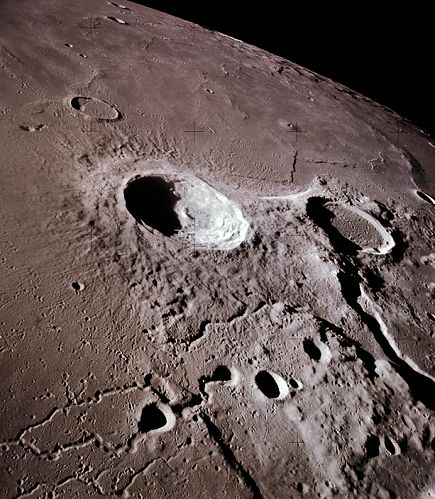
Physical Features
Aristarchus is unmistakable: twice as bright as the average lunar highlands, with a high albedo of ~0.25 vs ~0.12 mean. Its youth (~450 million years, Copernican) means its ejecta hasn't been darkened by space weathering — micrometeorite gardening and solar wind sputtering that gradually darkens lunar soil.
The crater exhibits classic complex-crater morphology. Terraced walls step down 2.7 to 3.5 km from rim to floor — deeper than the Grand Canyon (1.8km). The walls show slump blocks and avalanche scars, especially on the east. The floor is relatively flat but hummocky, dusted with impact melt.
Apollo 15, Aristarchus (right, brilliant) and Herodotus (left, lava-flooded, 35km) photographed from lunar orbit, August 1971. North is up. The sinuous Vallis Schröteri snakes north from Herodotus. NASA / JSC.
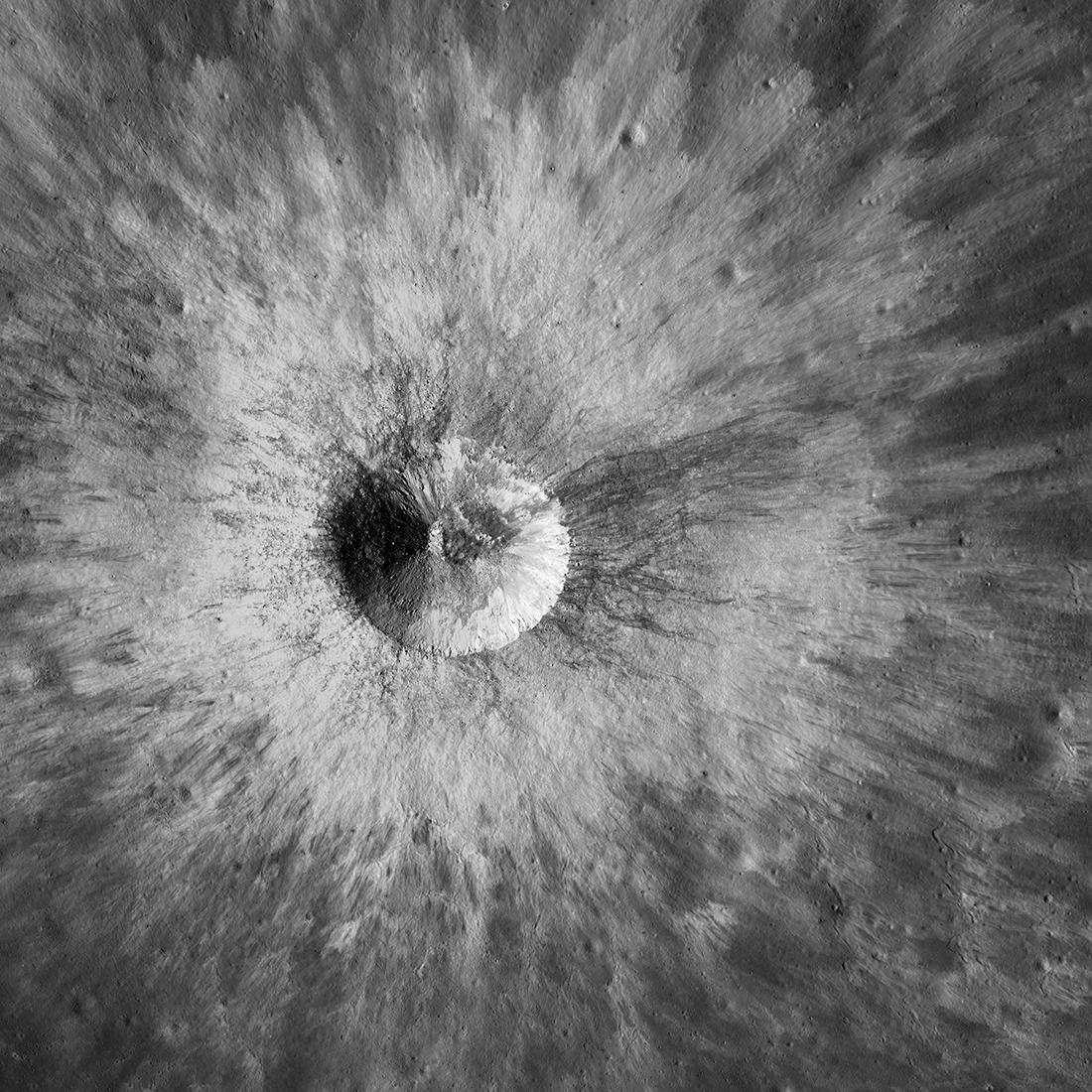
At its center rises a central peak complex — not a single peak but a 2km-long ridge of shattered anorthosite, the Moon's primordial crust floated to the top of the magma ocean 4.4 Gyr ago. In high Sun, the peak casts a dagger shadow across the floor.
LROC NAC Central peak detail: striated, fractured anorthosite blocks uplifted from depth. Illumination from low west highlights layering. The peak itself stands ~300m above the floor. NASA / GSFC / ASU.
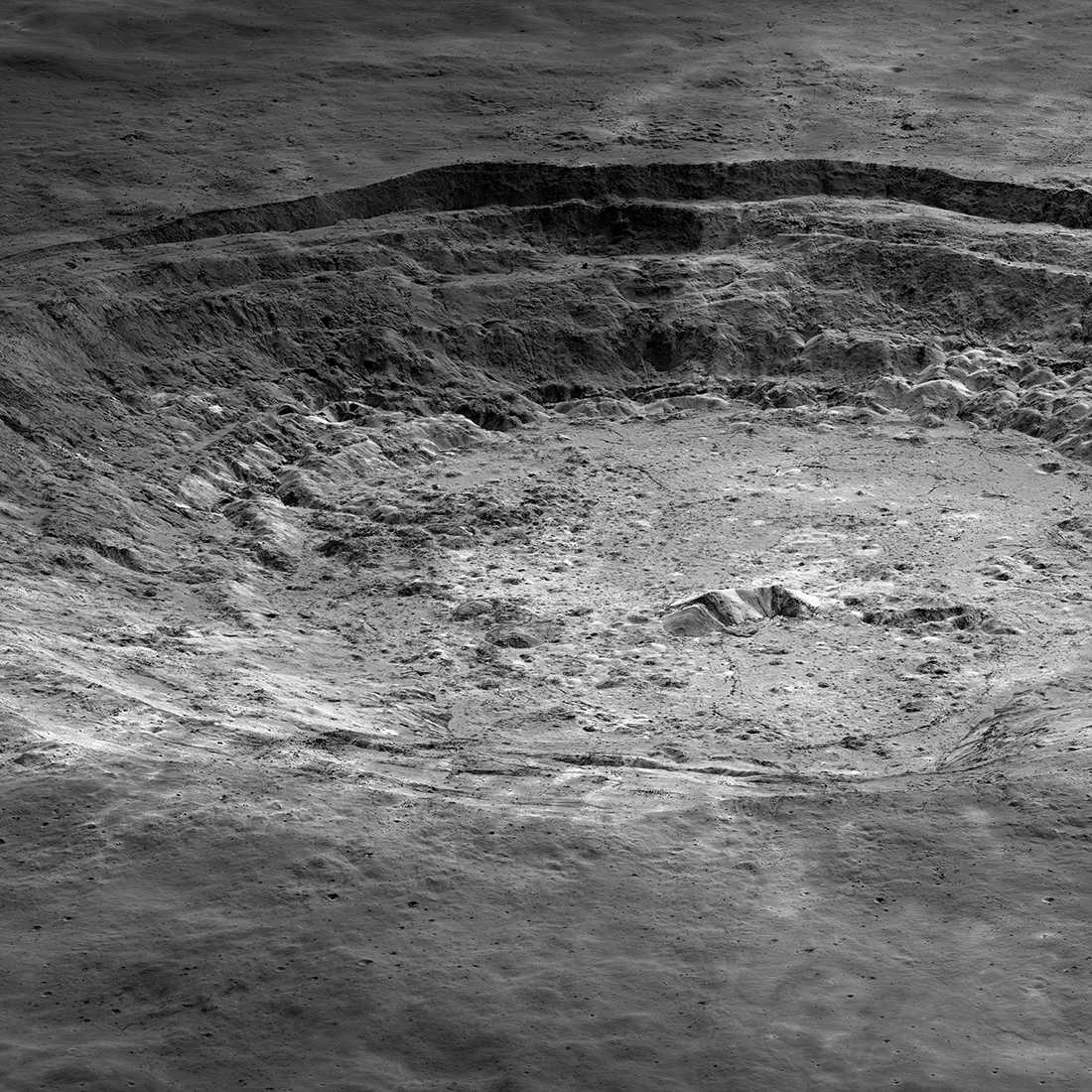
The Aristarchus crater (40 kilometer diameter, 23.73°N, 312.51°E) and plateau is one of the most geologically complex areas on the Moon. In this amazing picture, the LRO spacecraft slewed 62° (west-to-east) looking across the crater. Image: NAC M1259297876LR [NASA/GSFC/Arizona State University].
Surrounding Area
Aristarchus does not sit on a flat mare. It sits on the Aristarchus Plateau — a rectangular island 170 × 220 km across and nearly 2 km high, tilted up above Oceanus Procellarum, the vast dark Ocean of Storms. The plateau is the most geologically diverse patch on the near side.
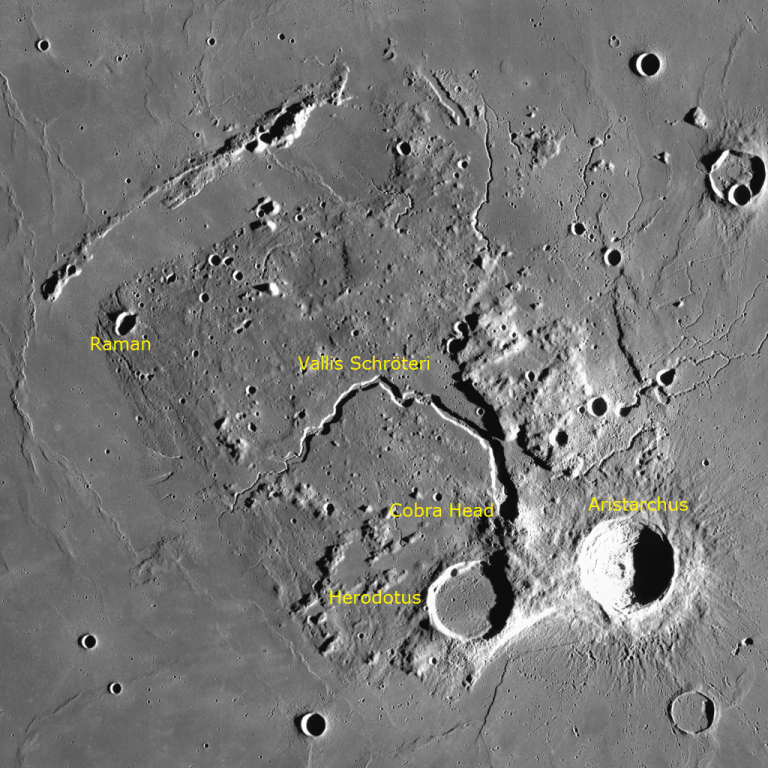
LRO WAC MOSAIC: The Plateau: Aristarchus (brilliant, lower right), Herodotus (flooded, center), and Vallis Schröteri — the Cobra Head and 160km sinuous rille — curling north. Rimae Aristarchus fractures the plateau. LRO / NASA.
Herodotus • 35km The Flooded Companion
Lava-flooded, flat-floored crater immediately east of Aristarchus. Its western rim breached by mare lavas. A benchmark for comparing fresh vs. flooded crater morphology at the same illumination.
Vallis Schröteri • 160 km The Cobra Head Rille
Largest sinuous rille on the Moon. Starts at a 6km crater, "Cobra Head" north of Herodotus, snakes north then northwest. A collapsed lava tube/channel, 6- 10 km wide, up to 1km deep.
Crisscrossing the plateau are Rimae Aristarchus — a network of narrow rilles and fractures radial to the plateau uplift, likely tectonic stresses from the plateau's doming.
Most striking is the pyroclastic deposit — the plateau's dark mantle, covering ~50,000 km², the largest on the Moon. It is glassy, sulfur-rich volcanic ash from fire-fountain eruptions 3.5 Gyr ago. In multispectral data, it is orange-red, anomalously rich in thorium (10-14 ppm) from KREEP — the last dregs of the magma ocean — and ilmenite (FeTiO₃), a potential resource for lunar ISRU oxygen extraction.
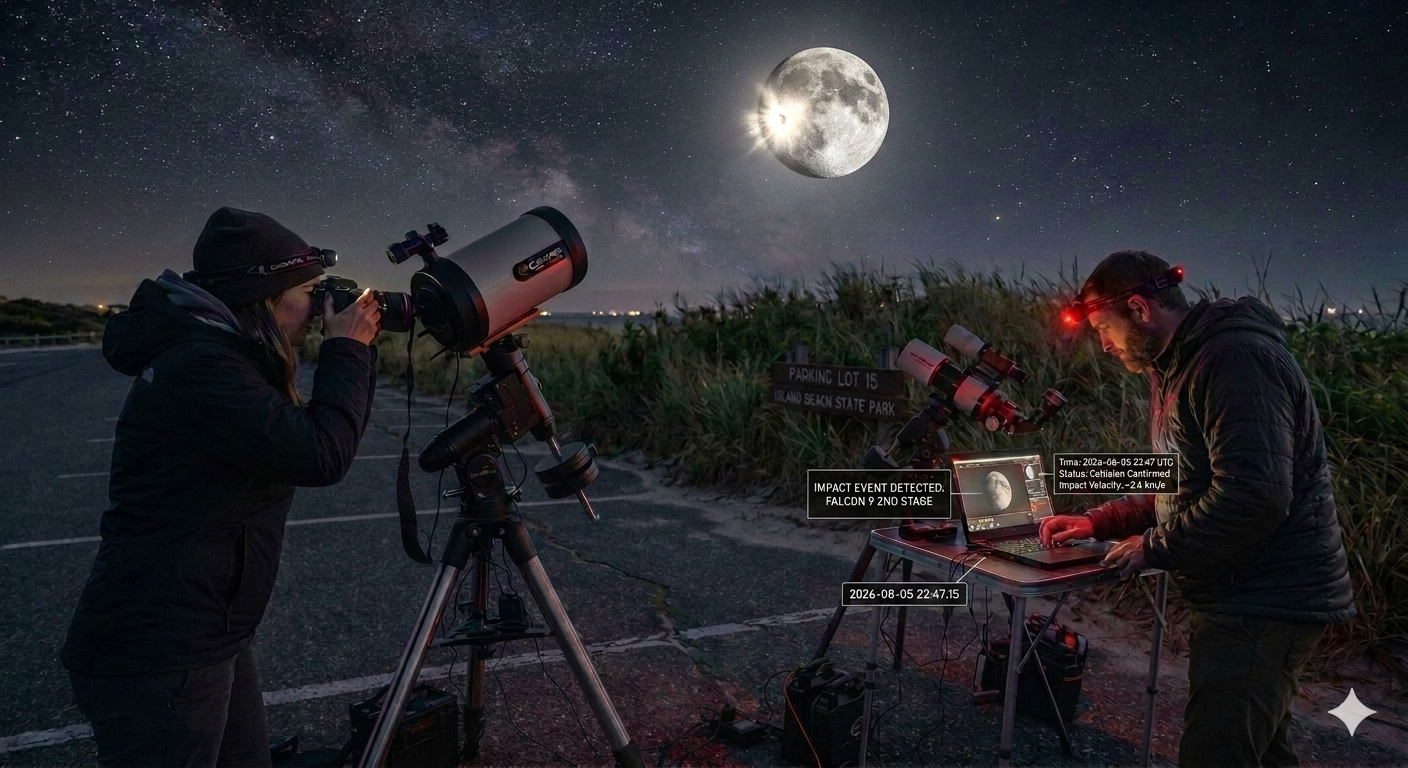
Observing Guide
Tailored for Toms River — latitude ~39°N, typical seeing. Aristarchus is forgiving: bright, high-contrast, tolerant of light pollution.
The best time to observe the Aristarchus Crater is during the waxing or waning gibbous phase, specifically around 11 to 13 days into the lunar cycle
Traditional Telescopes
Aperture: 4-inch (100mm) minimum recommended. 6–8" ideal.
Low power: 40–60× — locate the plateau as a bright island in Procellarum
Medium: 100–150× — terraces, central peak shadow, Herodotus
High: 200×+ — striations on walls, Cobra Head, Rimae on best nights
Use lunar filter or neutral density at full Moon — Aristarchus glares.
Binoculars
Naked eye: visible as brightest spot NW of center — even at waxing crescent
7×35 – 10×50: plateau resolved as distinct light patch, Herodotus dark
Wood's Spot: orange-brown tint visible in 10×50 under steady sky
Earthshine: during thin crescent (days 2-4, 27-29), Aristarchus still blazes in dark side
Mount binoculars for >10× — lunar detail rewards stability.
Smart Telescopes
Seestar S50 / S30: Lunar mode, 1–2ms exposure, low gain (10–30). Stack off.
eVscope 2: 34×47 arcmin FOV frames plateau perfectly. Use Enhanced Vision off for Moon.
Tips: Focus on nearby crater edge, not Aristarchus itself (blooms). Capture 10s video, stack best 25% in post.
Color: Boost saturation +15 to reveal pyroclastic orange.
Share instantly — smart scopes excel
Scientific Significance
Aristarchus is more than pretty — it is a window into the Moon's volatile history. In 1971, Apollo 15's orbital mass spectrometer detected a radon-222 outgassing event over Aristarchus — decay product of uranium deep underground. It was the first in-situ evidence that the Moon still degasses, however faintly.
Later, Lunar Prospector (1998–99) mapped thorium enrichment over the plateau from orbit via gamma-ray spectrometer — confirming KREEP-rich volcanism. The plateau's pyroclastic glasses are among the most thorium-rich on the Moon, 3× that of typical mare.
Sources & Further Reading
• NASA LRO / LROC — Aristarchus crater NAC M111578606R, WAC mosaic
• USGS Astrogeology — Gazetteer of Planetary Nomenclature, Aristarchus
• IAU — Riccioli Almagestum Novum (1651) naming, formal 1935 adoption
• Wikipedia — Aristarchus (crater), Aristarchus Plateau, Vallis Schröteri
• BBC Sky at Night — "How to observe Wood's Spot" (2023)
• IOPscience — Ling & Zhang (2021), pyroclastic deposits thorium mapping
• APOD — Apollo 15: Aristarchus and Herodotus (2012-02-28)
• NASA Apollo 15 Preliminary Science Report — radon outgassing

Outreach material below is distributed free for public outreach.
Astronomy for ASTRA Kids

NASA Science
For our young ASTRA members, NASA has online webpages for kids, an educational resource for fun learning, and arts & crafts.
Highlighting NASA for Kids
NASA resources for elementary school students can be found at NASA KIDS SCIENCE. A place for learning, games, and video resources.
Sky and Telescope has resources for Kids as well, tailored for homeschooling.
Image by Quan-Yu Zang on Squarespace.
Around The Web
The Mid-Hudson Astronomical Association (MHAA) is a non-profit amateur astronomy club based in the Mid-Hudson Valley region of New York, dedicated to sharing the science and excitement of astronomy with members, students, and the general public.
They have presentations available on YouTube.
The Vera C. Rubin Observatory: A Powerful Eye on the Changing Cosmos, with Sandrine Thomas.
Dr. Sandrine Thomas presents the Vera C. Rubin Observatory’s early discoveries and explains how the LSST’s massive sky survey, record‑breaking digital camera, and advanced data pipeline reveal asteroids, supernovae, variable stars, and clues about dark matter and dark energy.
Presented with support from the Vassar College Physics & Astronomy Department (speaker and venue) and the Mid‑Hudson Astronomical Association (livestream and publication).
Dark Sky News

Latest News:
DarkSky New Jersey has now become a 501c (3). This now opens the doors for bigger and better things for the movement, correcting light pollution in New Jersey.
Recent article on light pollution, DarkSky Hopewell and DarkSky New Jersey: Princeton Magazine.
The Night Sky for October 2026
Sky & Telescope Astronomy Podcast
A new episode of the S&T Podcast is usually available on the fifth day of the month.
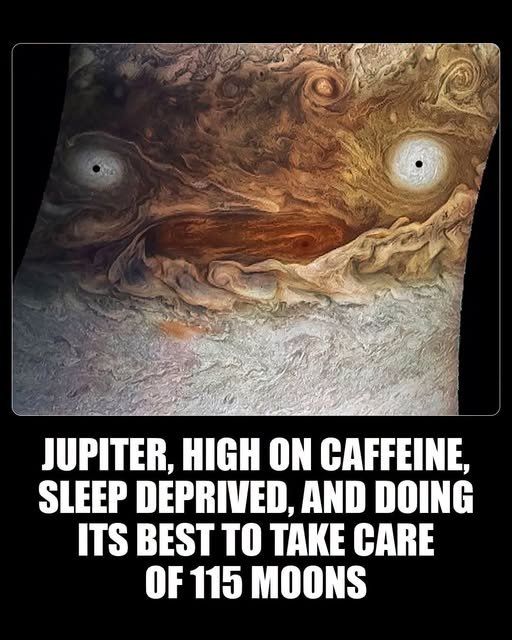
On the lighter side of astronomy …

What’s Up:
Sky Watching Tips from NASA
Provided by NASA Jet Propulsion Laboratory. Is usually updated anywhere from the first day of the month to the fifth day of the month. Check back to this linked image if it hasn’t been updated yet.
For more go to NASA Jet Propulsion Laboratory webpage: What’s Up: Skywatching Tips From NASA

This article and images are distributed by NASA Night Sky Network
The Night Sky Network program supports astronomy clubs across the USA dedicated to astronomy outreach.
Visit nightsky.jpl.nasa.gov to find local clubs, events, and more!
NSN Articles have returned for October.
October’s Night Sky Notes: Spooky Stargazing
By Kat Troche
The Ghoul -
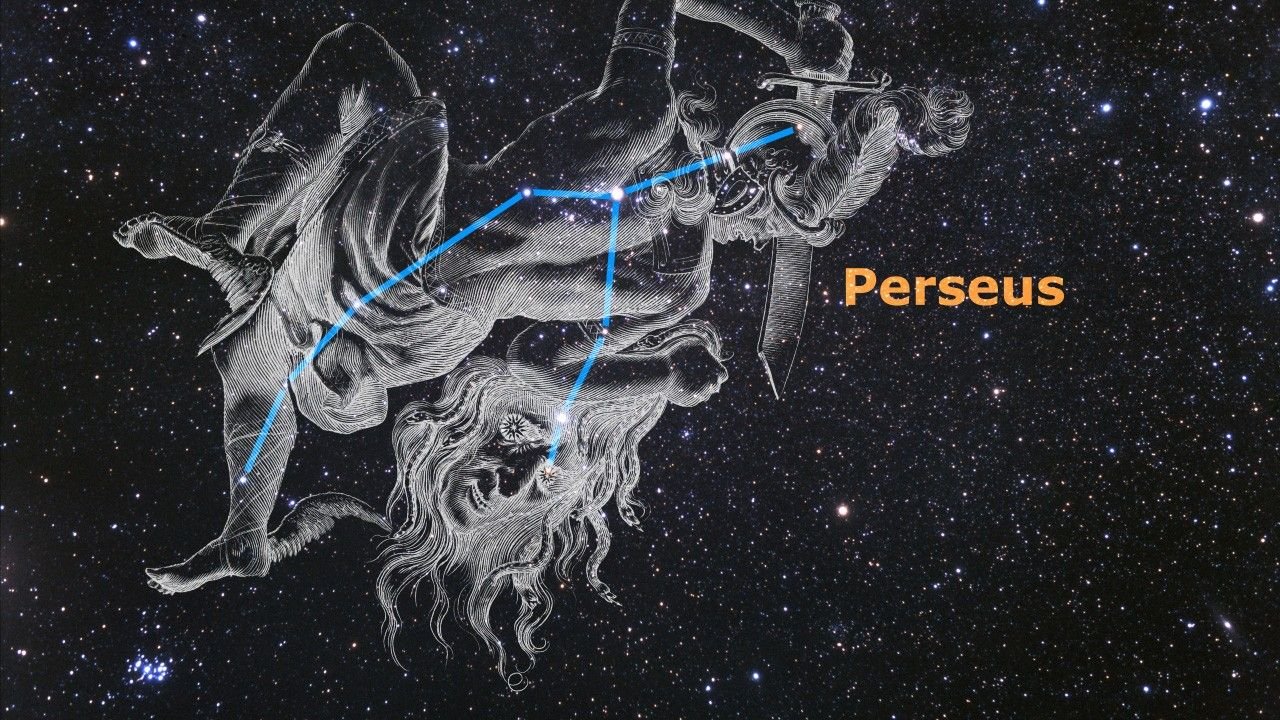
Located within the constellation Perseus lies a star called Algol, also known as ‘Demon Star’ or ‘The Ghoul’. You can spot this star during the autumn months, along with Cassiopeia and Andromeda in the northeastern sky, beginning after 9 PM. In Greek mythology, this star represents the ‘blinking eye’ of the gorgon Medusa. But how can a star blink?
Perseus holding the head of Medusa. Credit: NASA Science
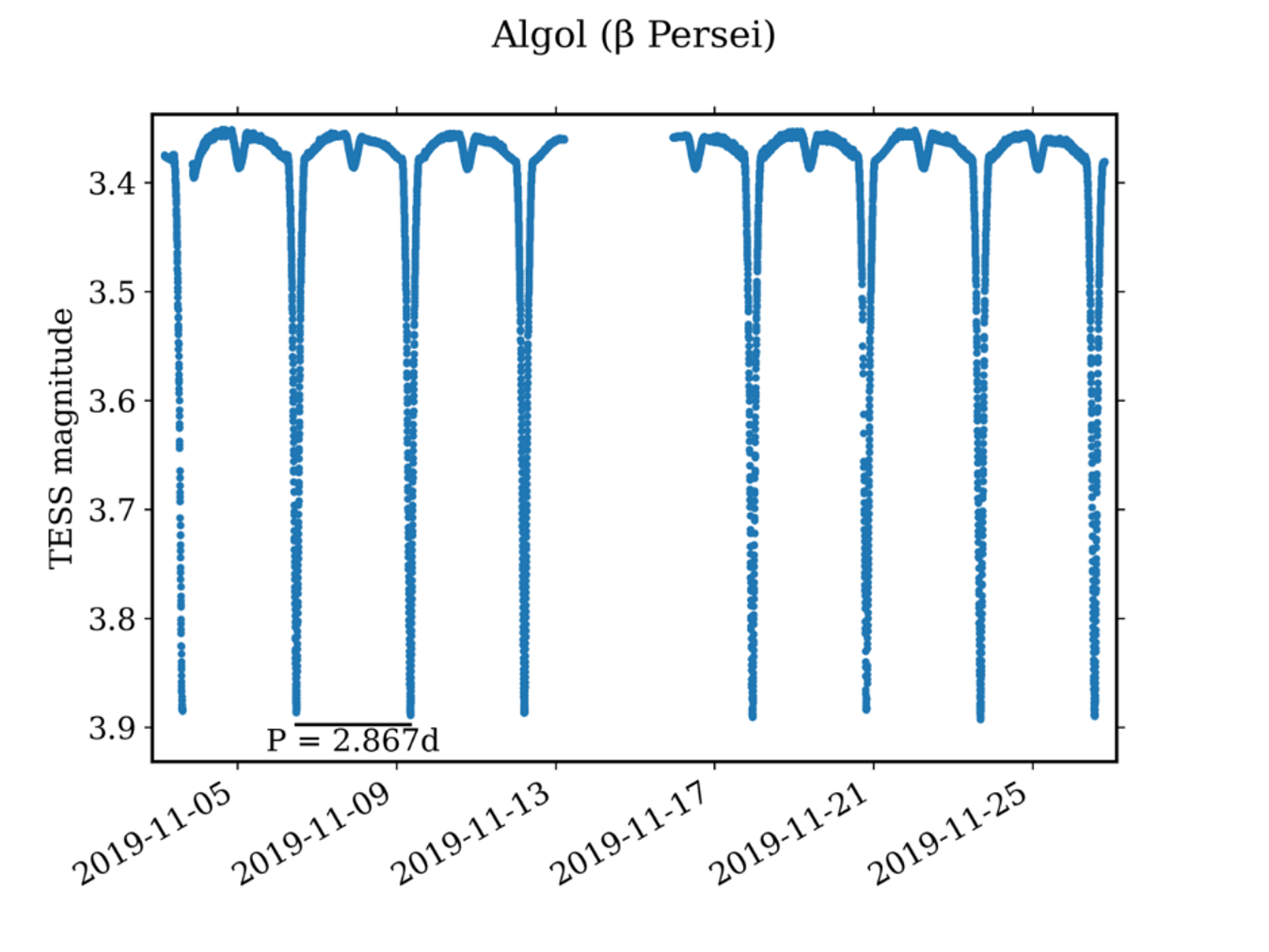
Algol is a triple-star system, with two of the three stars orbiting one another. This eclipsing binary causes the system to go from a bright +2.1 magnitude to a slightly dimmer +3.4 magnitude about every three days. Using data from NASA’s Transiting Exoplanet Survey Satellite (TESS) mission, this light curve shows the regular dimming, or Medusa’s ‘blinking eye’!
Light curve of the eclipsing binary star Algol recorded by NASA's Transiting Exoplanet Survey Satellite (TESS), stored on NASA’s Mikulski Archive for Space Telescopes (MAST). Credit: NASA/Wikipedia Commons
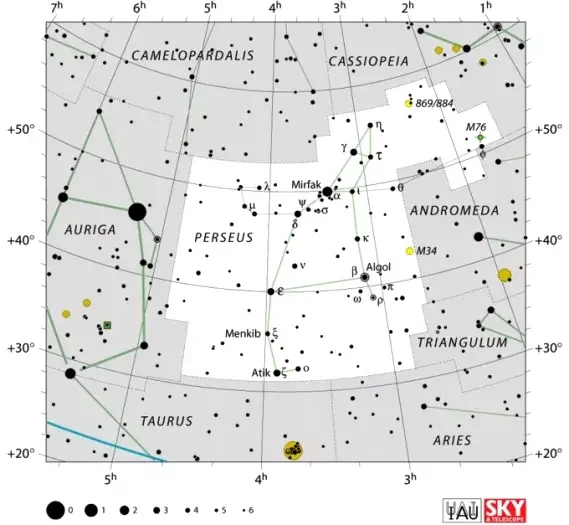
There is no shortage of resources on how to calculate the dimming – or minima – of Algol, from interactive charts to data plots. Find the one that works best for you. Because it has a similar magnitude of brightness, you can compare Algol’s brightness to the nearby star Almach (Gamma Andromedae) in Andromeda using a small telescope or binoculars.
Using the constellations Cassiopeia and Andromeda, locate Perseus. You can find Algol by using the star Almach as a guide. Credit: constellation-guide.com
Witch Head Nebula
Between the Eridanus and Orion constellations lies a spooky silhouette, illuminated by the star Rigel. IC 2118, or the Witch Head Nebula, is a reflection nebula about 900 light-years away from Earth. Because reflection nebulae rely on nearby starlight to appear visible, they can be difficult to see with the naked eye, especially if they are as far away as this one. While the Witch Head Nebula can’t be seen with the naked eye, telescopes with very large apertures and low magnification make it easier to catch under dark skies. Astrophotographers, with or without smart telescopes, can image this haunting outline within a few hours, depending on equipment and sky quality. And what is a witch without their broom! You can find the Witch's Broom in the Western Veil Nebula, located in the constellation Cygnus.
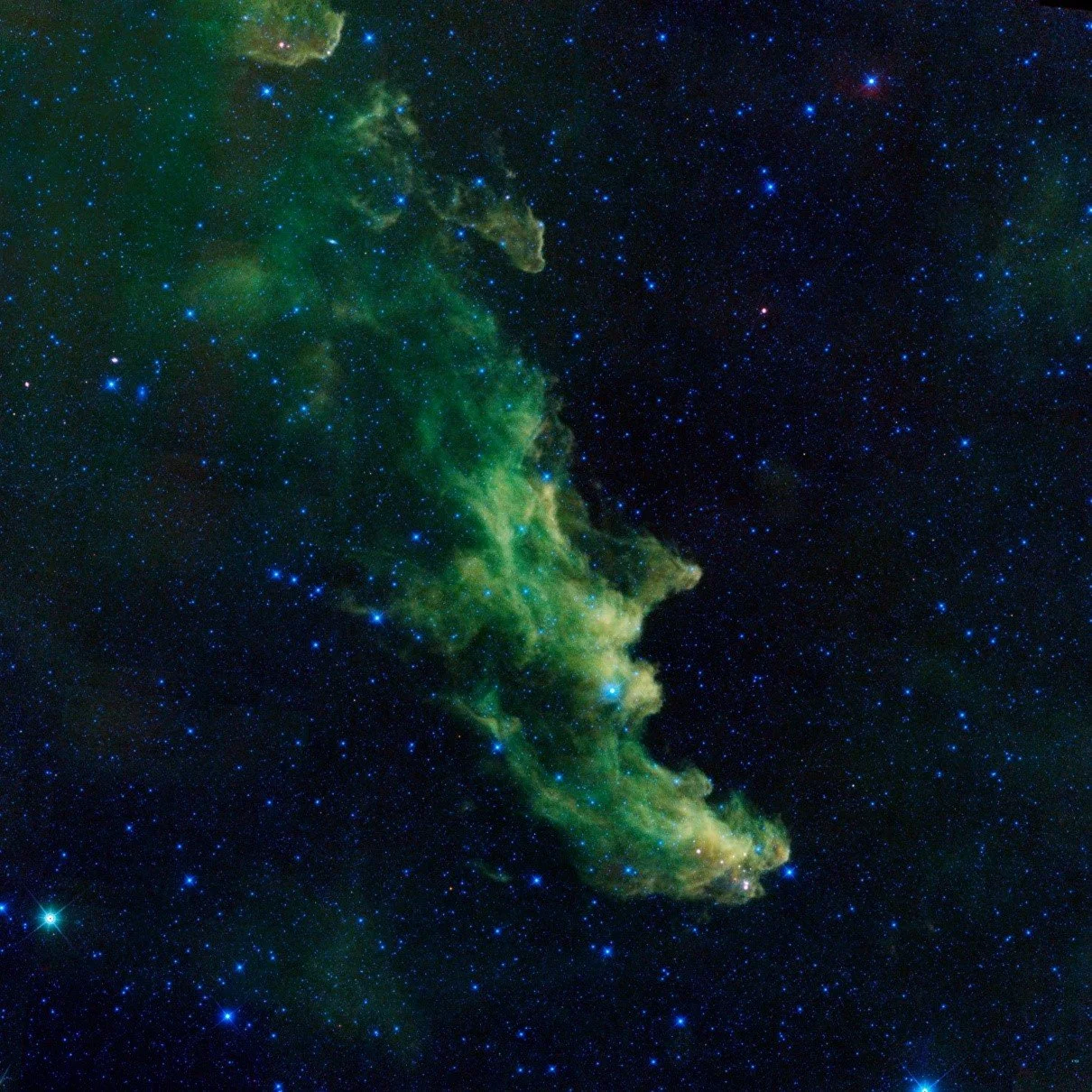
An infrared portrait of the Witch Head nebula from NASA's Wide-field Infrared Survey Explorer, or WISE, shows billowy clouds where new stars are brewing. Credit: NASA/JPL-Caltech

Want more tips for getting into the season? Read our article on how you can make some spooky sidewalk astronomy fun for your community with Trick or Treat: Sidewalk Astronomy!
Image by Jim Webster using Meta.AI
Deep-Sky objects in October
October is one of the best months for deep-sky from New Jersey — nights are long, the summer haze is gone, and the autumn galaxies are straight overhead.
Best dark window: Oct 7-13. The New Moon is Oct 10, giving you the darkest skies of the month, ideal for faint galaxies and nebulae. Early October also has exceptionally dark evenings right after the Draconids. The Full Hunter's Moon on Oct 26 will wash out faint objects, so plan your faint stuff early.
Here are the top telescope targets, ranked for a typical 4-8" scope:
Galaxies - The Main Event in October
1. Andromeda Galaxy (M31) - in Andromeda
Mag 3.4, 3° across. It reaches its highest point around midnight on Oct 2, so it's perfectly placed all evening. Visible as a faint smudge even to the naked eye from a dark site, highest around 10 pm from mid-northern latitudes. With a telescope: use your lowest power (25-30x). You'll see the bright core plus dust lanes on dark nights. Look for companions M32 and M110 nearby.
2. Triangulum Galaxy (M33) - in Triangulum
Mag 5.7, very large but low surface brightness. The true test of dark NJ skies. Needs averted vision and low power. Best after 10 pm.
3. Fireworks Galaxy NGC 6946 + NGC 6939 Cluster - in Cepheus
A galaxy and open cluster in the same low-power field. Great for photography.
Star Clusters - Gorgeous even from light pollution
4. Double Cluster (NGC 869 & NGC 884) - in Perseus
One of the best binocular/telescope objects of the year. Two side-by-side open clusters, visible to the naked eye as fuzzy patches between Perseus and Cassiopeia from dark sites. Stunning at 40-60x.
5. Pleiades (M45) - in Taurus
Rises in the northeast in October and is obvious to even casual observers. Too big for high power — use your widest eyepiece. Nebulosity around the stars pops with dark adaptation.
6. The Autumn Open Cluster Run - in Cassiopeia / Andromeda
These are the specific October Northern Hemisphere highlights this year: M2 in Aquarius, and open clusters NGC 752, NGC 457 (the ET Cluster), and NGC 663.
- NGC 457: Looks like an ET with arms outstretched at ~80x
- NGC 752: Large, loose in Andromeda — great low-power target
7. Globulars: M15 (Pegasus) and M2 (Aquarius)
Tight balls of 100k+ stars. M15 is easy — find it near Enif in Pegasus. Crank to 120x+ to resolve outer stars.
### ## Nebulae - Bring a filter if you have one
8. Little Dumbbell Nebula (M76) - in Perseus
Smallest Messier object. Planetary nebula that looks like a double-lobed dumbbell. Needs 100x+ and averted vision. Listed as a prime October telescope target.
9. Pacman Nebula (NGC 281) & California Nebula (NGC 1499)
Both in the Perseus/Cassiopeia region. The Pacman is one of the better nebulae for October observers in the Northern Hemisphere. The California Nebula is huge — 2.5° long — you need a very low-power + UHC/OIII filter. Also look for NGC 40, the Cave Nebula (Sh2-155), and the Ghost of Cassiopeia (IC 63) in the same region, which are all noted October nebulae for telescopes.
10. Orion Nebula (M42) - Late Night Bonus
Rises around 11pm-midnight by late October. If you're up late, it's the best emission nebula in the sky.
- Don't miss: Saturn is at opposition on Oct 4 this year — not deep-sky, but it's up all night right next to your galaxy targets.

Let’s Explore Space
The Latest News on Astronomy and Sky Watching — By StarWalk Astronomy App - Sky Tonight

Tonight’s Sky: No longer posting
October 2024 was the last updated posting of Tonight’s Sky. It is still available via YouTube.
Linked is the twelve-month playlist on YouTube.
Any suggested replacements, let me know.
Visit the STScI, which produced Hubblesite.org video overviews for Tonight’s Sky.
They can be found both on Facebook and stsci.edu.
Submissions Welcome
Members are invited to submit articles, photos, news, or stories for inclusion with Astral Projections Online. Please contact the ASTRA Webmaster.