Astral Projections Online September 2026
Check our Website for updated content at www.astra-nj.com
Club Presentations Wanted:
Does anyone have any astronomy items of interest to share with the membership?
Please let us know at Club Contacts. For 2026, we still have some open slots.
Club dues and membership.
If you renew after March 31, you will be renewed as a new member.
Forms can be found on the website or here.
ASTRAL PROJECTIONS ONLINE (APO for short) is an email-linked publication for members only. If you exit APO to the club website or other resources you will need to use the emailed link again to get back to it. If you wish to retain a copy please bookmark or refer back to the email. We will make all efforts to post by the first week of the month.
Submissions Welcome: Members are invited to submit articles, photos, news, or stories for inclusion with Astral Projections Online. Please contact the ASTRA Webmaster.
Event Calendar
Event Cancellations: Members will receive email notifications of event cancellations.
Upcoming September ASTRA Meeting
ASTRA's next meeting will be Friday, September 11, 2026, at 7:00 PM EST.
Upcoming Public Star Parties
September 19 - Jake’s Branch - 8 PM
October 3 - Island Beach State Park Area 2 - 8 PM
Seaside Park Environmental Committee
October 17 - Jake’s Branch - 7 PM
Upcoming Public, County & State Park Presentations 2026
Public Outreach Presentations: If any member wants to support ASTRA's public outreach efforts, please let Vinny, Ro, or Jim know. Additional help for these events is always appreciated.
None for now.
County and State Park presentations require a registration fee; call the hosting park to reserve.

Website Updates …
Please visit our club website. We continue to have additional updates, if some content would be useful to members please let us know.
"It is a beautiful and delightful sight to behold the body of the Moon."
Galileo Galilei - Italian astronomer, physicist, engineer, and polymath.
The Stary Messenger, printed in Venice - March 1601

ASTRA Meeting - Sept 11 at 7 PM
Starting in September, we are back at Novins Planetarium at 7 PM.
ASTRA Member Sharad Shroff will present his experiences with “Stargazing for Summer 2026”
Jim Webster will touch on a visit to the James Veer Observatory with his trip to Grand Rapids, Michigan.
Time permitting, we will review Meteor Detection with Radio Astronomy.
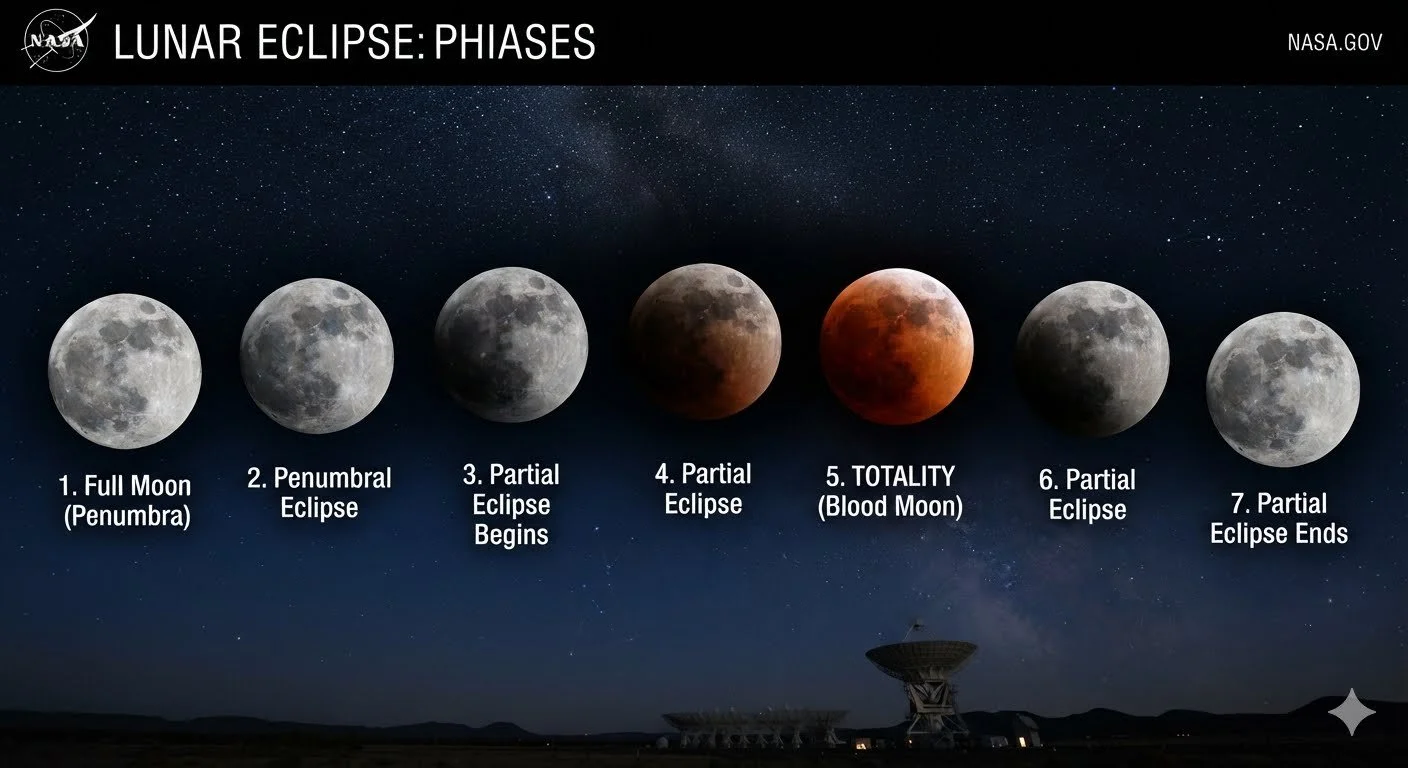
The recent Partial Lunar Eclipse
For the September ASTRA meeting, if anyone has experiences to share from the recent lunar eclipse, reach out to Jim Webster, and he will add it to the meeting slide deck. (No cloud or rain images needed)
Please support Novins Planetarium, patronizing their shows, who has supported us since the beginning of ASTRA.
Event Reports
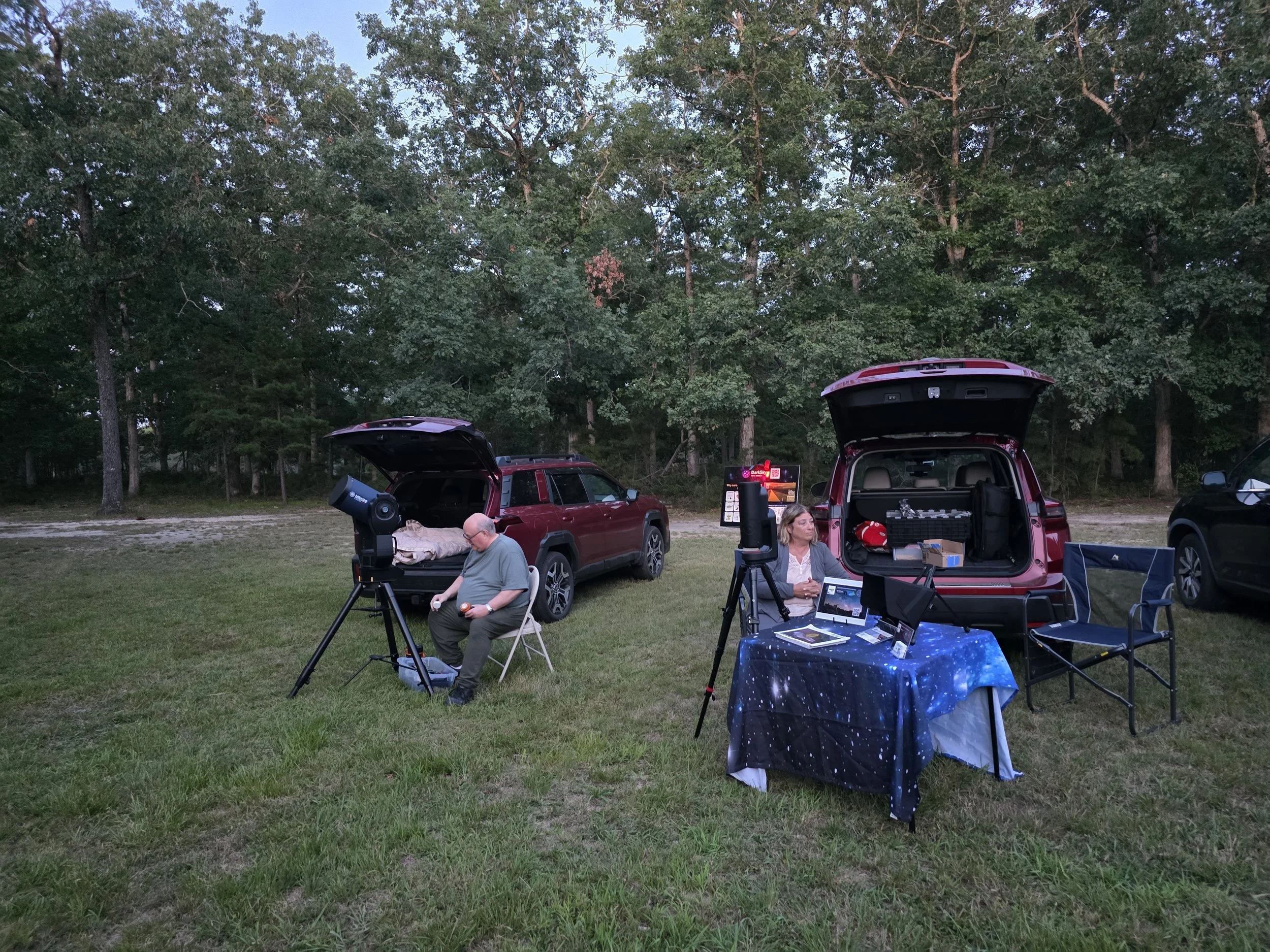
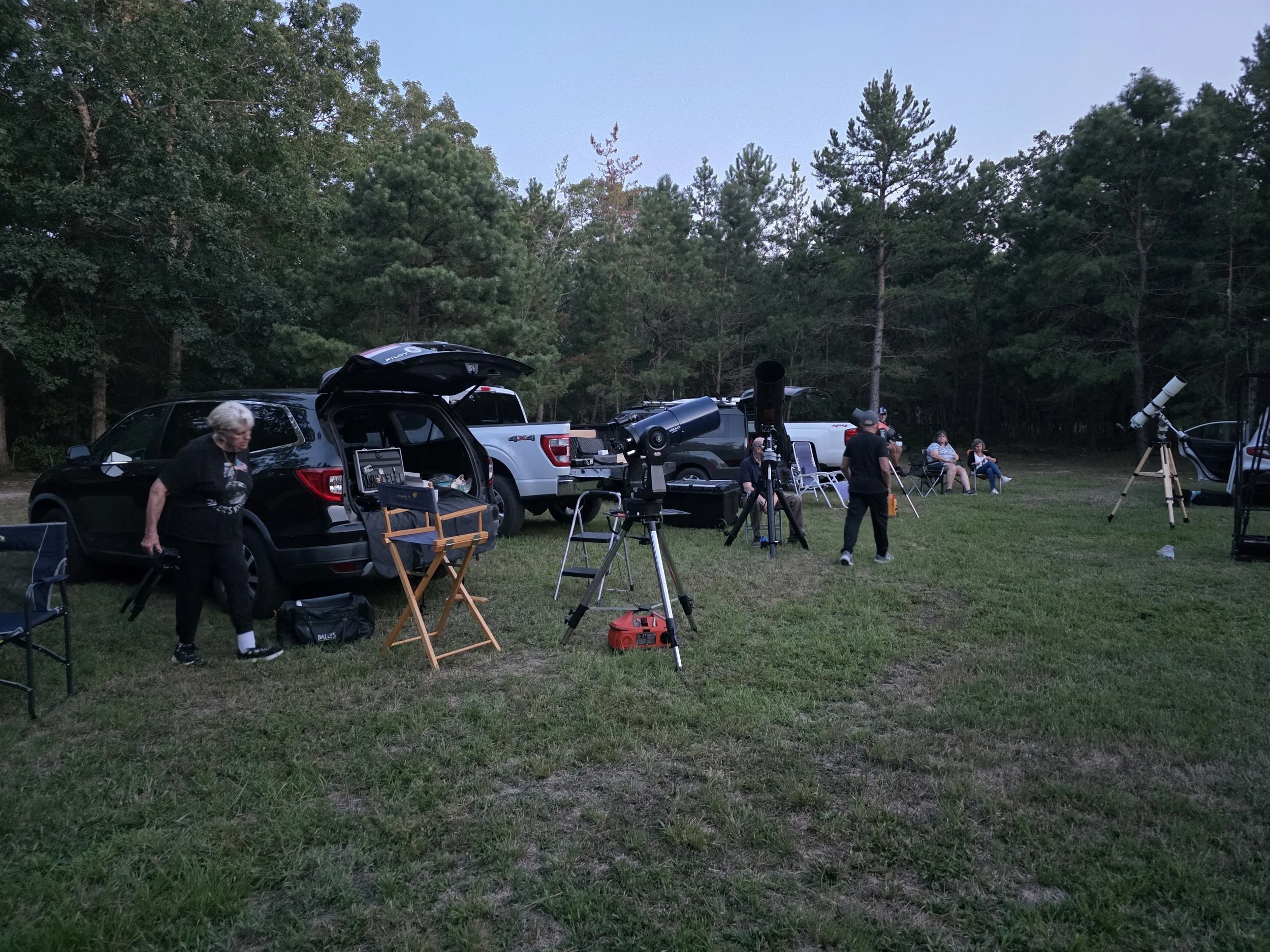
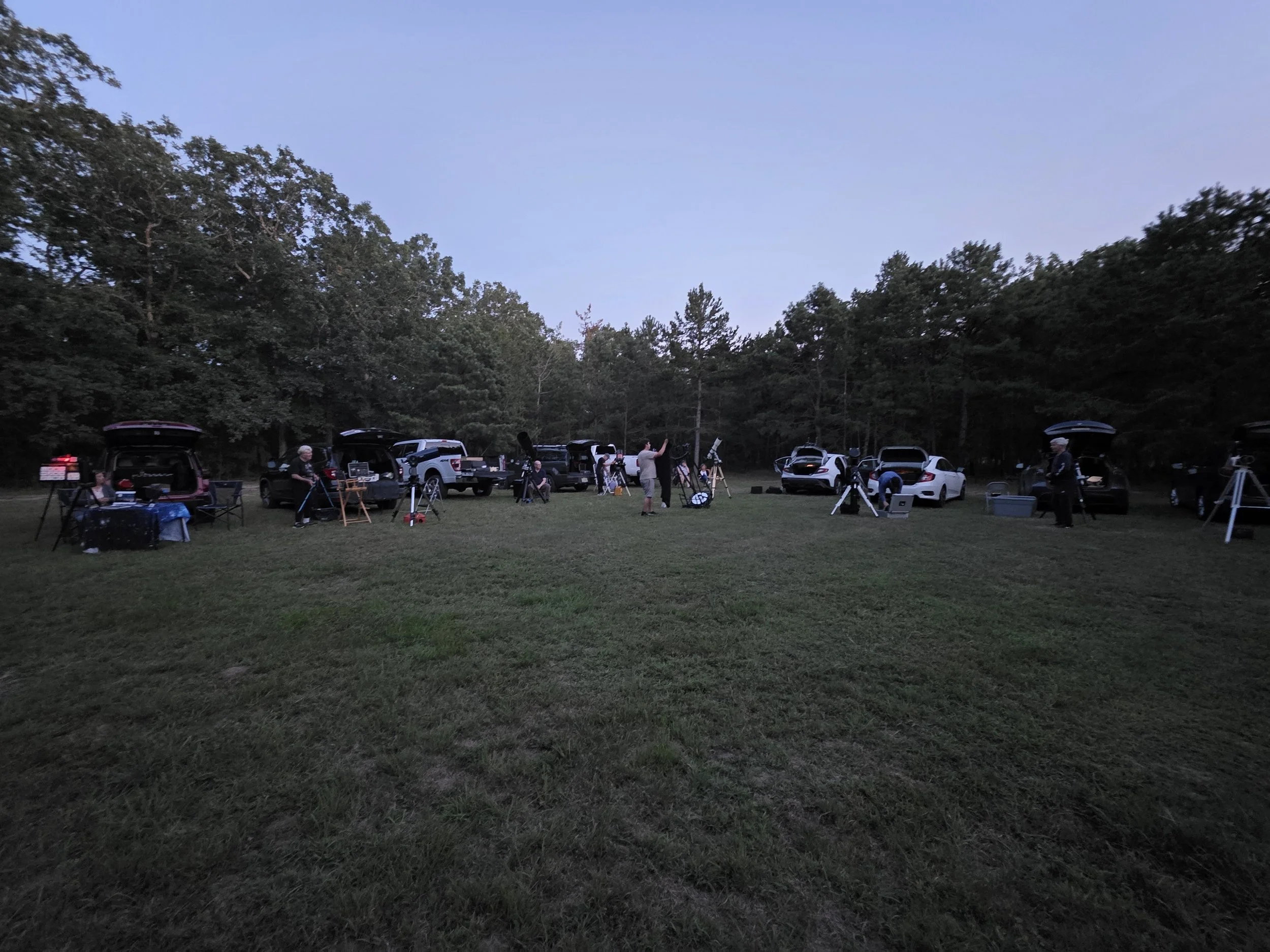
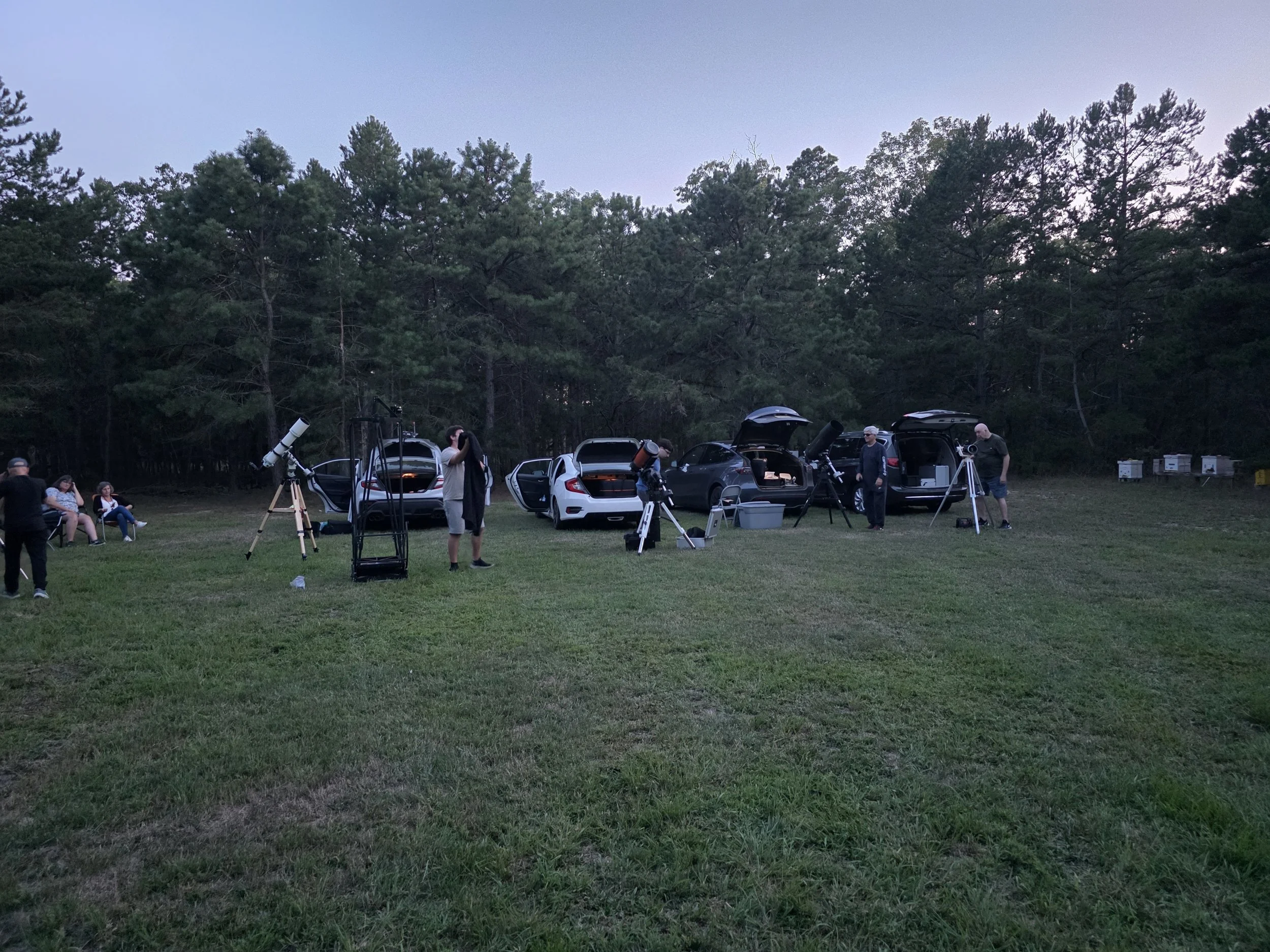
Below are images from ASTRA’s Star Party that was held at Cloverdale Farm County Park on August 15. We had great member turnout and plenty of public engagement for this night, including a constellation review. We even had a visit by some Apache Helicopters flying overhead. It was a welcome change from the bad weather that has been plaguing us. Unfortunately, the star party at Jakes Branch had to be canceled again due to the weather.
August ASTRA Meeting Summary
We had our club observing meeting for August. Unfortunately, I was so excited to finally get out there that I forgot to take some pictures. I think overall, for everyone who attended, it was a good night in spite of the no-see-ums that wracked my ankles and wrists.
Public Events and Presentations
None for August.

AstroMag August 2026
A free online publication for Amateur Astrophotographers.
The Moon: Our Nearest Neighbor
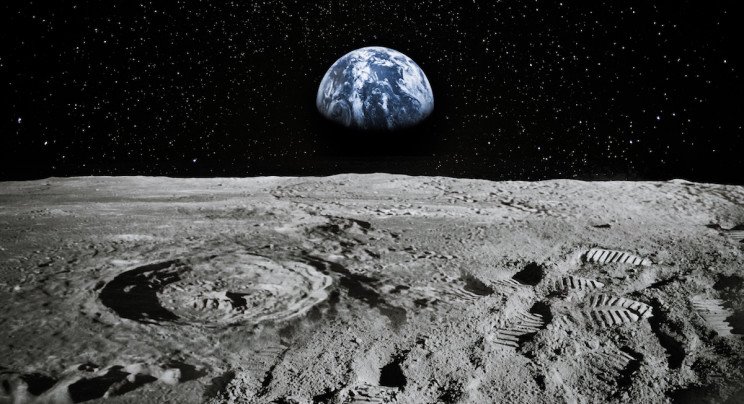
Let’s explore some interesting features, facts, or myths about our nearest neighbor, the Moon. Without it, life on Earth would be totally different, if not at all.
Beyond the Naked Eye: Guide to Observing the Moon
Note: This article is partially AI-generated.
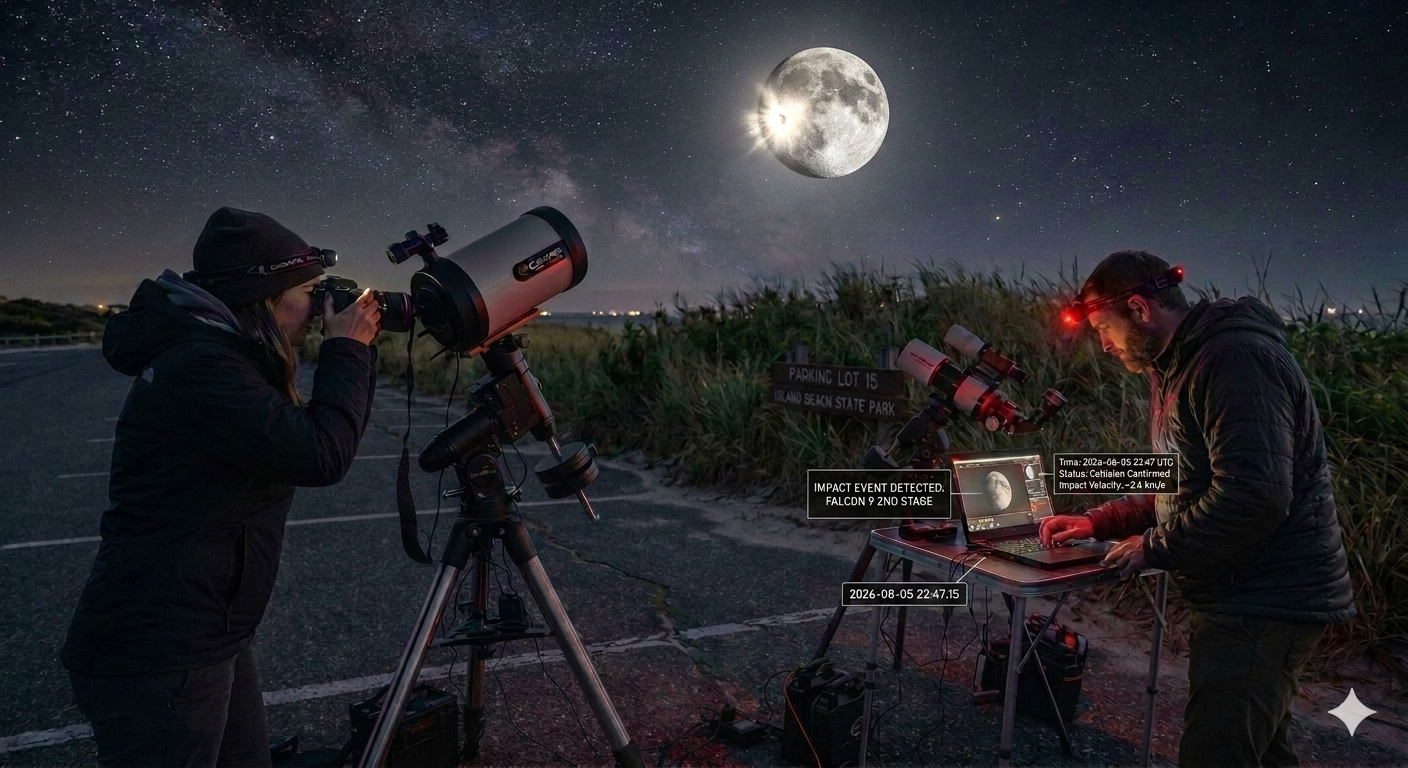
By the Astronomy Desk
SPACE & SCIENCE REVIEW — While casual observers often wait for a blazing Full Moon to break out their telescopes, seasoned astronomers know that a fully illuminated lunar disk is actually the worst time for detailed study. Bathed in direct overhead sunlight, surface features lose their shadows, washing out the dramatic relief that gives our nearest celestial neighbor its texture.
To truly appreciate lunar geology, astronomers target the terminator—the shifting boundary line between night and day. Here, low-angle sunlight catches ridges, crater rims, and fault lines, casting long, inky black shadows that reveal the Moon in striking three-dimensional relief.
Whether you are observing with binoculars or setting up a high-magnification rig in the backyard, here are the premier topographical targets and best practices for your next observing session.
Must-See Lunar Landmarks
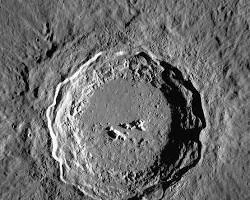
1. Copernicus Crater: The Monarch of the Moon
Spanning 58 miles (93 km) in diameter, Copernicus stands out as one of the most magnificent impact sites on the lunar near side. Featuring a distinctively terraced rim, complex central peaks, and an extensive ray system stretching for hundreds of miles, it is easily resolved with a small telescope or binoculars.
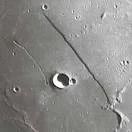
2. Rupes Recta (The Straight Wall)
Located on the floor of Mare Nubium, this dramatic linear fault drops off steeply by nearly 1,000 feet over a 62-mile (100 km) stretch. Roughly a day after the First Quarter phase, sunlight hits the cliff edge to cast a razor-thin, jet-black shadow line, making it look remarkably like a vertical masonry wall.

3. Montes Apenninus (The Apennine Mountains)
Bordering the southeastern edge of Mare Imbrium, this is the Moon's most dramatic mountain range. Spanning over 370 miles, its jagged peaks—including Mons Huygens, which climbs 18,000 feet—throw massive shadows across the adjacent plain when illuminated from the side.
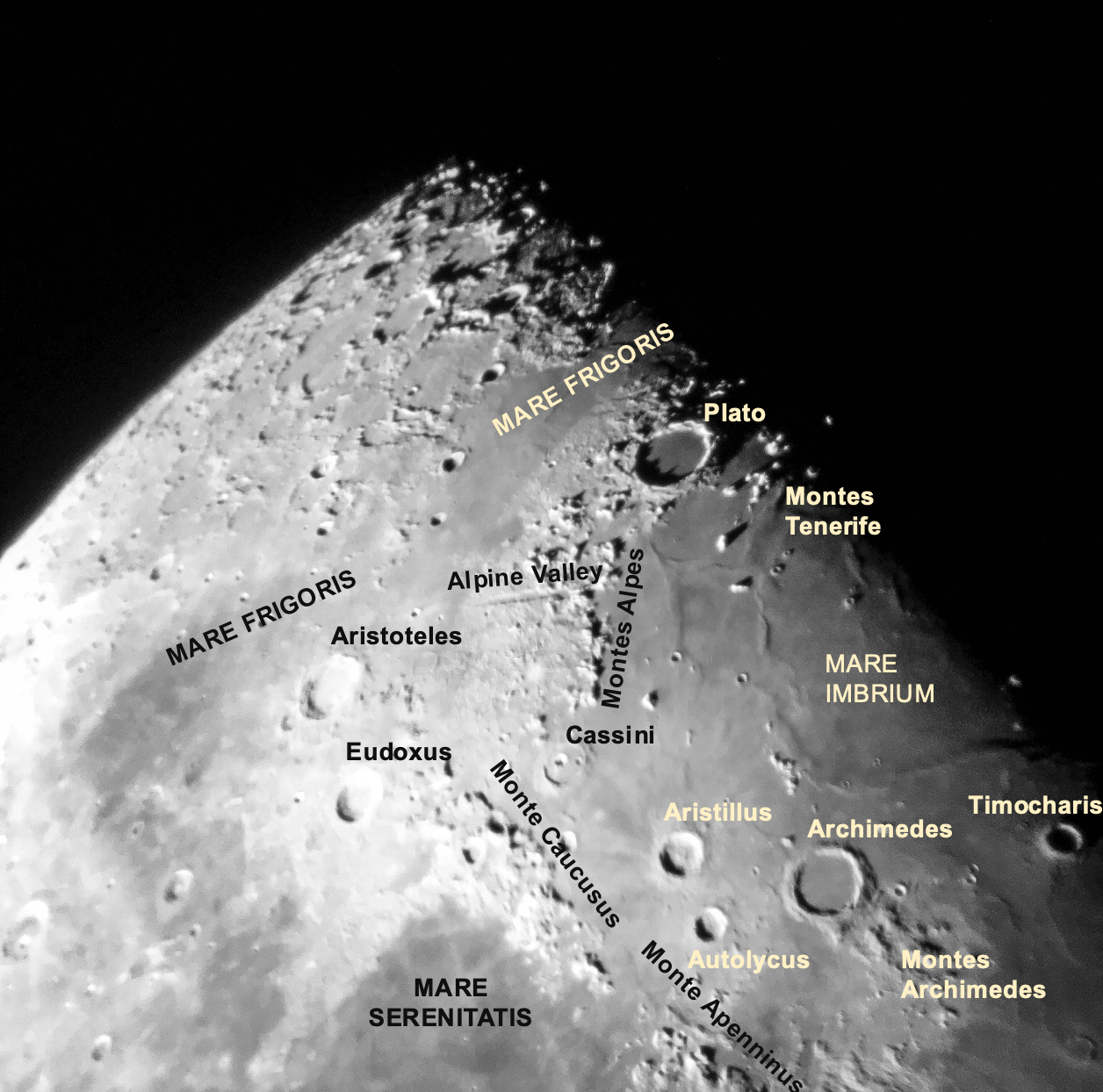
4. Plato Crater and Vallis Alpes (Alpine Valley)
Plato is famous for its dark, smooth, basalt-filled floor, earning it historic descriptions like the "Greater Black Lake." Just north of it lies Vallis Alpes, an 80-mile-long cleft cut clean through the lunar Alps, featuring a remarkably narrow rille running down its center.
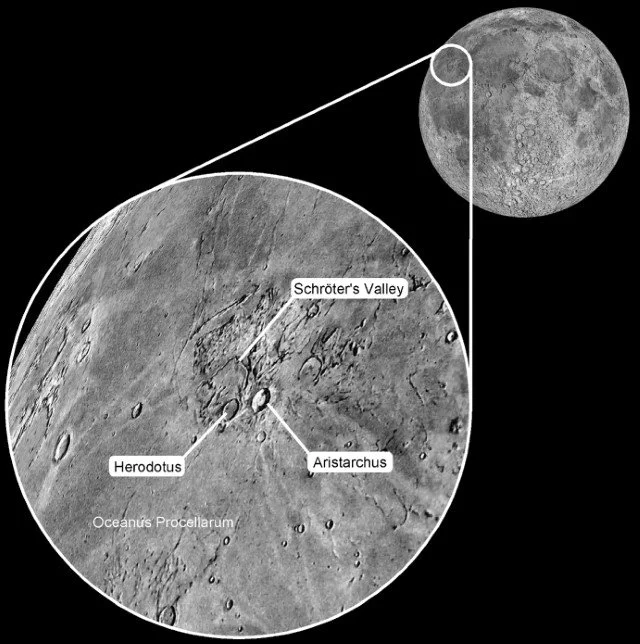
5. Aristarchus Crater & Schröter’s Valley
Aristarchus is exceptionally young and stands out as the most reflective, brightest feature on the lunar near side. Right next to it is Schröter’s Valley, the Moon's largest winding volcanic rille, resembling a giant cosmic tadpole carved into the plateau.
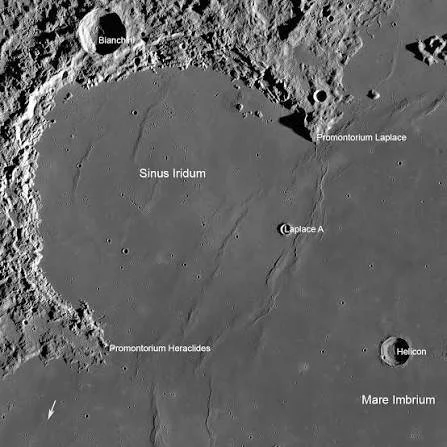
6. Sinus Iridum (The Bay of Rainbows)
This stunning, semi-circular bay opens onto the vast plain of Mare Imbrium. Its curved rim is defined by the Montes Jura range, which catches the sunrise a few days before First Quarter, creating a striking "golden handle" illusion floating in the dark expanse of space.
Best Practices for Lunar Observing
Hunt the Terminator: Prioritize observing during partial phases (such as First or Last Quarter). Focusing along the terminator places surface features in dramatic, low-angle sunlight that exposes fine-scale geological structures.
Manage Ocular Glare: Because the lunar surface reflects intense sunlight, viewing a bright moon through optics can cause eye strain. Utilize a neutral density or polarizing moon filter on your eyepiece, or employ an aperture mask to cut down excess light without sacrificing clarity.
Match Magnification to Target: Start wide with low magnification (around 50x) to frame the entire disk and contextualize regional maria and highlands. Step up to medium-to-high magnifications (100x to 150x+) to dive into individual craters, rilles, and fault lines, keeping local atmospheric seeing conditions in mind.
Utilize Steady Optics: While handheld binoculars offer quick, wide-field lunar scouting, higher-magnification binoculars (15x or greater) and telescopes require a rigid tripod or mount to eliminate hand-shake.
Track Changes Across Successive Nights: Revisit the Moon over consecutive clear nights during a waxing or waning phase. Watching the terminator creep across the landscape lets you see shadows lengthen or shorten, making static geological features appear dynamic as the sun rises or sets across them.
Sources and reference data courtesy of astronomical organizations and guides from Celestron's Lunar Guide, BBC Sky at Night Magazine, and NASA Lunar Reconnaissance Orbiter (LROC) mapping data.

Outreach material below is distributed free for public outreach.
Astronomy for ASTRA Kids

NASA Science
For our young ASTRA members, NASA has online webpages for kids, an educational resource for fun learning, and arts & crafts.
What is an orbit?
Additional NASA resources for students of all ages and educators visit: NASA-Learning-Resources.
Image by Quan-Yu Zang on Squarespace.
Around The Web
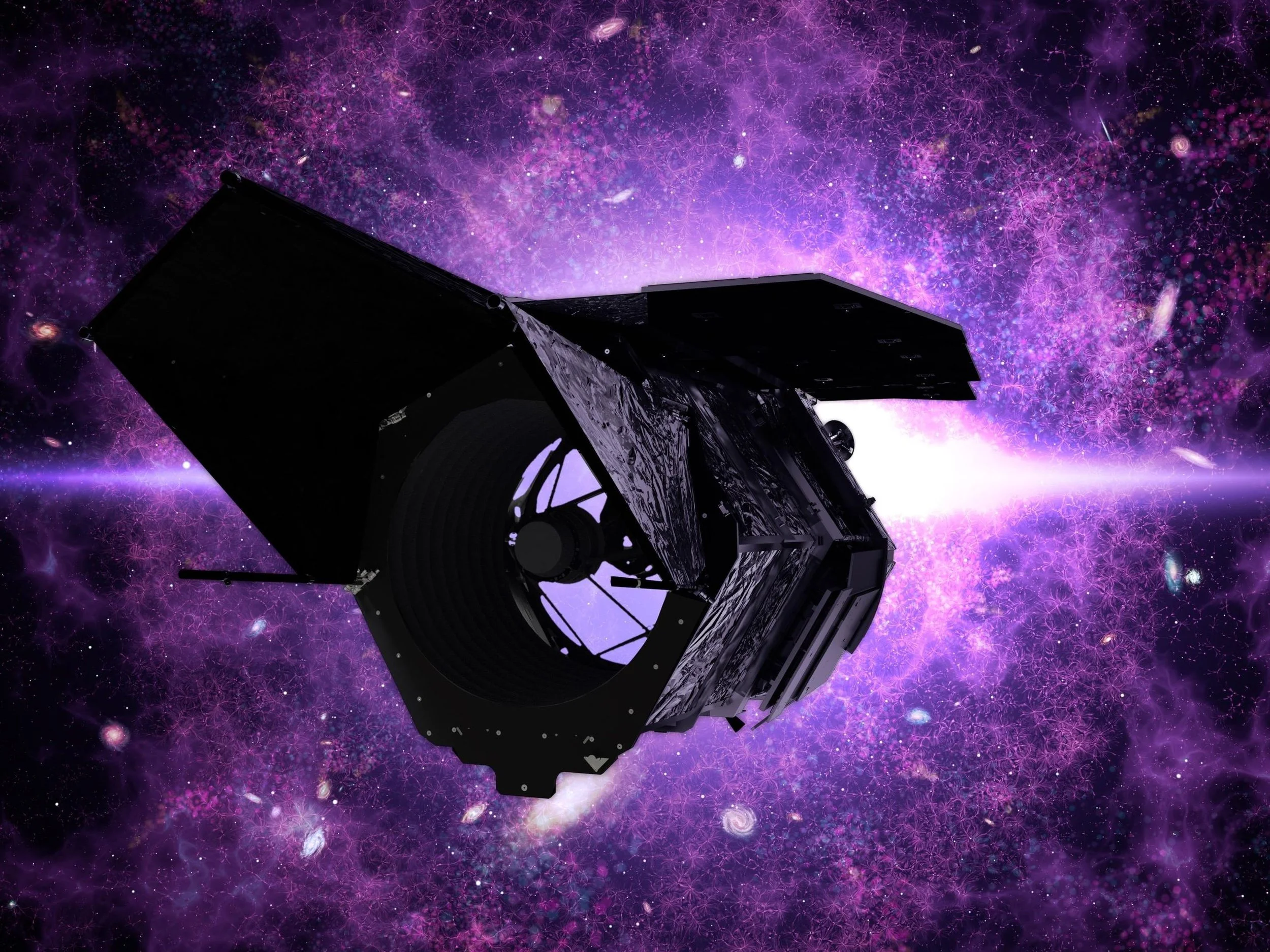
NASA's Nancy Grace Roman Space Telescope successfully launched on August 30, 2026, to solve major mysteries regarding dark energy, exoplanets, and infrared astrophysics.
Orbit and Operations
It will travel to the second Sun–Earth Lagrange point (L2), roughly 1 million miles away from Earth.
It lifted off atop a SpaceX Falcon Heavy rocket from Kennedy Space Center in Florida.
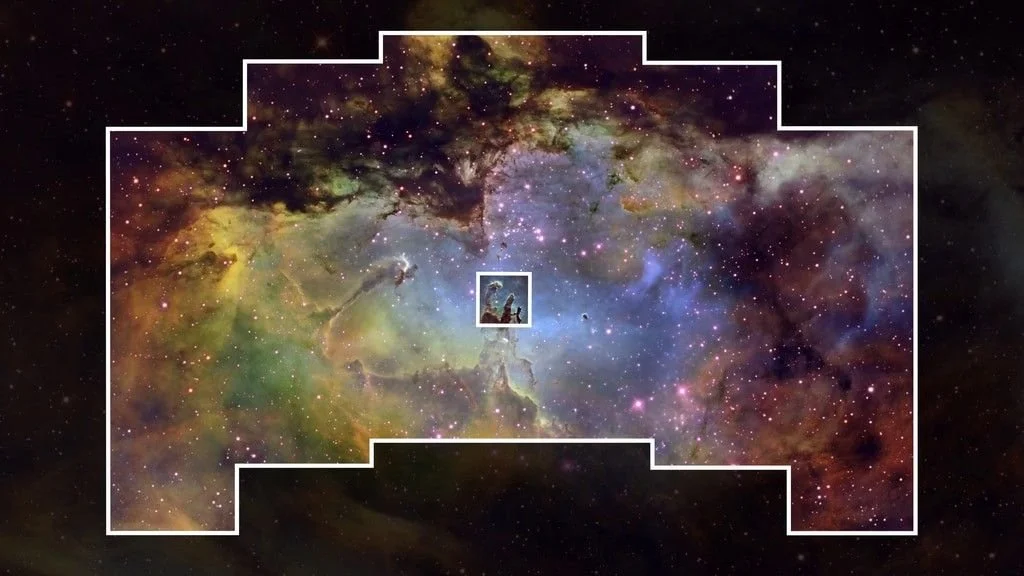
This image of the Eagle Nebula showcases the superb resolution and wide field of view of the Nancy Grace Roman Space Telescope. It begins with a Hubble image of the famous Pillars of Creation superimposed on a ground-based image. The view then zooms out to show the full field of view of Roman’s Wide Field Instrument.
This massive panoramic capability is engineered to act as an astronomical wide-angle lens, allowing the observatory to capture vast swaths of the night sky in a single observation.
Roman’s images will have the resolution of Hubble while covering an area about 100 times larger in a single pointing.
L. Hustak (STScI)
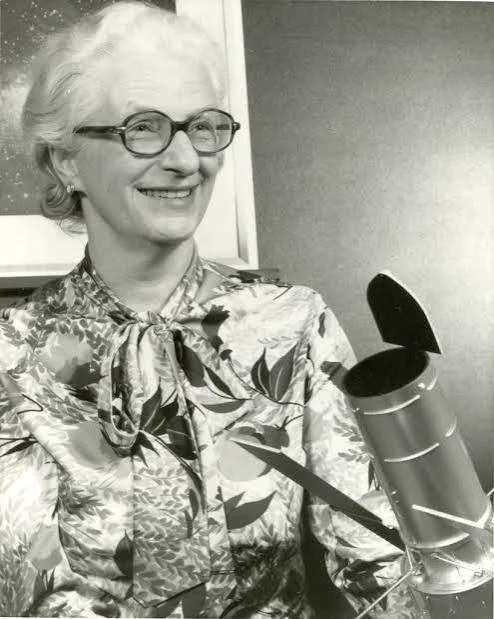
Who is Nancy Grace Roman?
Resource: science.nasa.gov
Dr. Nancy Grace Roman (1925–2018) was a legendary American astronomer famously known as the "Mother of the Hubble Space Telescope" and recognized as the first female executive at NASA.
Joining the agency in 1959, just one year after its founding, she became NASA's very first Chief of Astronomy. Her leadership laid the groundwork for the modern fleet of space-based observatories.
She completed her bachelor’s degree in astronomy from Swarthmore College in 1946 and earned a Ph.D. from the University of Chicago in 1949. Her early research made highly important contributions to cosmic stellar classification and stellar movement patterns.
Groundbreaking Career at NASA
Program Founder: She created NASA's entire space-based astronomy program from scratch.
Hubble Architect: She successfully campaigned Congress and managed committees to approve the Hubble Space Telescope.
Executive Pioneer: She shattered glass ceilings as the first woman to hold an executive management role at NASA.
Fleet Development: Beyond Hubble, she oversaw development for the Cosmic Background Explorer and the Orbiting Solar Observatory
For more about Nancy Grace Roman visit science.nasa.gov and YouTube.
Dark Sky News

Latest News:
DarkSky New Jersey has now become a 501c (3). This now opens the doors for bigger and better things for the movement, correcting light pollution in New Jersey.
DarkSky New Jersey and SciStarter will have a shared table for the South Jersey Green Fair at the Edelman Fossil Park and Museum of Rowan University for their first EFM BioBlitz! On September 20th, 2026, from the museum opening to close (10 am - 5 pm).
DarkSky New Jersey will be at the 6th Annual Earth Care Day on Sunday, October 4, 2026, from 11 a.m. to 3 p.m. at Cheesequake State Park.
What makes Earth Care Day special is the level of engagement. Families come ready to learn, explore, and participate. We encourage exhibitors to bring hands-on experiences such as demonstrations, crafts, educational activities, wildlife presentations, or other interactive opportunities that help visitors connect with your mission in a meaningful way.
The day also features guided walks, educational talks, and a scavenger hunt that encourages attendees to visit exhibitor booths throughout the park, creating even more opportunities for visibility and interaction.
On the lighter side of astronomy …

What’s Up:
Sky Watching Tips from NASA
Provided by NASA Jet Propulsion Laboratory. Is usually updated anywhere from the first day of the month to the fifth day of the month. Check back to this linked image if it hasn’t been updated yet.
For more go to NASA Jet Propulsion Laboratory webpage: What’s Up: Skywatching Tips From NASA

This article and images are distributed by NASA Night Sky Network
The Night Sky Network program supports astronomy clubs across the USA dedicated to astronomy outreach.
Visit nightsky.jpl.nasa.gov to find local clubs, events, and more!
NSN Articles have been suspended until further notice.
The articles below are from other free sources, including older NSN articles.
The Enduring Advantages of Traditional Telescopes
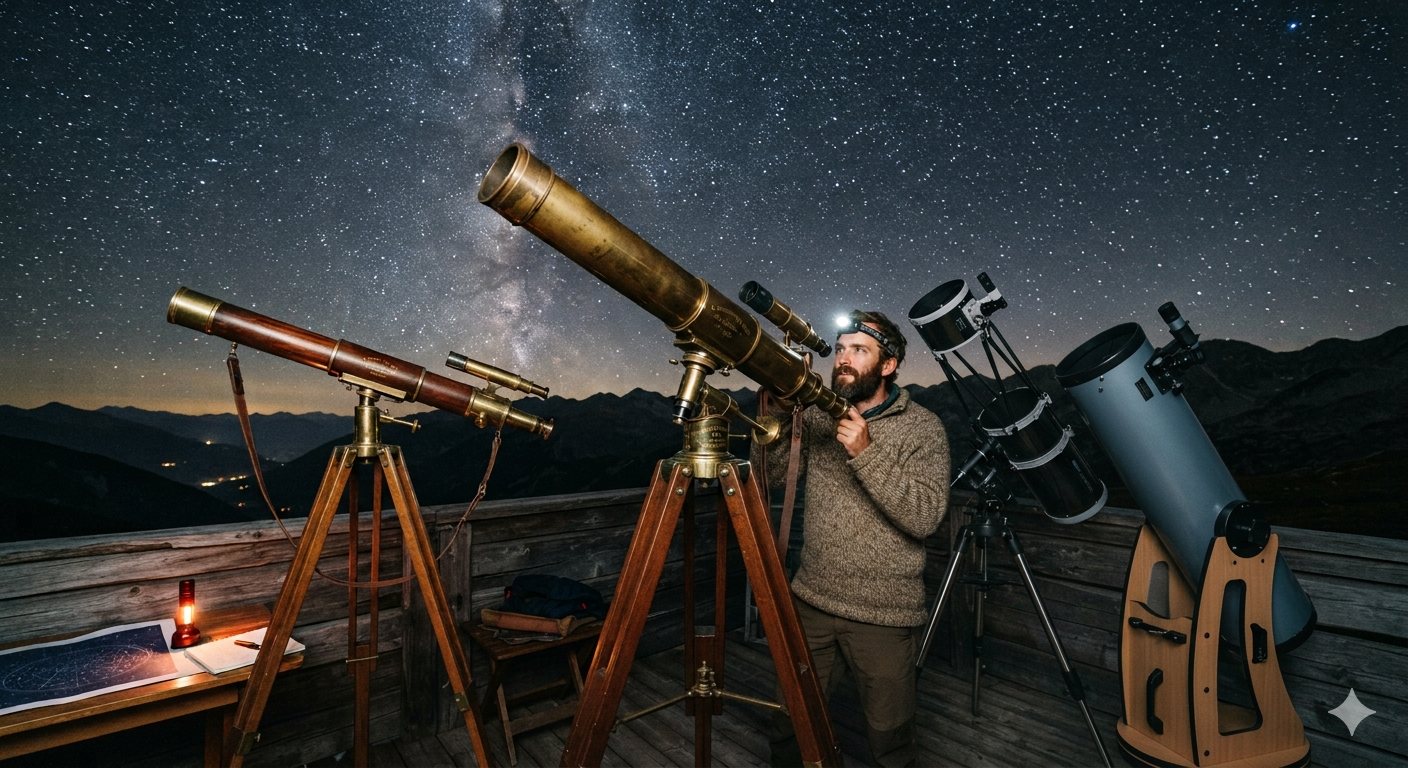
In an era that is starting to be dominated by smart devices, automated GoTo mounts, and electronic camera-based astrophotography, traditional optical telescopes—such as classic Newtonian reflectors, Dobsonians, and refractors—might seem like relics of the past.
AI generated image
However, these pure optical instruments continue to be prized by beginner astronomers and seasoned veterans alike. Stripping away microchips, Wi-Fi modules, and digital viewfinders reveals a range of profound advantages that keep traditional telescopes at the forefront of amateur astronomy.
1. Direct Optical Purity and Real-Time Viewing
One of the most compelling advantages of a traditional telescope is the uncompromised, real-time connection to the cosmos. When you look through the eyepiece of an optical telescope, photons that left distant stars, nebulae, or planets millions of years ago pass directly through physical glass or reflect off precision-coated mirrors straight onto your retina.
There is zero digital lag, no sensor compression, and no artificial image processing or algorithmic sharpening. What you see is the absolute truth of the night sky in real-time—a visceral, authentic experience that digital screens simply cannot replicate.
2. Complete Independence from Power and Software
Smart telescopes and computerized mounts require external battery packs, firmware updates, precise smartphone pairings, and clear Wi-Fi or Bluetooth signals. If a battery dies in the middle of a crisp, dark-sky session, or if an app refuses to sync, a high-tech telescope becomes a useless metal paperweight.
Traditional telescopes operate entirely mechanically. A purely manual Dobsonian or equatorial mount requires no electricity to track or point (aside from optional simple battery drives that are entirely skippable). They are immune to software bugs, operating system updates, and connectivity dropouts, ensuring that they are ready to perform whenever the clouds clear.
3. Superior Cost-to-Aperture Value
Aperture—the diameter of the telescope's main lens or mirror—is the single most important specification in astronomy, dictating how much light the instrument can gather and how faint of an object it can resolve.
Traditional setups: Direct the vast majority of your financial investment into raw optical quality and mechanical aperture size.
Smart setups: Allocate a heavy portion of the price tag to internal computers, CMOS sensors, motorized servos, and proprietary software.
By skipping the electronics, buyers of traditional telescopes get significantly larger mirrors or lenses for a fraction of the cost, translating directly into brighter, sharper views of deep-sky objects like galaxies and star clusters.
4. Exceptional Longevity and Durability
Consumer electronics have notoriously short lifespans, plagued by rapid technological obsolescence, failing circuit boards, and abandoned app support. Traditional telescopes, by contrast, are built for generational longevity.
A well-crafted optical tube assembly and a solid metal mount can last for decades—even centuries—with minimal upkeep. Mirrors can eventually be re-coated, lenses can be cleaned, and mechanical parts can be lubricated. Because the underlying physics of optics do not change, a classic telescope bought today will perform just as brilliantly thirty years from now, completely unbothered by changing tech ecosystems.
5. Unmatched Educational Value and Skill Building
Using a manual telescope transforms astronomy from a passive viewing experience into an active, rewarding craft. Finding celestial objects with a traditional scope requires learning "star-hopping"—navigating from known bright stars to faint deep-sky targets using finderscopes and star charts.
This process teaches users:
Real-world spatial awareness and celestial mapping.
A deep understanding of constellation geometry and planetary motion.
Patience, observation skills, and a genuine connection to the night sky that automated "push-button" scopes bypass entirely.
How to Star Hop? For an overview of beginner to mid-range star hopping to deep-sky objects, check out the Kissimmee Park Observatory 62 video library on YouTube. It has been added to the ASTRA-NJ webpage link: Online Observing Tools.
Sources
NASA Science: Telescopes — Introduction to Optical Systems and Amateur Astronomy Guide.
Sky & Telescope Magazine: Reflector vs. Refractor: Understanding the Trade-offs in Modern and Traditional Amateur Optics.
Wikimedia Commons: Historical and Structural References for Newtonian and Optical Telescope Mechanics (File: NewtonsTelescopeReplica.jpg).

Let’s Explore Space
The Latest News on Astronomy and Sky Watching — By StarWalk Astronomy App - Sky Tonight

Tonight’s Sky: No longer posting
October 2024 was the last updated posting of Tonight’s Sky. It is still available via YouTube.
Linked is the twelve-month playlist on YouTube.
Any suggested replacements, let me know.
Visit the STScI, which produced Hubblesite.org video overviews for Tonight’s Sky.
They can be found both on Facebook and stsci.edu.
Submissions Welcome
Members are invited to submit articles, photos, news, or stories for inclusion with Astral Projections Online. Please contact the ASTRA Webmaster.