Astral Projections Online August 2026
Check our Website for updated content at www.astra-nj.com
Club Presentations Wanted:
Does anyone have any astronomy items of interest to share with the membership?
Please let us know at Club Contacts. For 2026, we still have some open slots.
Club dues and membership.
If you renew after March 31, you will be renewed as a new member.
Forms can be found on the website or here.
ASTRAL PROJECTIONS ONLINE (APO for short) is an email-linked publication for members only. If you exit APO to the club website or other resources you will need to use the emailed link again to get back to it. If you wish to retain a copy please bookmark or refer back to the email. We will make all efforts to post by the first week of the month.
Submissions Welcome: Members are invited to submit articles, photos, news, or stories for inclusion with Astral Projections Online. Please contact the ASTRA Webmaster.
Event Calendar
Event Cancellations: Members will receive email notifications of event cancellations.
Upcoming August ASTRA Observing Meeting
ASTRA's next meeting will be Friday, August 14, 2025, at 8:00 PM EST.
Heads Up for August Meeting.
Our August meeting will be Observing Meetings at Island Beach State Park.
Unlike the public Star Parties at IBSP, Observing Meetings are at Area 15.
All members are invited with or without a telescope, but must be registered members.
If the event is canceled due to weather, there is no backup plan; do not go to the planetarium.
Upcoming Public Star Parties
August 15 - Cloverdale Farm - 9 PM
August 22 - Jake’s Branch 9 PM
September 19 - Jake’s Branch 8 PM
Upcoming Public, County & State Park Presentations 2026
Public Outreach Presentations: If any member wishes to support ASTRA's public outreach efforts, please let Vinny, Ro, or Jim know of any interest. Additional help for these events is always appreciated.
Date Change: Brick Township Library - August 12 - 6:30 PM - Coastal Dark Skies
County and State Park presentations require a registration fee; call the hosting park to reserve.

Website Updates …
Please visit our club website. We continue to have additional updates, if some content would be useful to members please let us know.
"Though my soul may set in darkness, it will rise in perfect light; I have loved the stars too fondly to be fearful of the night."
This quote belongs to English poet Sarah Williams, not Galileo.
It comes from her 1868 poem, "The Old Astronomer to His Pupil"
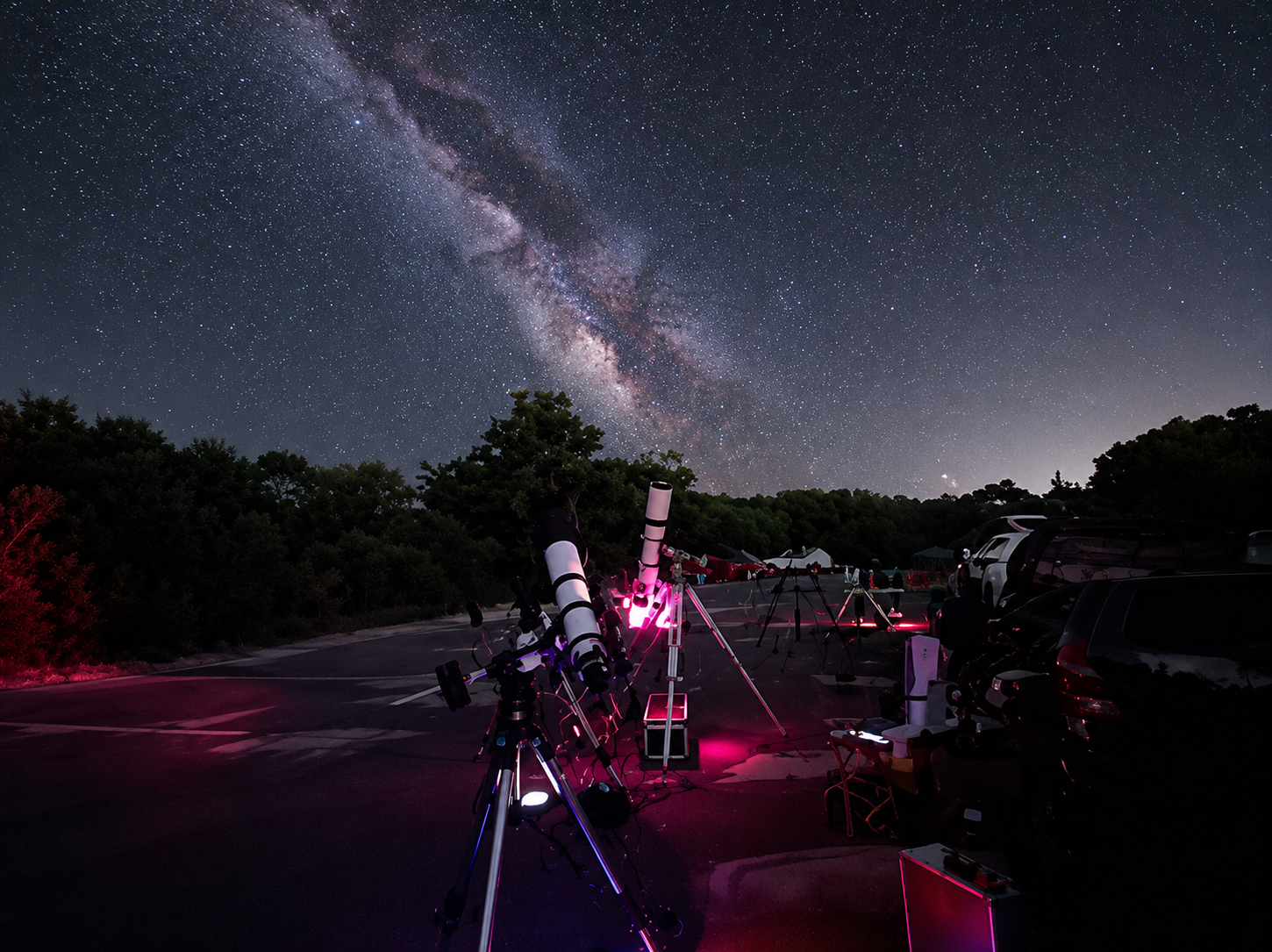
ASTRA Meeting - August 14 at 8 PM
For August, we will have an observing meeting at Island Beach State Park. We will be at Parking Lot #15 at 8 PM. This will give us plenty of time to socialize and set up before it gets dark.
You can’t camp out, but there is no time limit for staying to observe or image. Great for our astrophotographers.
*** You must be a registered member. ***
If the event is canceled due to weather, there is no backup plan; do not go to the planetarium.
Please support Novins Planetarium, patronizing their shows, who has supported us since the beginning of ASTRA.
Event Reports
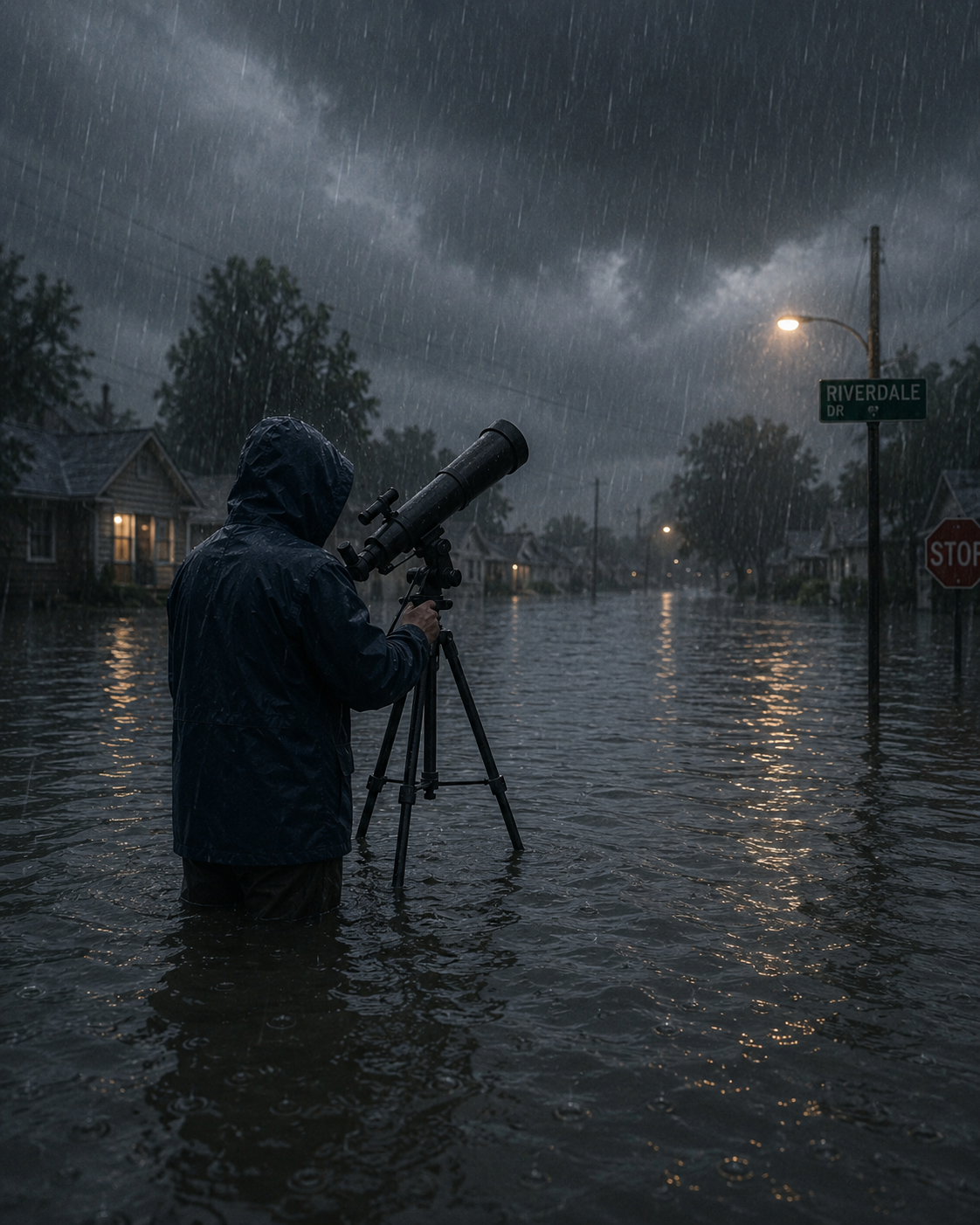
Unfortunately, July was a washout this month due to the weather. Hoping for better conditions in August.
July ASTRA Meeting Summary
Unfortunately, July was a washout this month due to the weather. Hoping for better conditions in August.
Public Events and Presentations
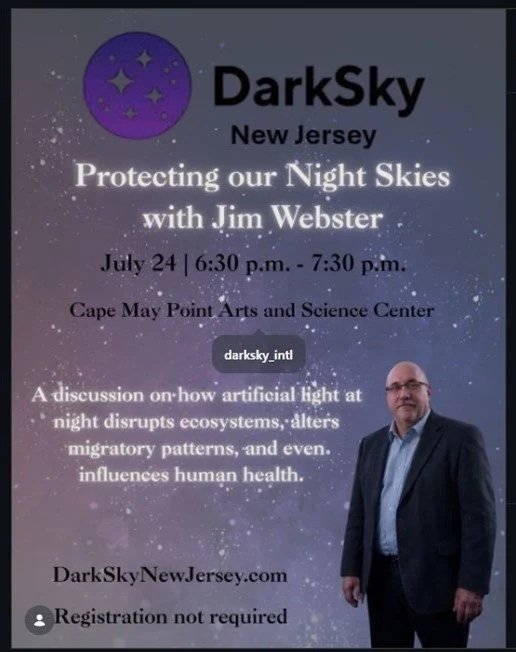
Not an ASTRA event, but related to the Dark Sky we all love to observe.
Jim Webster presented to the Cape May Point Arts and Science Center on July 24. There were several Environmental Commission members on hand, and interest was evident among all who attended.
One point of discussion was that Cape May is a four on the Bortle scale, so why worry? This is, of course, an area of concern in itself. To continue protecting what you already have, it is best to get ahead of the problem before it becomes one.
Checking light pollution maps for the Cape May Area, on average, did not amount to a four on the Bortle Scale; several locations were between five and some sixes.
The image below is from a Coastal DarkSkies presentation. This slide was just made for this discussion and will be used going forward.
The video below is from the Coastal DarkSkies presentation, was added, and will be used going forward.

AstroMag July 2026
A free online publication for Amateur Astrophotographers.
The Moon: Our Nearest Neighbor
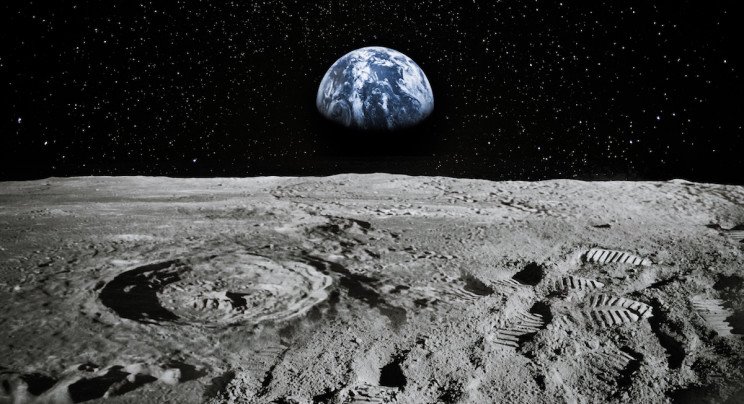
Let’s explore some interesting features, facts, or myths about our nearest neighbor, the Moon. Without it, life on Earth would be totally different, if not at all.
NASA News for the Moon
Note: This article is partially AI-generated.
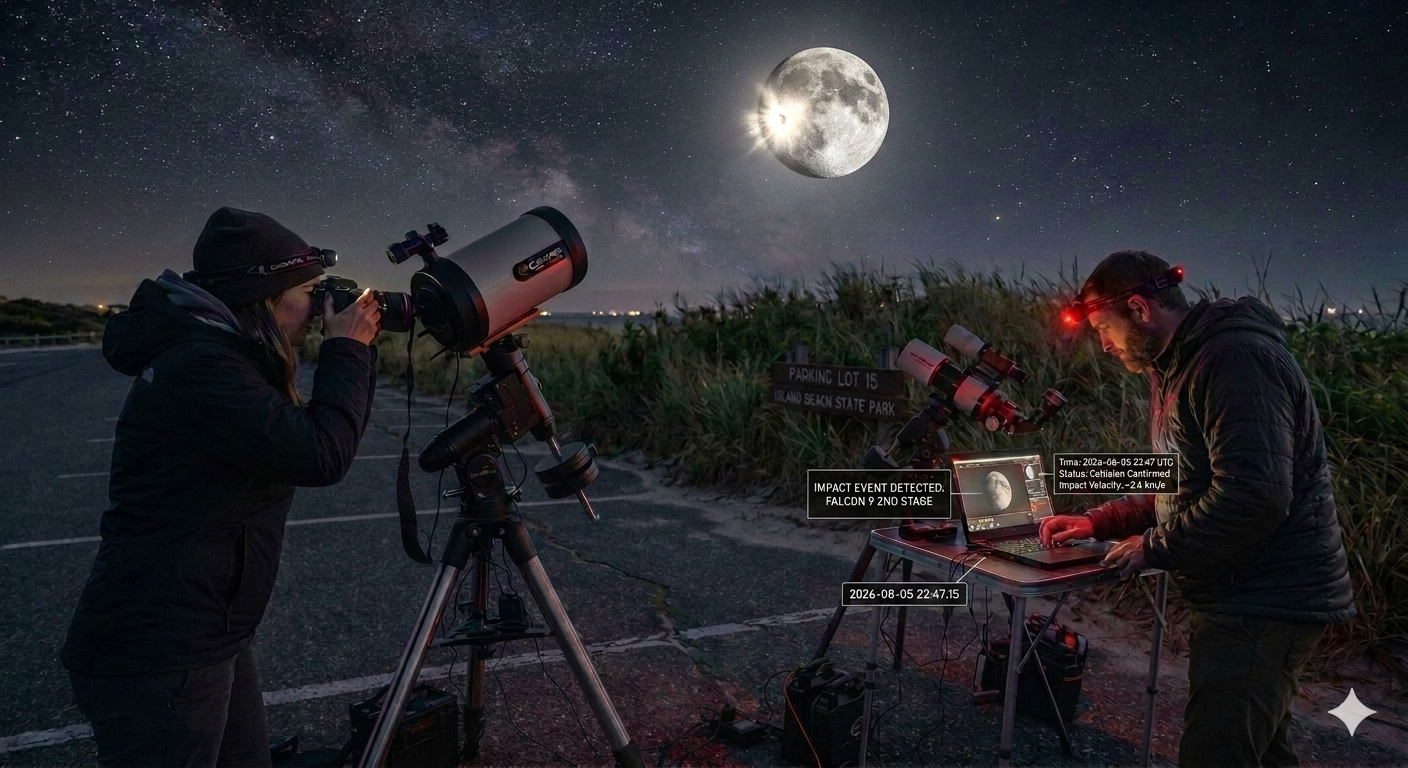
On August 5, 2026, the moon is in a waning gibbous phase heading toward the last quarter. Approximately 56.7% of the lunar disk is illuminated by the sun.
So what makes this day different from other waning gibbous phases?
An abandoned SpaceX Falcon 9 rocket stage is on a high-speed collision course to accidentally slam into the Moon.
This will potentially create a new crater and a substantial dust plume, with prime viewing opportunities from the eastern U.S. The collision, occurring at 5,400 mph, is expected to generate a debris cloud reaching up to 62 miles high, which may be visible to observers in areas like Toms River, New Jersey, using high-quality telescopes and high-frame-rate cameras. Read the full, in-depth scientific breakdown of what to expect at Space.com.
Most commercial smart telescopes lack the necessary high-frame-rate capabilities to capture a moon impact, though premium models with higher resolution, such as the Celestron Origin Mark II and Vaonis Vespera Pro 2, offer the best, albeit low, chance of success. Experts note that intense lunar glare and specialized, long-exposure, deep-sky functionality make capturing the event difficult for standard consumer gear. For further technical details, see the analysis on Cloudy Nights and Space.com.
High-end traditional astrophotography setups have the best chance of capturing this event from Earth, far outperforming automated smart telescopes. Unlike smart telescopes, which are optimized for automated deep-sky imaging, traditional setups allow you to customize camera settings, frame rates, and filters to handle the extreme glare of the Moon.
Because the rocket hits the sunlit side of the Moon, you will not see a bright flash. Your camera must be rolling continuously during the exact window of the impact. Afterward, you will have to manually scroll through thousands of video frames to look for a subtle, dark silhouette or a faint, sunlit dust cloud expanding past the Moon’s sharp western edge near Einstein Crater.
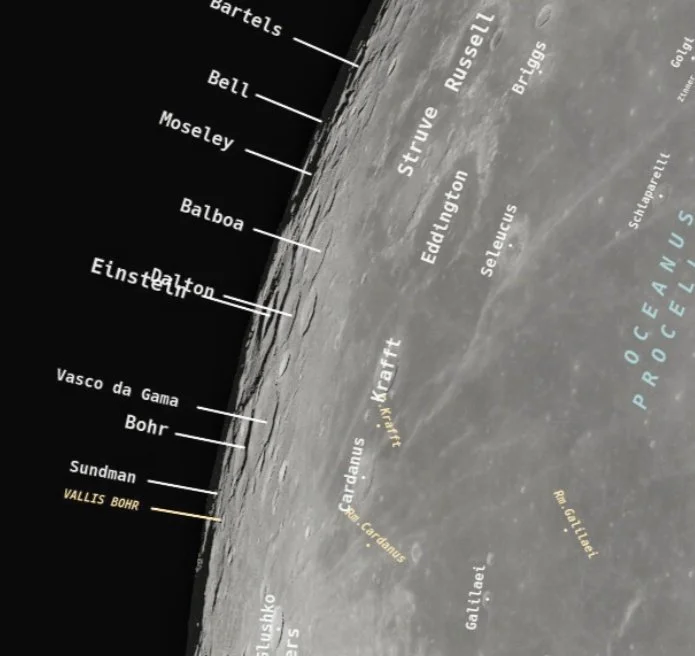
Einstein Crater
Einstein's crater is located on the western limb of the Moon's near side, specifically at 16.60° N, 88.65° W.
It sits in the northern hemisphere near the edge of the visible disk, making it hard to see from Earth unless favorable libration brings it into view.
So this one will be difficult to capture, but it will be a great image to capture. Are you up for the challenge?

Outreach material below is distributed free for public outreach.
Astronomy for ASTRA Kids

NASA Science
For our young ASTRA members, NASA has online webpages for kids, an educational resource for fun learning, and arts & crafts.
Why Does the Moon Have Craters?
Additional NASA resources for students of all ages and educators visit: NASA-Learning-Resources.
Image by Quan-Yu Zang on Squarespace.
Around The Web
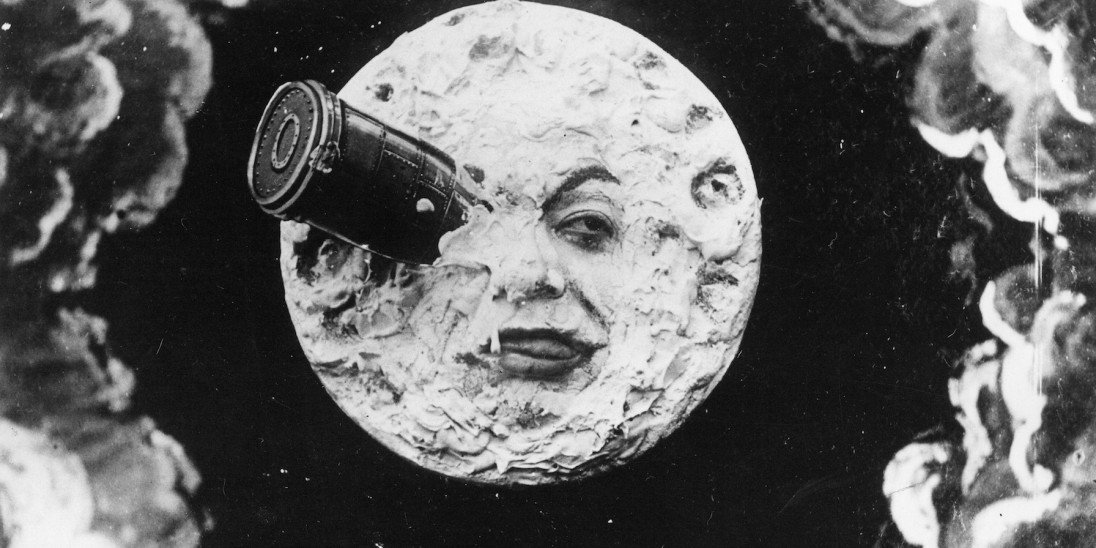
No One Can Stop This SpaceX Rocket From Hitting the Moon
More on the upcoming August 5 lunar event.
The following video from YouTube was shared by Vic Palmieri … NASASpaceNews
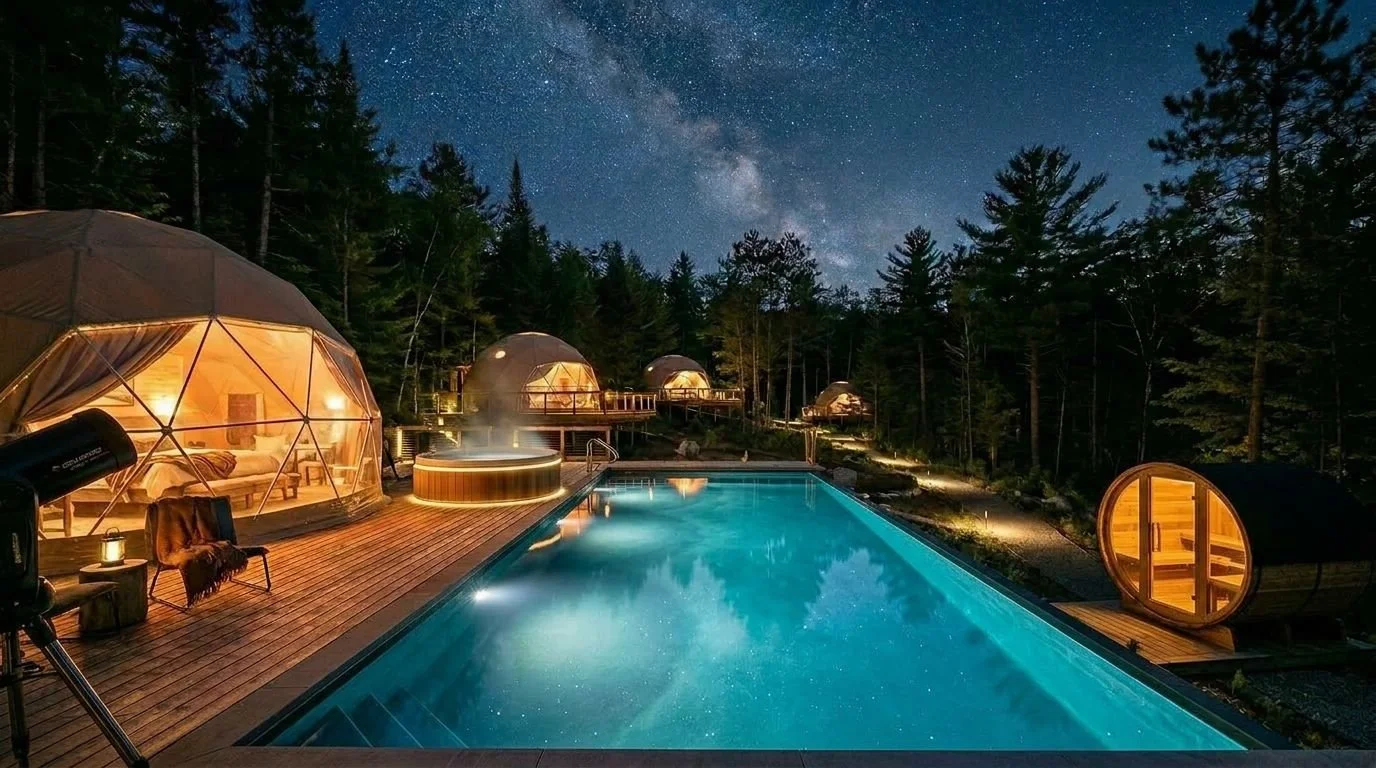
A Boutique Wellness Retreat, Set Under Michigan’s Night Sky.
A stargazing retreat next to Crystal Mountain in Northern Michigan. Shared by Matt Webster, Jim and Gloria’s son. Stargazers Luxury Glamping Resort
While not an official Dark Sky location, it does offer some great viewing, according to Matthew.
Nearby Alternatives: If you want an official, certified dark sky experience in the region, the prominent nearby National Park Service-listed destination is Sleeping Bear Dunes National Lakeshore (roughly 35 to 45 miles northwest), which actively promotes and interprets pristine night skies.
Dark Sky News

Latest News:
DarkSky New Jersey has now become a 501c (3). This now opens the doors for bigger and better things for the movement, correcting light pollution in New Jersey.
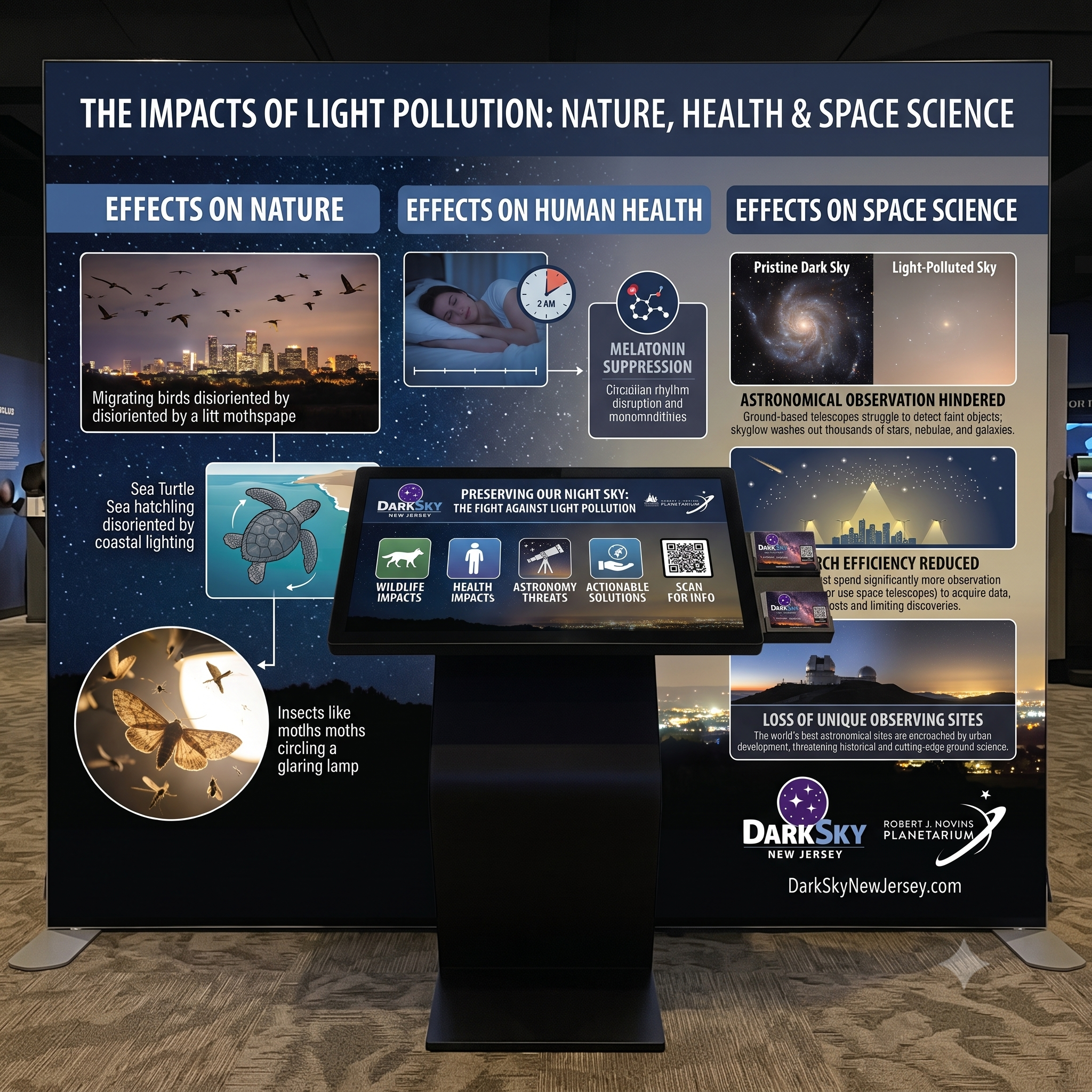
DarkSky New Jersey Exhibit?
The imagined exhibit will help create public awareness of the impacts of light pollution.
It’s a conceptual design using a display board and Kiosk system. So, depending on the location and available space, it can be changed to suit a potential location.
Time will tell; with some grants, this could happen.
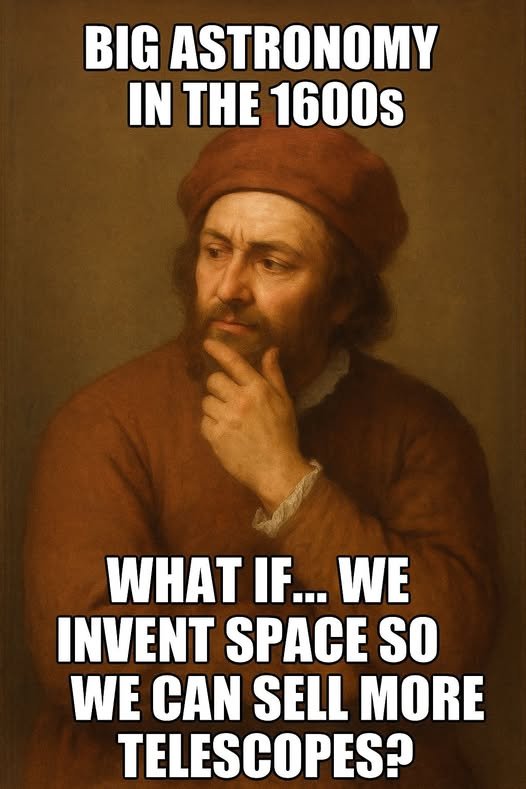
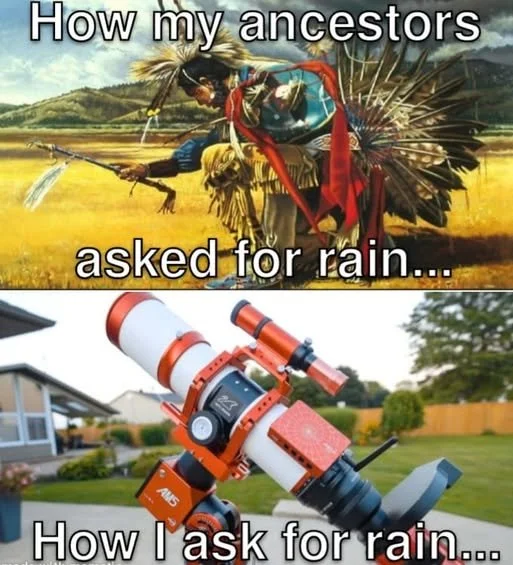
On the lighter side of astronomy …

What’s Up:
Sky Watching Tips from NASA
Provided by NASA Jet Propulsion Laboratory. Is usually updated anywhere from the first day of the month to the fifth day of the month. Check back to this linked image if it hasn’t been updated yet.
For more go to NASA Jet Propulsion Laboratory webpage: What’s Up: Skywatching Tips From NASA

This article and images are distributed by NASA Night Sky Network
The Night Sky Network program supports astronomy clubs across the USA dedicated to astronomy outreach.
Visit nightsky.jpl.nasa.gov to find local clubs, events, and more!
NSN Articles have been suspended until further notice.
The articles below are from other free sources, including older NSN articles.
CTB "Caltech B-list”
Created by Robert W. Wilson and John G. Bolton, CTB stands for Caltech Radio Observatory B-list, a historical catalog designation prefix. Objects with this label (such as CTB 1 or CTB 80) are galactic radio sources discovered during surveys conducted by the California Institute of Technology, many of which were later identified as supernova remnants (expanding shells of gas from dead stars). CTBs can be found at: https://www.constellation-guide.com/medulla-nebula-ctb-1/
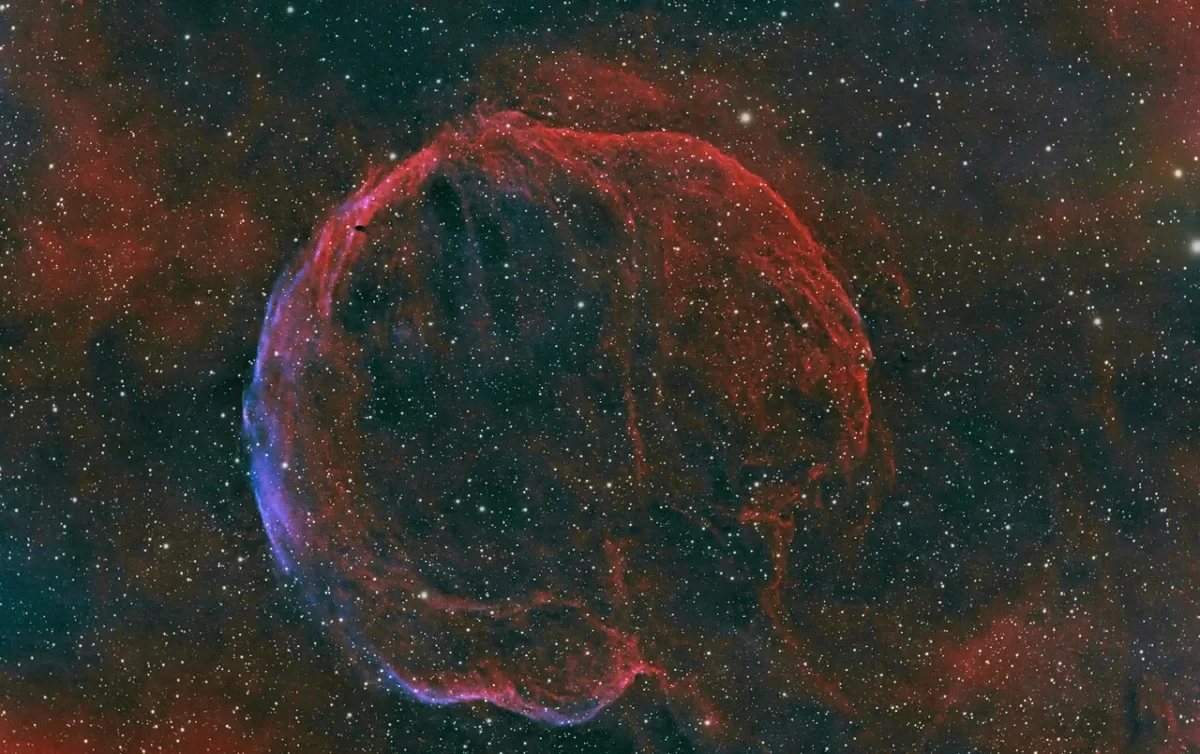
The Caltech Observatory List B (CTB), published in 1960, is a catalog of 110 discrete radio sources along the Milky Way's galactic plane, primarily identifying supernova remnants and H II regions. These sources are significant for studying stellar evolution, synchrotron radiation from high-energy particles, and mapping the galaxy's structure through interstellar dust.
Medulla Nebula (CTB 1), image credit: Flickr Commons/Astrophoto Andy (CC0 1.0)
While professional radio and X-ray telescopes map the emissions, amateur observation requires large apertures or, more effectively, deep-exposure astrophotography using narrowband OIII or H-alpha filters to capture faint, extended structures like CTB 1.
CTB 1, widely known as the Medulla Nebula or the Garlic Nebula, is an exceptionally faint, expanding supernova remnant (SNR) located in the constellation Cassiopeia. Initially misclassified by astronomer George Abell in 1955 as a planetary nebula (and designated Abell 85), subsequent radio and X-ray observations confirmed it to be the ghostly shell of a dead star.
Astrophotography Target: Because it is incredibly dim, capturing the intricate gas filaments of CTB 1 requires specialized narrowband filters (targeting Hydrogen-alpha and Oxygen-III wavelengths) and massive exposure times, often ranging from 40 to over 80 hours of integration.
How Amateurs Successfully "Observe" CTB Objects
Long-Exposure Astrophotography: Instead of looking through an eyepiece, amateurs use specialized astronomy cameras to collect light over long periods. Capturing a clear image of CTB 1 typically requires anywhere from 11 to over 60 hours of total exposure time spread across multiple nights.
Narrowband Filters: CTB objects glow primarily in specific wavelengths of light. Amateurs use Hydrogen-alpha (Hα) and Oxygen-III (OIII) narrowband filters to isolate the faint glowing gas of the nebula while completely blocking out light pollution and background starlight.
Wide-Field Telescopes: Since objects like CTB 1 are visually large (about the size of a full moon), amateur astrophotographers often use relatively small, wide-field refracting telescopes (such as 70mm to 100mm apertures) to capture the entire structure in a single frame.
Smart Telescopes: The rise of automated, all-in-one digital telescopes (like Seestar, Unistellar, or Vaonis) allows beginners to track the sky and stack images automatically, bringing once-impossible targets into the realm of casual hobbyists.
There are 110 original objects in the CTB catalog. The most famous objects in the CTB catalog are all supernova remnants (SNRs) that are heavily studied by professional astrophysicists and targeted by deep-sky astrophotographers.
The most prominent objects include:
CTB 1 (The Medulla Nebula): Located in the constellation Cassiopeia. This is by far the most famous target for amateur astrophotographers because of its large, brain-like shell structure. It is incredibly faint and requires dozens of hours of narrowband exposure (particularly OIII and H-alpha) to resolve.
CTB 109: A highly famous, asymmetrical supernova remnant in Cassiopeia. It is renowned for harboring 1E 2259+58.6, one of the universe's rarest objects: an anomalous X-ray pulsar and ultra-dense magnetar.
CTB 80: A complex "composite" supernova remnant in Vulpecula. It features unique, faint radio arms and holds a runaway, rapidly spinning pulsar (PSR B1951+32) fleeing the original explosion site at immense speeds.
CTB 87: Located in Cygnus, this is an evolved plerionic supernova remnant. It is heavily studied because it contains a prominent pulsar wind nebula (PWN). In 2024, astronomers using China's FAST telescope discovered its long-hidden core radio pulsar, PSR J2016+3711.

Let’s Explore Space
The Latest News on Astronomy and Sky Watching — By StarWalk Astronomy App - Sky Tonight

Tonight’s Sky: No longer posting
October 2024 was the last updated posting of Tonight’s Sky. It is still available via YouTube.
Linked is the twelve-month playlist on YouTube.
Any suggested replacements, let me know.
Visit the STScI, which produced Hubblesite.org video overviews for Tonight’s Sky.
They can be found both on Facebook and stsci.edu.
Submissions Welcome
Members are invited to submit articles, photos, news, or stories for inclusion with Astral Projections Online. Please contact the ASTRA Webmaster.