Astral Projections Online March 2026
Check our Website for updated content at www.astra-nj.com
Club Presentations Wanted:
Does anyone have any astronomy items of interest to share with the membership?
Please let us know at Club Contacts. For 2026, we still have some open slots.
Club dues and membership.
If you renew after March 31, you will be renewed as a new member.
Forms can be found on the website or here.
ASTRAL PROJECTIONS ONLINE (APO for short) is an email-linked publication for members only. If you exit APO to the club website or other resources you will need to use the emailed link again to get back to it. If you wish to retain a copy please bookmark or refer back to the email. We will make all efforts to post by the first week of the month.
Submissions Welcome: Members are invited to submit articles, photos, news, or stories for inclusion with Astral Projections Online. Please contact the ASTRA Webmaster.
Event Calendar
Event Cancellations: Members will receive email notifications of event cancellations.
Upcoming March ASTRA Meeting
Friday, March 13, 2026, at 7:00 PM EST at Novins Planetarium
Upcoming Public Star Parties
March 21, 2026 - Jake’s BRanch - 8 PM
April 25, 2026 - Jake’s Branch - 8:30 PM
Upcoming Public, County & State Park Presentations 2026
Public Outreach Presentations: If any member wishes to support ASTRA outreach efforts with the public, please let Vinny, Ro, or Jim know of any interest. Additional help for these events is always appreciated.
Cattus Island County Park - The Moon: Our Nearest Neighbor - March 3 - 6 PM
County and State Park presentations require a registration fee; call the hosting park to reserve.

Website Updates …
Please visit our club website. We continue to have additional updates, if some content would be useful to members please let us know.
"The Messier Marathon is an all-night struggle against sleep deprivation... a challenge that every dedicated backyard astronomer should try at least once."
Glenn Chaple - Astronomy Magazine

ASTRA Meeting - March 13 at 7 PM
For the March meeting at the planetarium, we will meet in the meeting room at 7 PM.
Jim Webster will present on Constellation Mythology: Orion and the Seven Sisters.
Rosemarie Spedaliere will present a report on her trip to Tucson in January with the Vatican Observatory Foundation.
Please support Novins Planetarium, patronizing their shows, who has supported us since the beginning of ASTRA.
Event Reports

Our star party for February was canceled due to the weather.
Annie Nyle - Stock image on SquareSpace
February ASTRA Meeting Summary
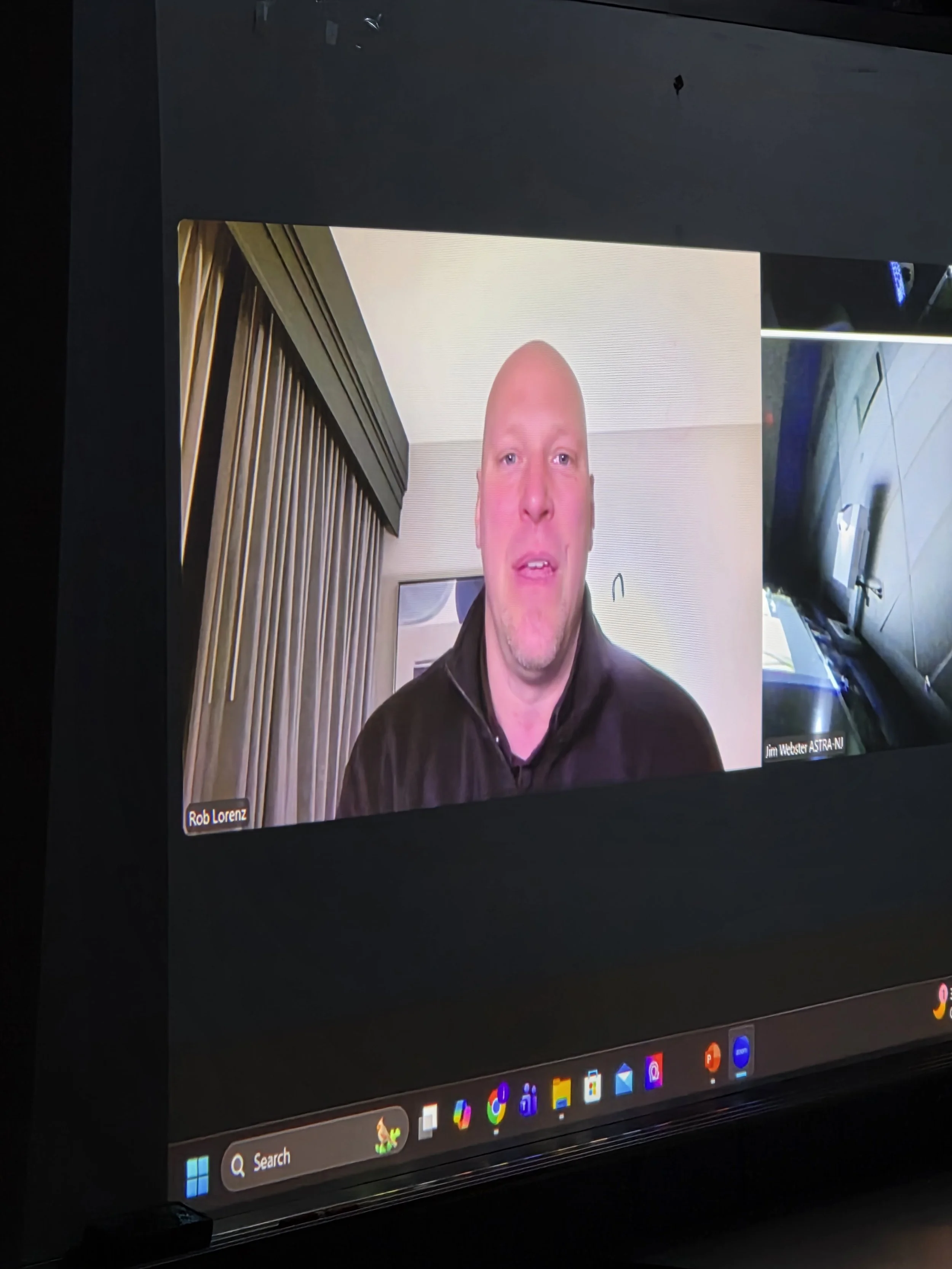
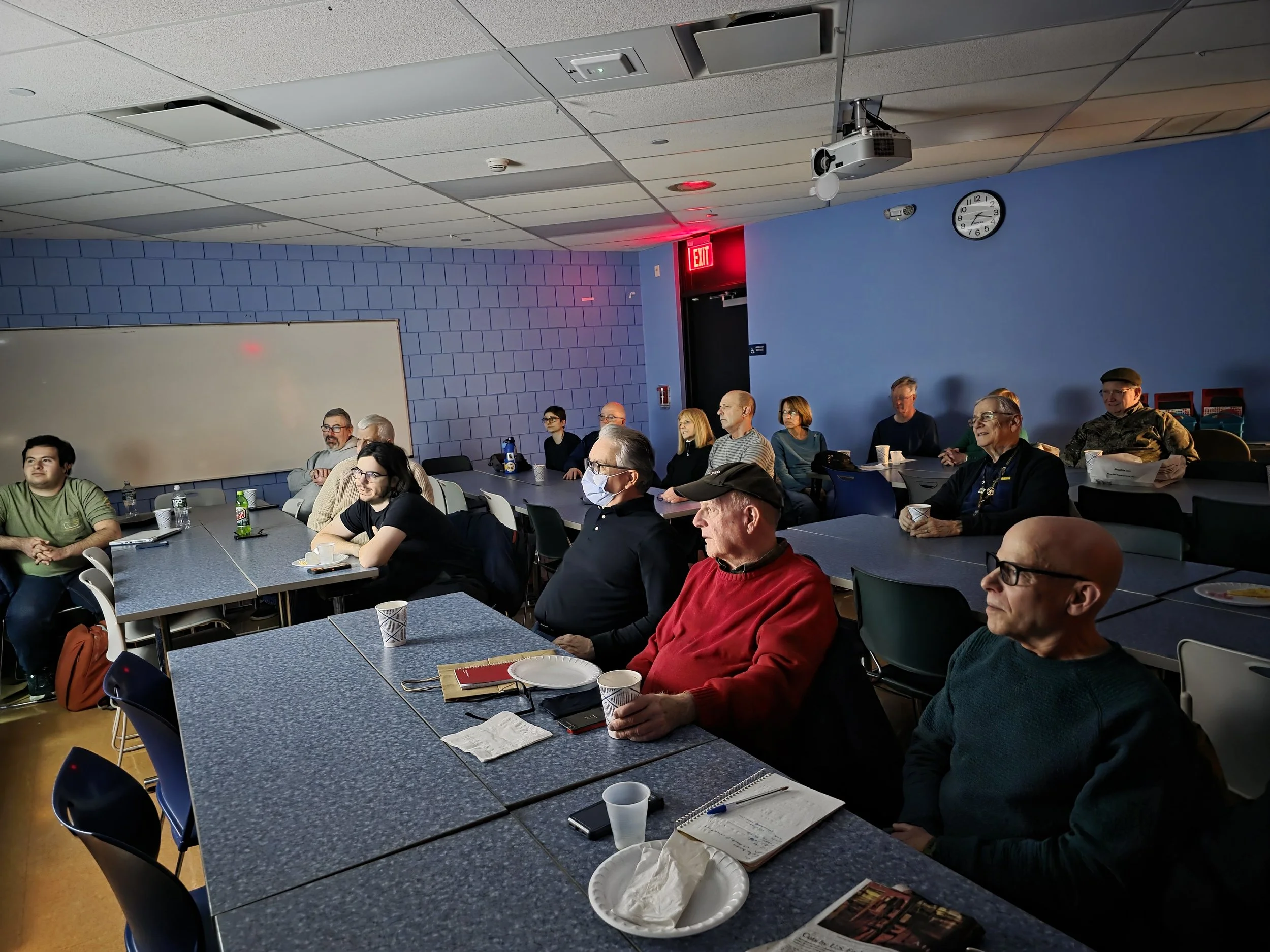
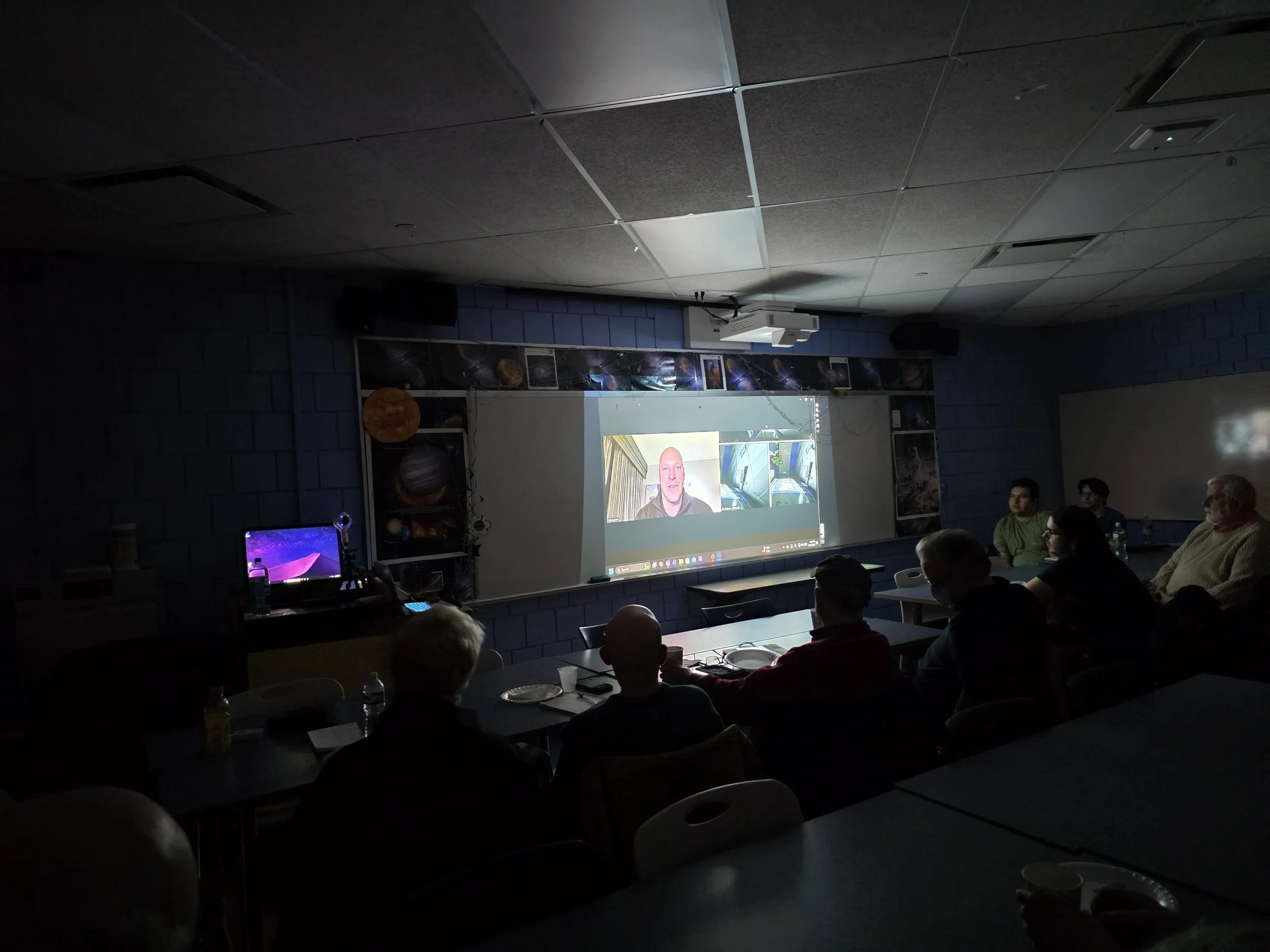
For our February meeting, we had Rob Lorenz, S.J., from the Vatican Observatory, who spoke to us about the Observatory’s history. Rob Lorenz’s presentation on the history and contributions of the Vatican Observatory was well received by the ASTRA membership. We appreciate the time he spent with us.
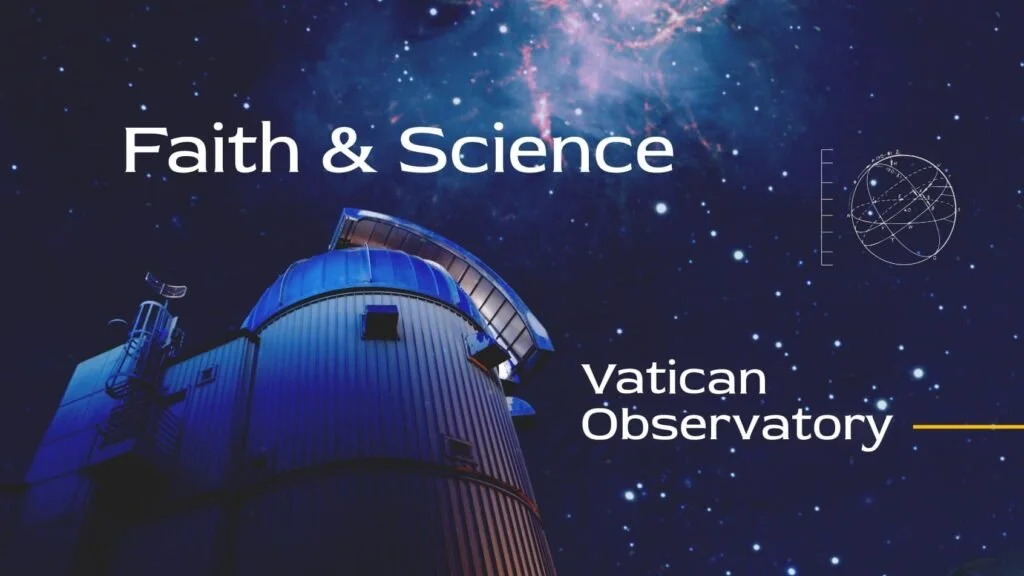
For our February meeting, we had Rob Lorenz, S.J., from the Vatican Observatory, who spoke to us about the Observatory’s history. Rob Lorenz’s presentation on the history and contributions of the Vatican Observatory was well received by the ASTRA membership. We appreciate the time he spent with us.
The linked YouTube video has more on the 400 year history of the Vatican Observatory.
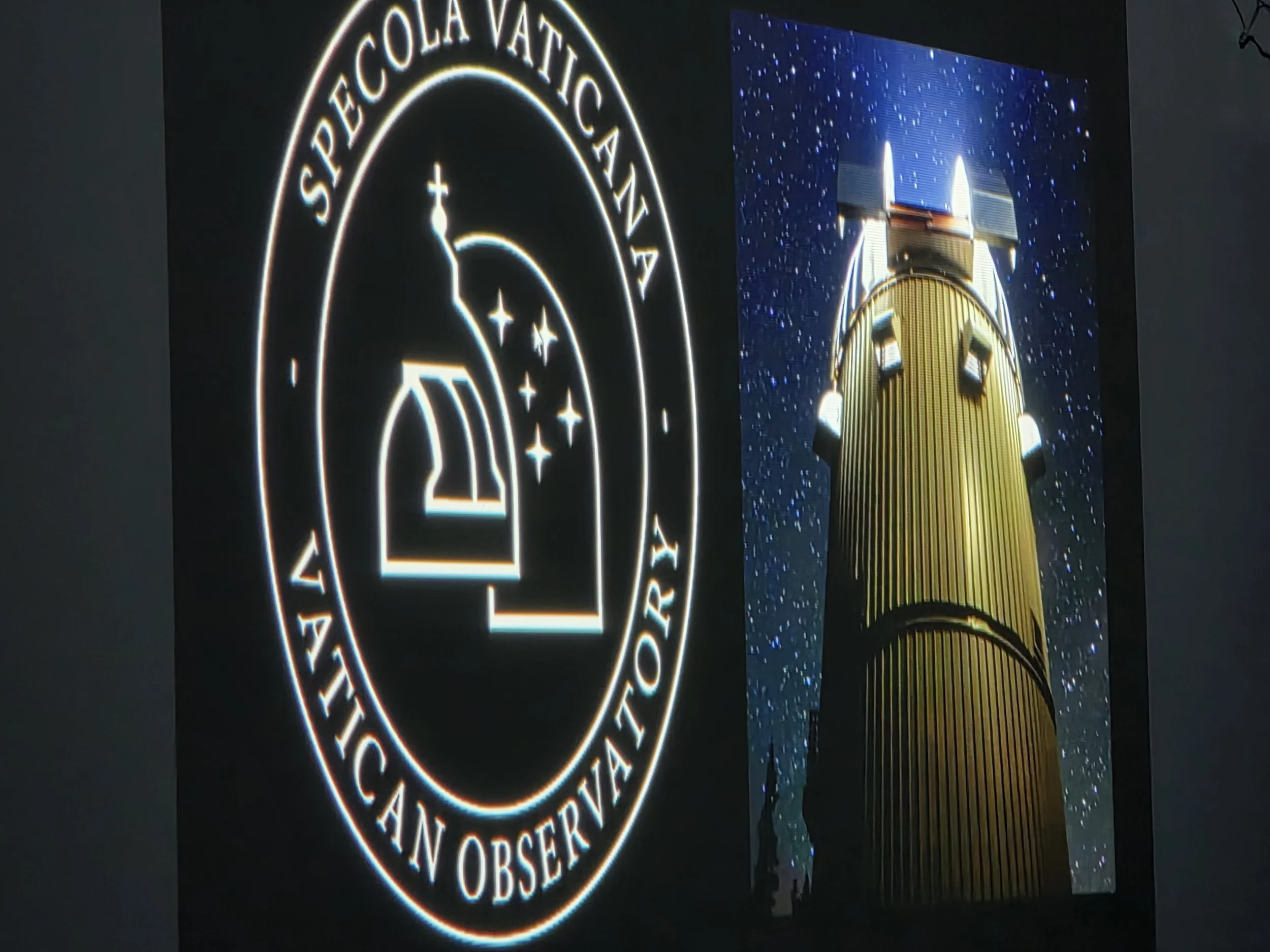
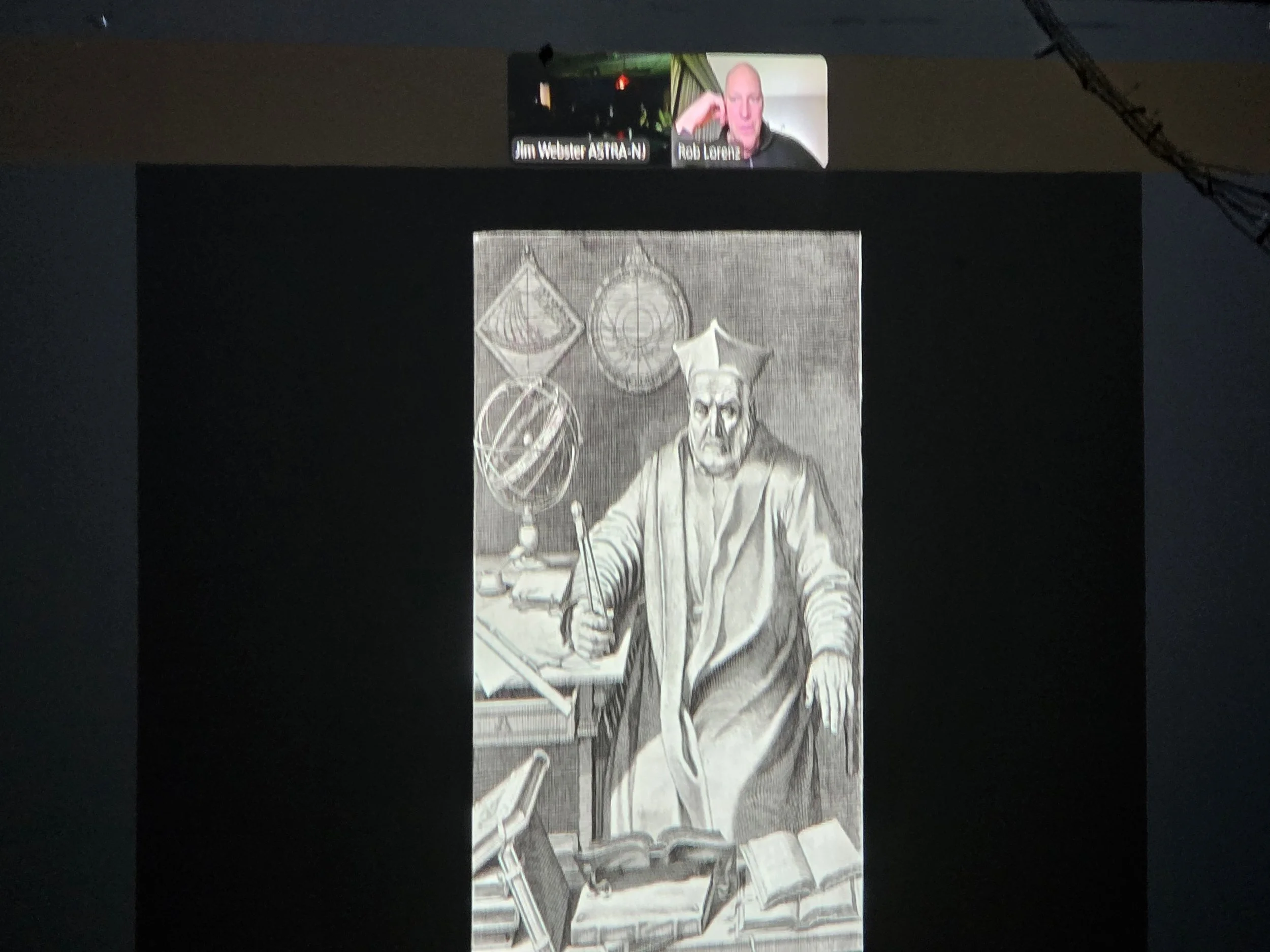
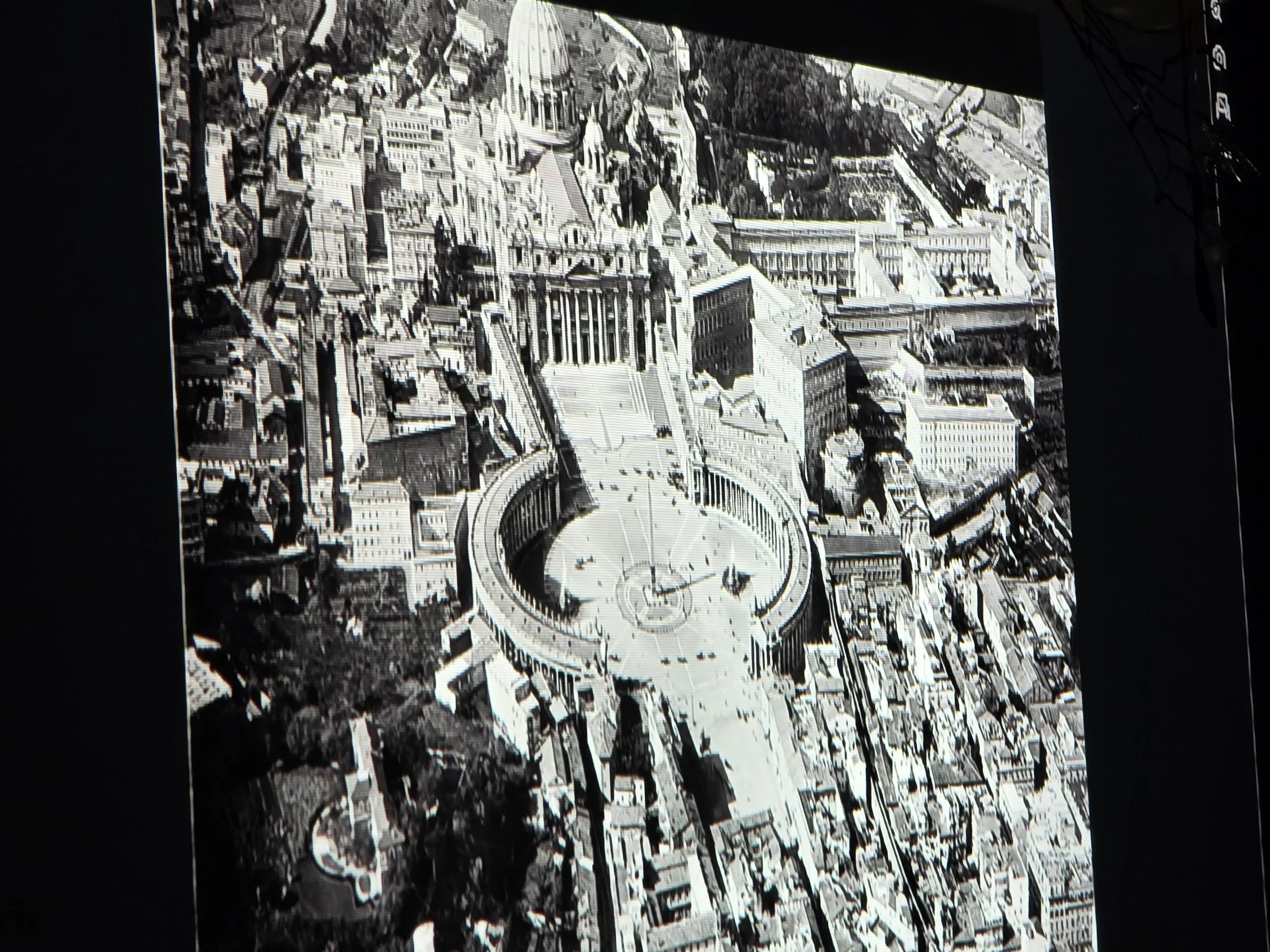
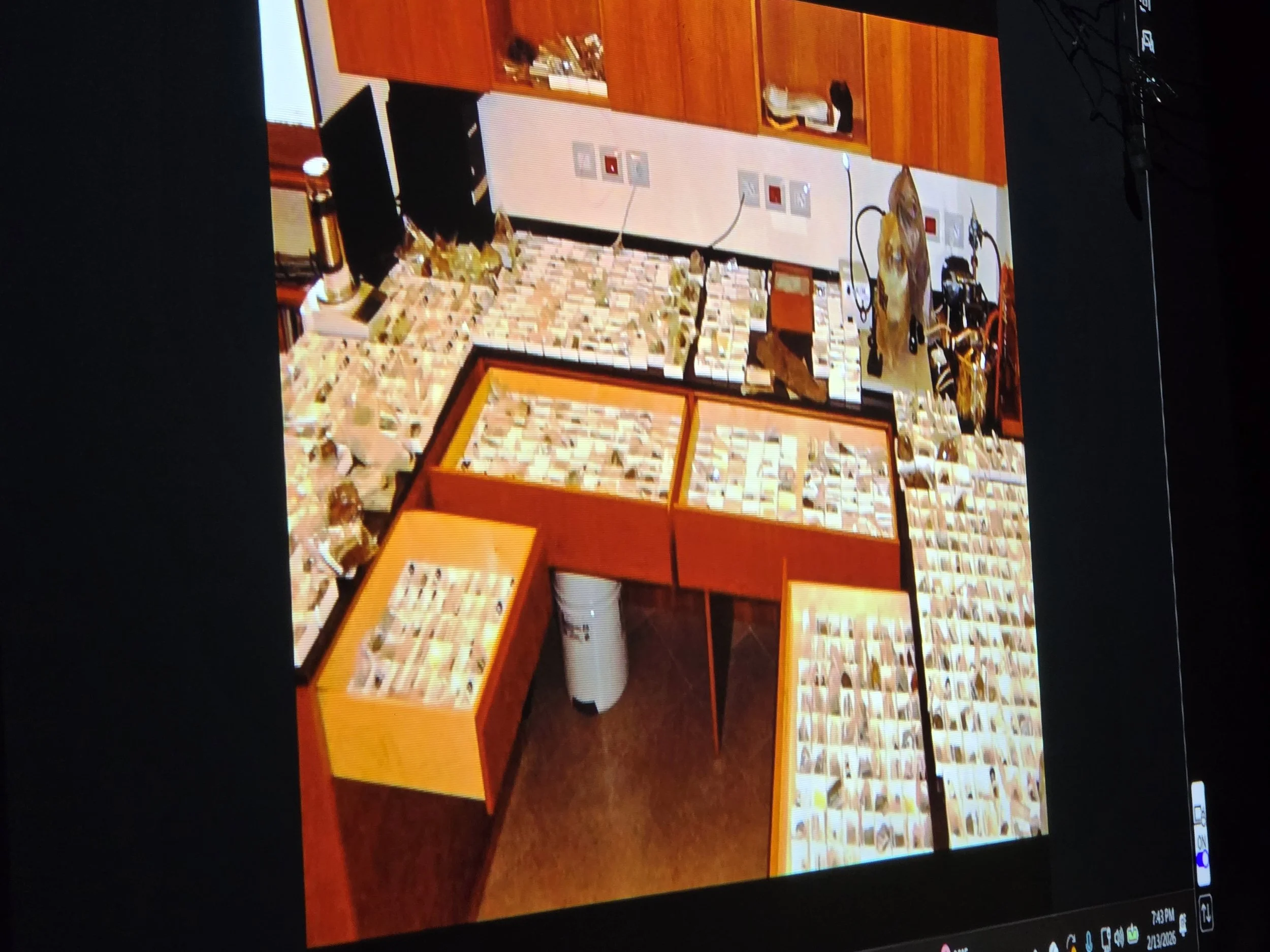
The Vatican Observatory (Specola Vaticana) is one of the world's oldest active astronomical research institutions, established to advance scientific understanding and bridge the dialogue between faith and science.
The Observatory operates from two main centers:
Castel Gandolfo, Italy: The headquarters are located at the Papal Summer Residence, focusing on administration, public outreach, and historical preservation.
Tucson, Arizona: Home to the Vatican Observatory Research Group (VORG), which utilizes the Vatican Advanced Technology Telescope (VATT) on Mount Graham for active scientific research.
The Vatican Observatory is approximately 135 years old in its modern form, though its historical roots extend back over 440 years.
Ancient Roots (1582): The observatory traces its origins to the committee established by Pope Gregory XIII to reform the calendar, leading to the Gregorian calendar used today.
Official Foundation (1891): The modern institution, officially titled the Vatican Observatory (Specola Vaticana), was formally established on March 14, 1891, by Pope Leo XIII.
Modern Relocation (1935): The headquarters were moved to their current location at Castel Gandolfo to escape Rome's light pollution, with the new facility inaugurated on September 29, 1935.
Arizona Expansion (1981): A major second research center, the VORG, was established in Tucson, Arizona, with the completion of the Vatican Advanced Technology Telescope (VATT) in 1993.
Key Research & Assets:
VATT Telescope: A 1.8-meter telescope in Arizona that pioneered "honeycomb" mirror technology.
Meteorite Collection: One of the world’s preeminent collections, featuring over 1,200 specimens, including fragments from Mars and the Moon.
Historical Library: Contains over 22,000 volumes, including rare first editions by Copernicus, Galileo, and Newton.
Active Projects: Ongoing research includes studying the Milky Way's chemistry, exoplanet surveys, and collaborations with NASA on asteroid sample analysis.
Why does the Vatican have a giant research telescope in Arizona? YouTube
Public Events and Presentations
We had two events for February:
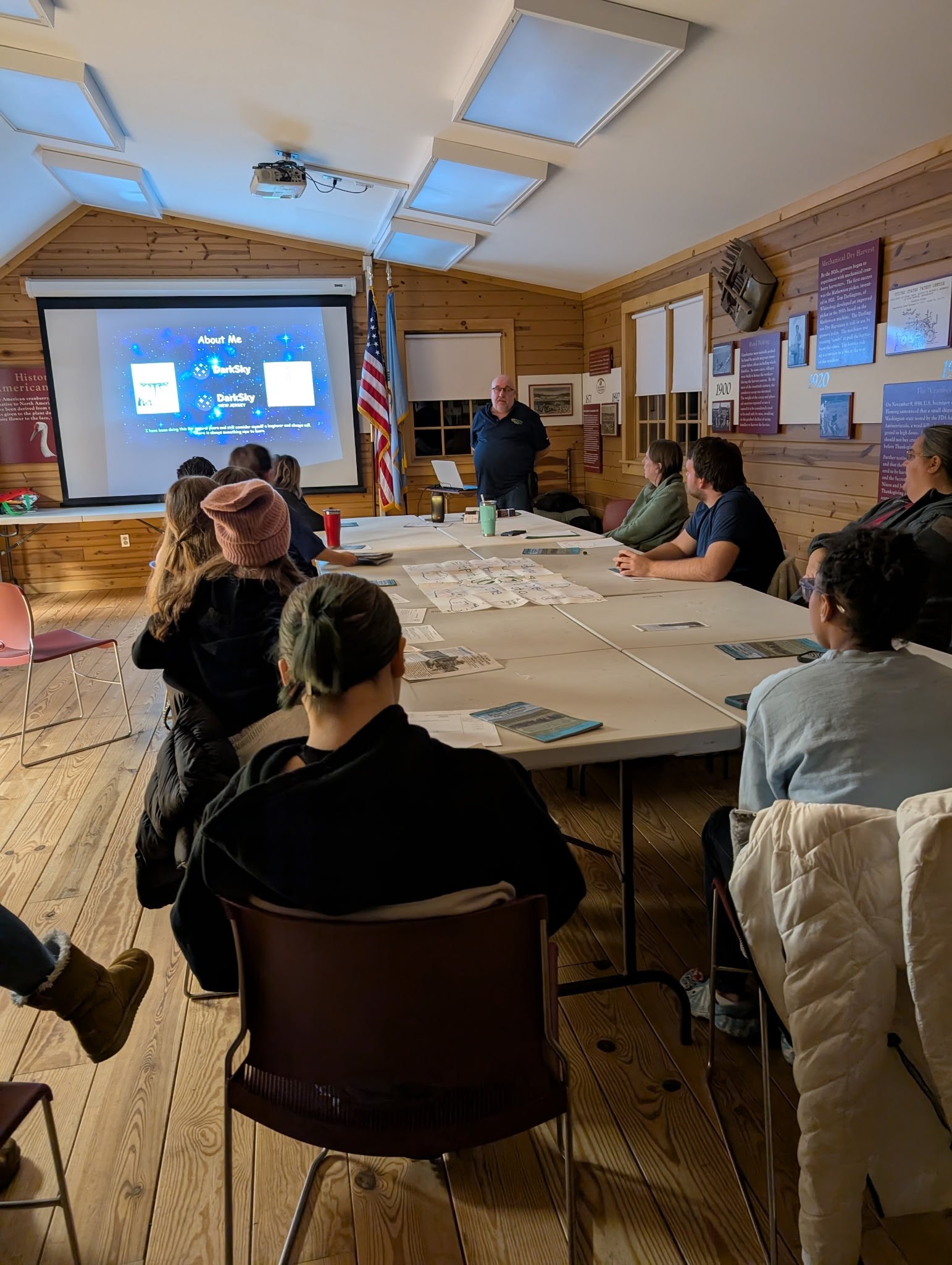
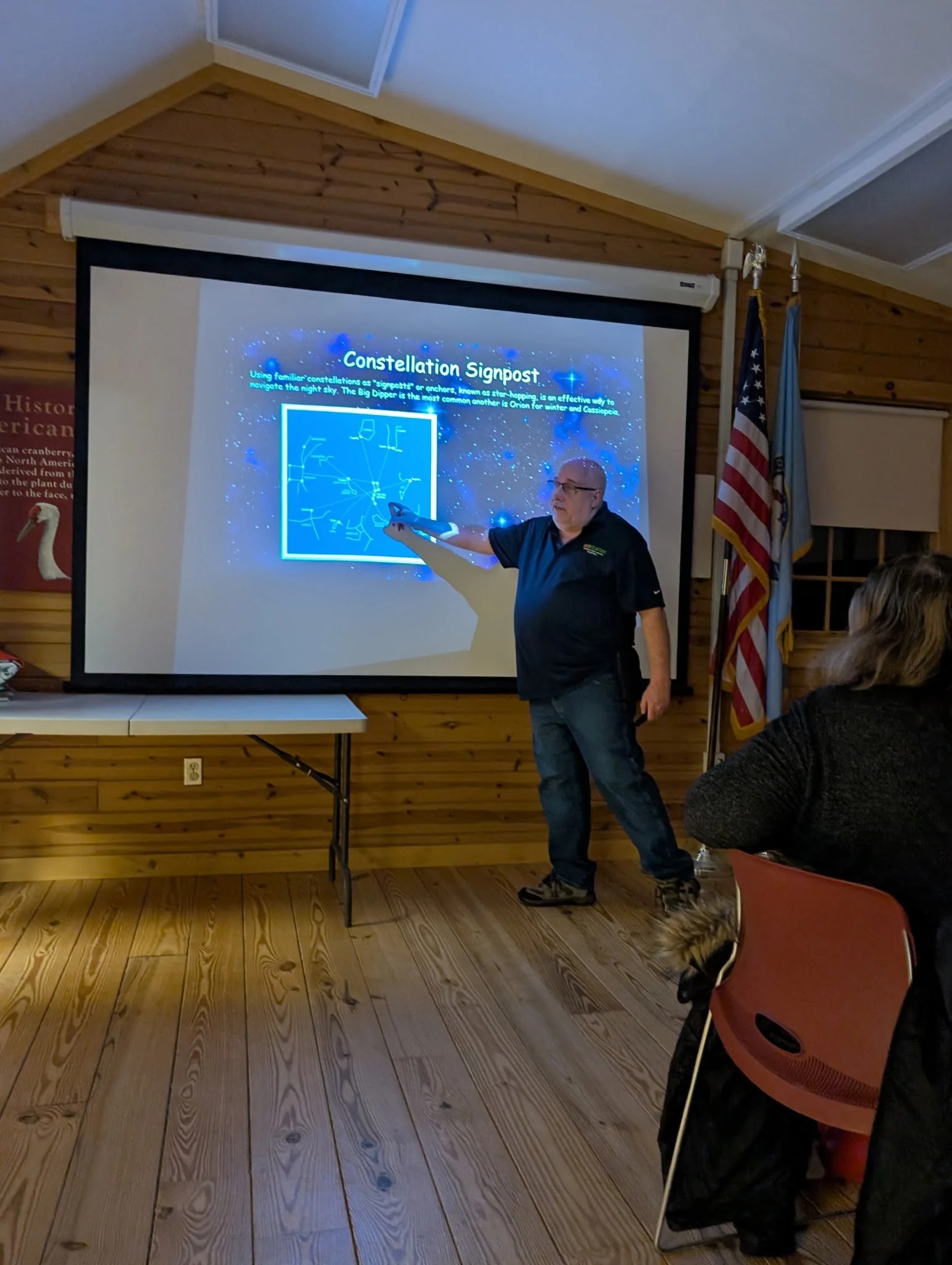
Cloverdale Farms hosted the 4H club on February 19th with a total of 20 attendees. Jim Webster presented Seasonal Constellation. Our focus was on the circumpolar and winter constellations. The 4H Club was actively engaged with the presentation. For an activity, we had a Planisphere and constellation blocks, allowing them to find the constellation they picked.
Citizen Science, Globe-At-Night, and DarkSky were also discussed. Well received and fit into one of the 4H Club’s purposes of protecting the environment.


Long Beach Island Science and Arts Foundation

The second presentation for the month on February 21 was with the Long Beach Island Science and Arts Foundation. Where art, community, and environment come together to inspire creativity, learning, and connection while celebrating the cultural and natural heritage of Long Beach Island.
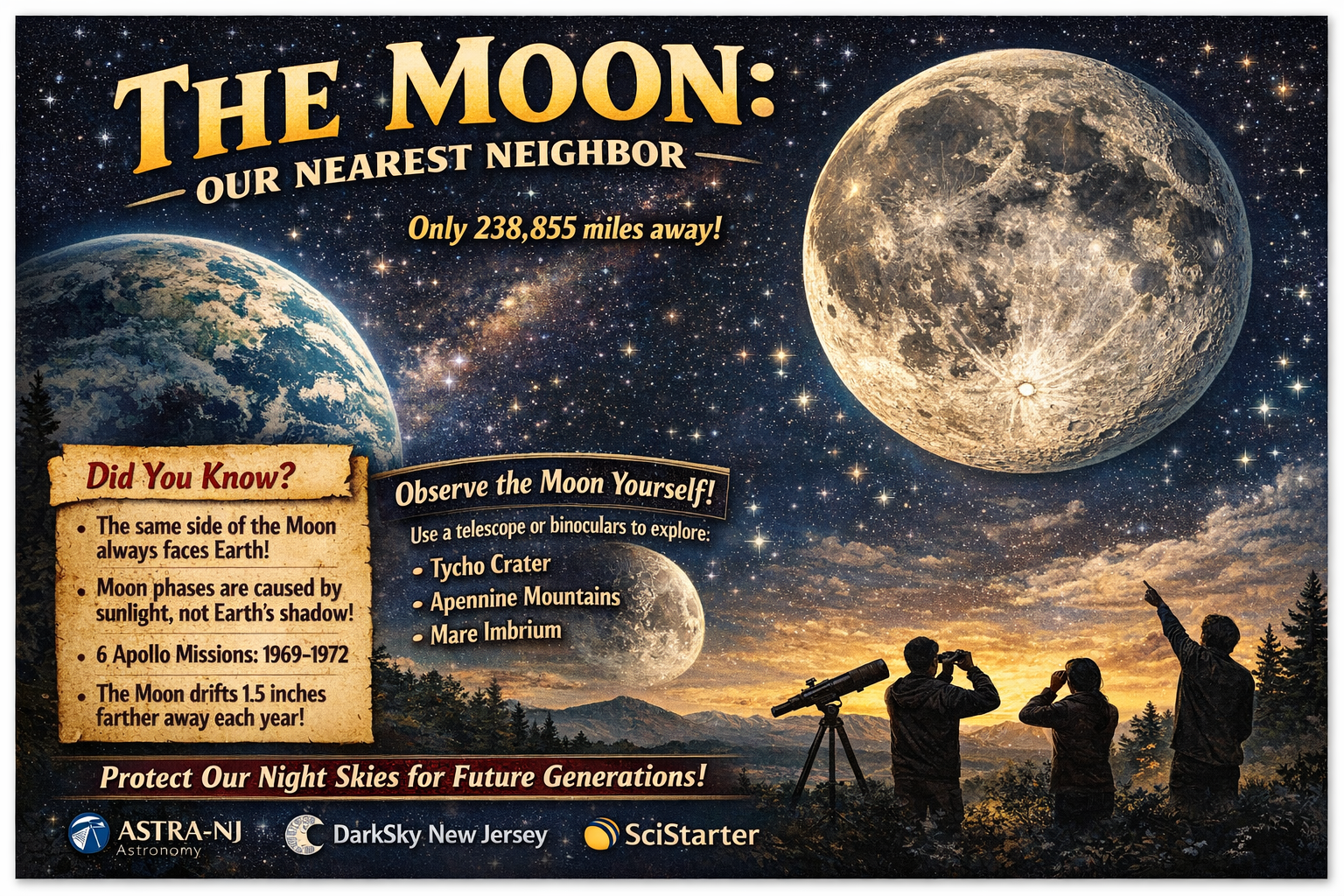
In a Zoom session, Jim Webster presented the newly revised The Moon: Our Nearest Neighbor. Originally, the presentation, which was an hour and a half, is now under an hour. This was our third presentation for LBIF.
The LBIF host received feedback that the presentation was well-received by the 20 participants.
Citizen Science, Globe-At-Night, and DarkSky were also discussed with the upcoming 2.5 Million Acts of Science for April and the International Dark Sky Week on April 13 to April 20.
Members Submitted Articles & Items
Whatever it is, how you tell your story online can make all the difference.
Contact: Jim Webster, ASTRA President and Webmaster, regarding submissions.
The Messier Marathon - By Vinny Illuzzi
(This article was created with material and input from Gemini, ChatGPT, and Copilot AI.)
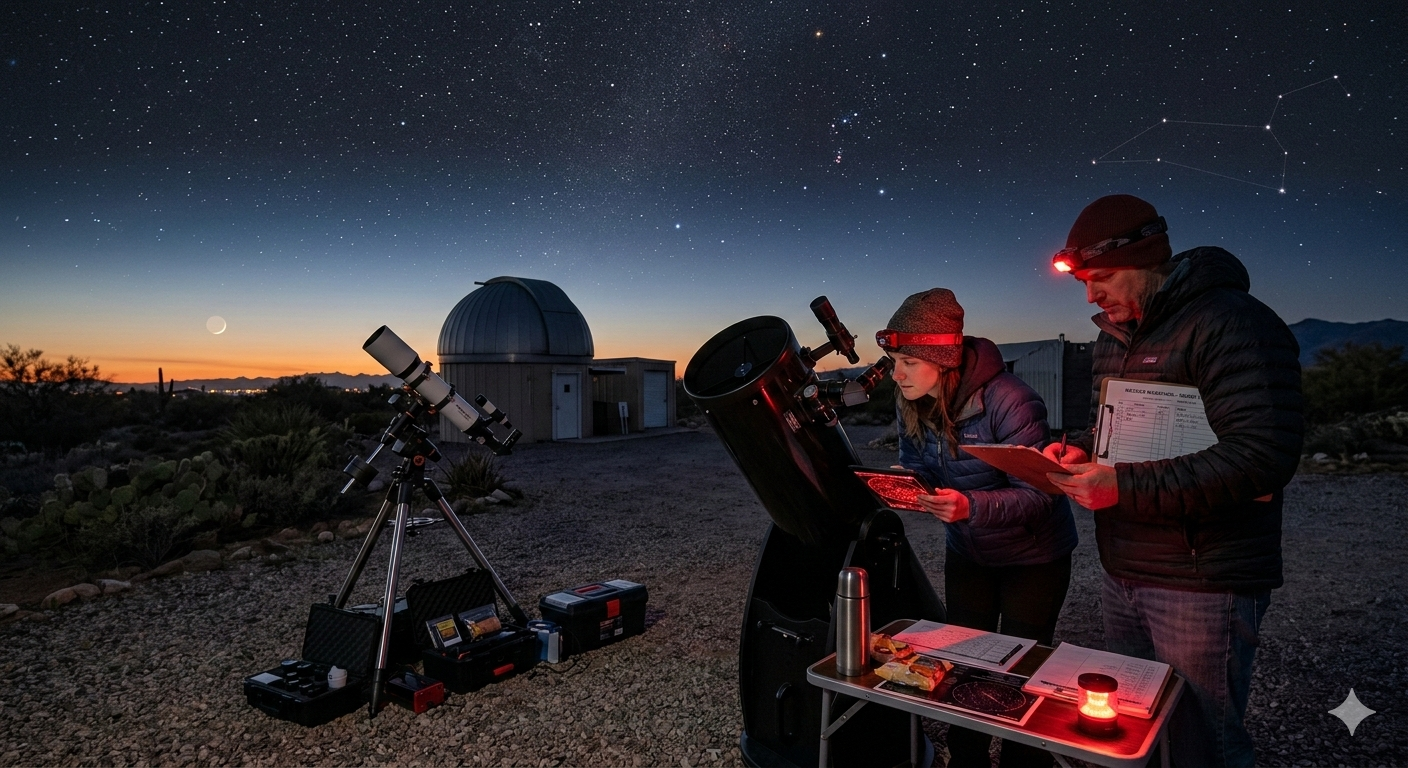
Every spring, amateur astronomers across the Northern Hemisphere take on one of the most popular challenges in observational astronomy: the Messier Marathon. It’s an all-night sprint through the night sky, a test of skill, endurance, and celestial navigation.

Who was Charles Messier?
Charles Messier (1730–1817) was a French astronomer best known for creating the Messier Catalog, a list of 110 nebulae, star clusters, and galaxies that amateur astronomers still use today.
Messier wasn’t originally trying to map deep-sky objects; he was obsessed with discovering comets. He kept running into fuzzy objects that looked like comets but didn’t move. To avoid wasting time, he began cataloging these “nuisances” so he could ignore them during comet hunts.
Over time, this list became one of the most important deep sky catalogs in astronomy.
What is a Messier Marathon?
The Messier Marathon is an event where observers attempt to view all 110 objects in the Messier catalog in a single dusk‑to‑dawn session.
The marathon tradition began in the late 20th century as astronomers realized that, under the right conditions, every Messier object becomes visible at some point during a single night. Since then, it has become a rite of passage, a community event, and a personal challenge rolled into one.
Some observers run the marathon visually with a telescope or binoculars; others attempt astrophotography versions. Some aim for all 110 objects, while others simply enjoy the journey.
Why does the Messier Marathon happen in March?
March is the sweet spot for a simple reason: it’s the only time of year when the entire Messier catalog is visible in one night from mid‑northern latitudes.
Several factors make this possible:
Seasonal Sky Alignment
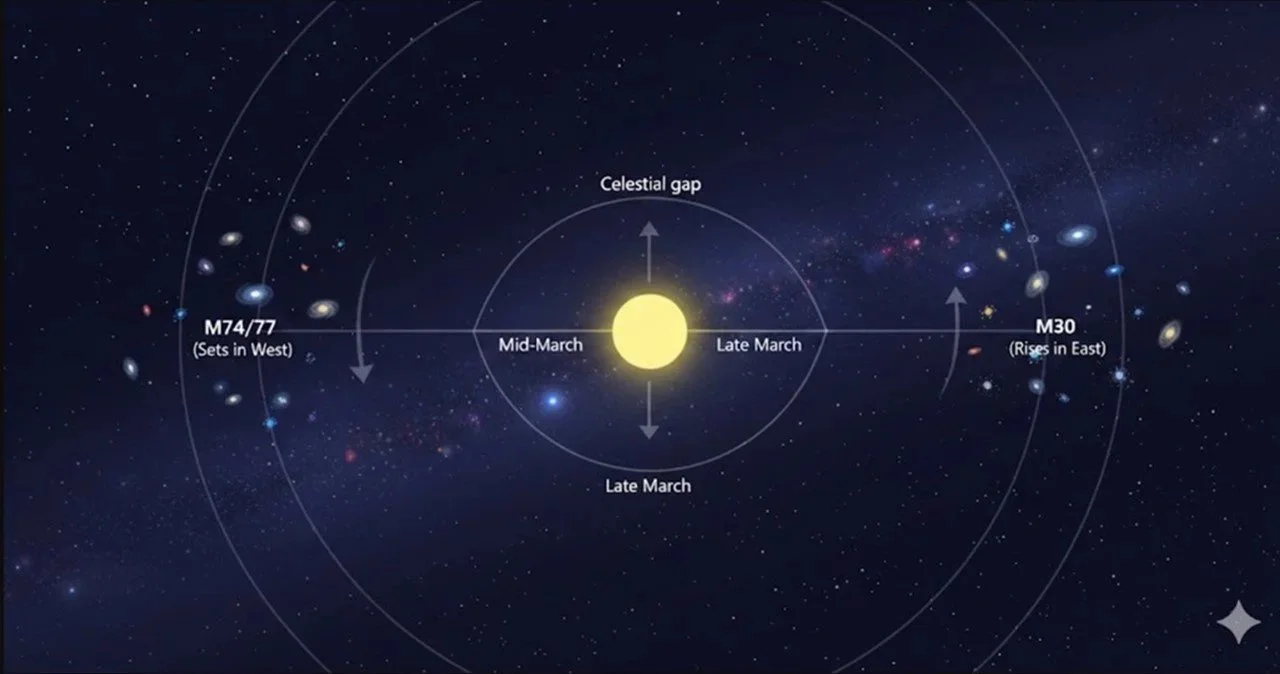
There is a small "window", or Celestial Gap, in the sky between the objects M30 and M74/M77 where no Messier objects reside. In late March, the Sun passes through this empty patch. This alignment allows all 110 objects to be on the "dark side" of the Earth at some point during a single 12-hour period.
· The last of the winter objects (like M74 and M77) are still above the western horizon at dusk.
· The early spring galaxies (like the Virgo Cluster) are high overhead at midnight.
· The summer objects (like M8 and M20) rise just before dawn.
Long Nights
By March, nights are shortening, but not too quickly. You still get enough darkness to fit the entire sequence.
Planning Your Messier Marathon
Whether it’s a group event or a solo endeavor, planning and preparation is essential to a successful marathon.
Choose the Right Night
• Aim for dates around the new moon in March. For 2026, the new moon occurs at 9:26 PM on March 18.
• Check weather forecasts for transparency and cloud cover.
• Have alternative dates available in case of uncooperative weather.
• If the thought of an all-night dusk-to-dawn activity is daunting, consider breaking it up across 2 or more nights. For example, dusk to midnight on one night, midnight to sunrise on another night.
Choose the Right Site
Your location can make or break the marathon. Scout a few locations ahead of time and look for:
• Dark skies far from city lights
• Low horizons, especially west (for dusk objects) and east (for dawn objects)
• Safe, accessible terrain where you can stay all night
• Minimal obstructions like trees or buildings
If you decide to split your marathon across multiple nights, you can optimize your horizon by using different locations for the dusk and dawn objects.
Prepare Your Equipment
You don’t need exotic equipment, just reliable, familiar tools and the gear you need to stay warm and comfortable for a long and possibly cold night.
Optics
Under reasonably dark skies, almost any telescope or even binoculars (7×50 or 10×50) are all you need to observe all 110 Messier objects. The key is familiarity with the equipment so you can very quickly slew to and acquire your targets. This is not the time to be learning a new piece of equipment.
Useful accessories
• Star charts or a digital sky app
• Red flashlight
• Dew heaters or shields
• Backup batteries
Comfort
• Comfortable observing chair
• Warm clothing and blankets. Bring extra clothing to layer.
• Snacks, warm drinks, and/or water.
Practice, Practice, Practice
Some Messier objects are notoriously tricky; spend a few evenings practicing.
• M74 and M77 (low at dusk)
• M33 (large and faint)
• M83 (low in the south for northern observers)
Know Your Targets
A critical piece of preparation is an object sequence list. Your marathon will start in the West to catch setting objects before they drop below the horizon. You will end in the East to catch rising objects before they wash out in the twilight of sunrise. Having and following a sequence list helps ensure that you don’t miss an object. An example sequence list for NJ in March is provided at the end of this article. Many planetarium applications and websites will let you generate a list for your particular observing location and date, as will many of the free AI tools available on line.
• Larry McNish's Messier Marathon Planner: https://calgary.rasc.ca/darksky/messierplanner.htm
• Some info on using Stellarium to create a list: https://www.cloudynights.com/forums/topic/839040-stellarium-plug-in/
Important note for GoTo scopes. The first set of objects you’ll be targeting right after sunset will be setting very quickly. You may not have time to align your scope before these objects set. Be prepared to manually acquire these first objects. The more you practice these, the better your chance of success. You’ll also want to know when you’ll have enough of a time gap between objects to complete your alignment.
Keep Track
Use a checklist to keep track of what you’ve observed to avoid taking the time to make notes as you go. Using a simple highlighter with your sequence list is a quick way of checking off what you’ve seen. If you’d rather have a dedicated checklist, there are many available on the web.
Executing the Marathon
At the Observing Site (Setup)
• Arrive well before sunset
• Set up the telescope and align the finder
• Check horizons for obstructions
• Organize your Messier list and logging method
• Let optics cool to ambient temperature
• Review the first 10 objects — they disappear fast
Early Evening Sprint
GoTo users, see the paragraph “Important note for GoTo scopes” above.
• Start immediately at dusk
• Prioritize low west objects (M74, M77, M31 group)
• Don’t linger — keep moving
Mid Evening Rhythm
• Follow your sequence steadily
• Check off each object as you go
• Take short breaks to avoid fatigue
• Monitor dew buildup
Midnight to Pre Dawn
• Stay organized — this is the galaxy-heavy section
• Pace yourself through Virgo Cluster objects
• Prepare for the final sprint before sunrise
• Set alarms for the last objects (M8, M20, M17, M16)
Pre Dawn Sprint
• Switch to low power for fast object acquisition
• Prioritize rising objects in the east
• Move quickly — sky brightens fast
• Check off everything immediately
Conclusion
The Messier Marathon is more than a checklist; it’s a challenge that blends skill, patience, and passion. Completing it deepens your understanding of celestial navigation and connects you to a long tradition of amateur astronomy. Whether you logged 110 objects or 30, you’ve accomplished something special.
The information provided here is in no way an exhaustive list of how to plan and prepare for a Messier marathon. There are many web resources available through which you can obtain material for planning your own Messier marathon.

AstroMag February 2026
A free online publication for Amateur Astrophotographers.
The Moon: Our Nearest Neighbor
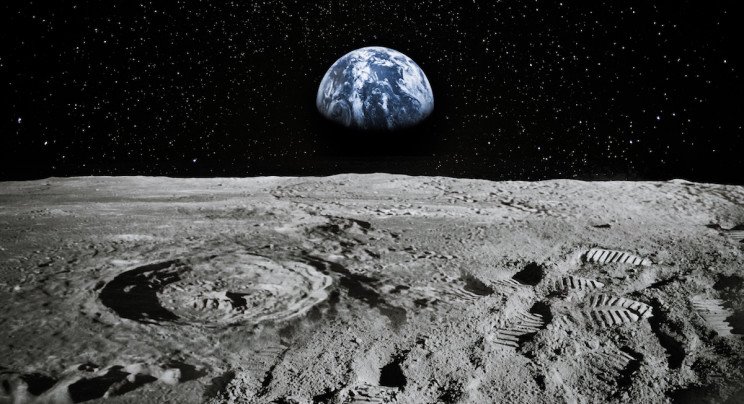
Let’s explore some interesting features, facts, or myths about our nearest neighbor, the Moon. Without it, life on Earth would be totally different, if not at all.
Mountains on the Moon
Note: This article is partially AI-generated.
The Moon's surface is covered with mountains, but they differ significantly from those on Earth in both formation and appearance. Unlike Earth’s mountains, which are primarily created by tectonic plate movements over millions of years, lunar mountains are mostly the result of catastrophic asteroid or comet impacts that occurred billions of years ago.
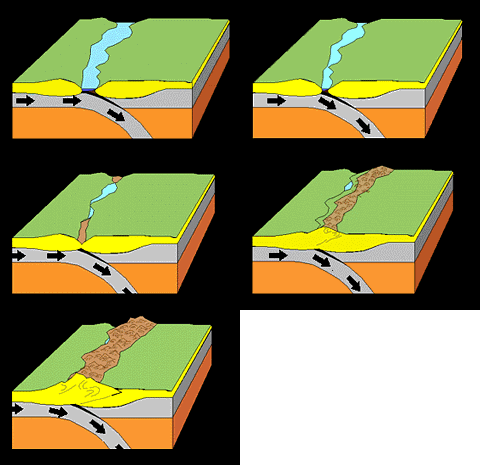
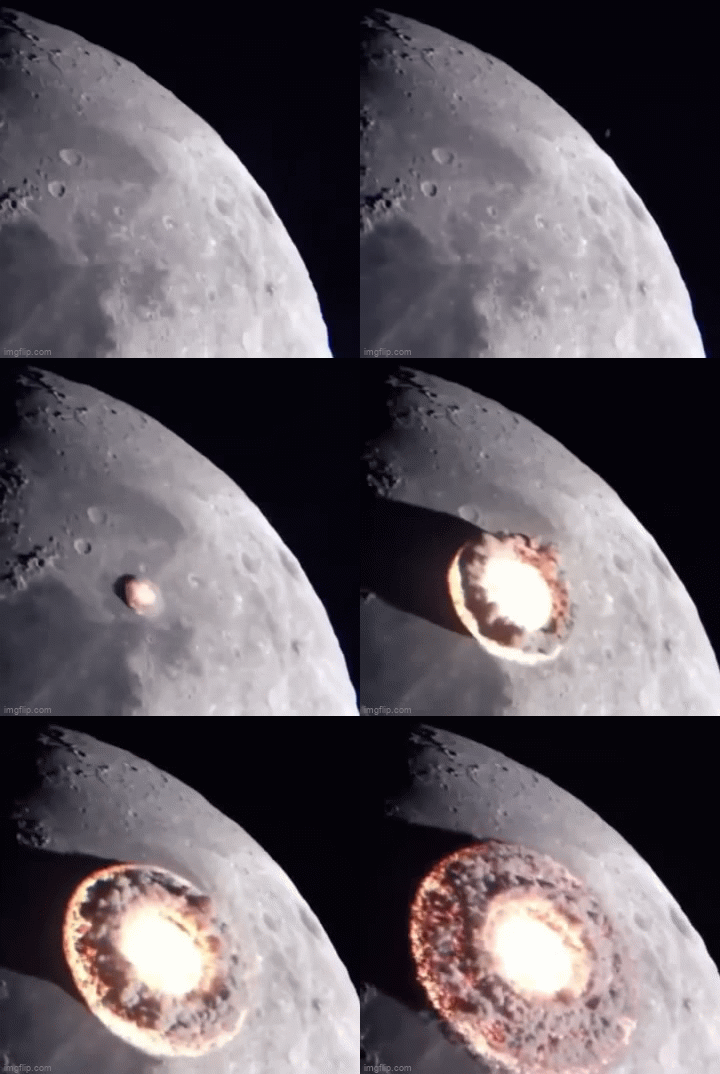
Because the Moon has no wind or water, there is no traditional erosion. However, billions of years of micrometeorite bombardment have smoothed and rounded their peaks, leaving no sharp, jagged edges like the Himalayas. Large, individual lunar craters often have central mountains, which are formed by the rebound of the crater floor immediately after a major impact.
Montes Apenninus
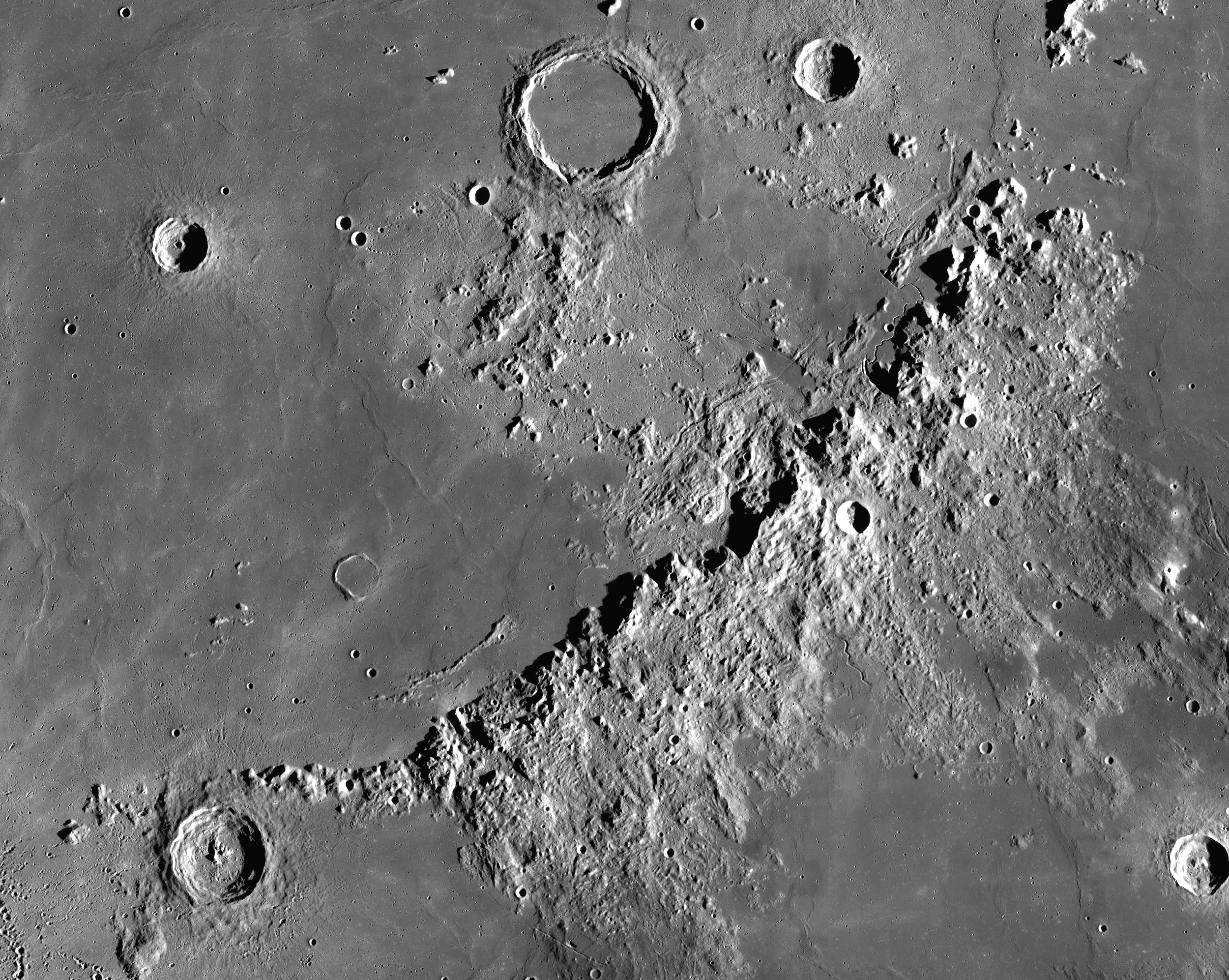
Montes Apenninus is the most spectacular and prominent mountain range on the Moon's near side, forming the rugged southeastern border of the Mare Imbrium basin. NASA has historically prioritized this region for exploration, most notably during the Apollo 15 mission in 1971.
Created roughly 3.8 to 3.9 billion years ago during the massive impact that excavated the Imbrium basin.
The range stretches approximately 370 miles in length. Mons Huygens is the tallest mountain in the Montes Apenninus range, reaching heights of approximately 3.5 miles to 3.9 miles. Easily visible with binoculars or a small telescope, it is best viewed when the lunar terminator is nearby, the line between the light and dark sides of the Moon. At this time, the low-angle sunlight casts long, dramatic shadows that make the lunar topography clearly visible from Earth.
Primary Formation Mechanisms
Impact Basin Rims: The most prominent lunar mountain ranges, such as the Montes Apenninus and Montes Caucasus, are actually the elevated rims of massive impact basins. When giant asteroids struck the Moon roughly 3.8 to 4 billion years ago, they excavated deep depressions and pushed up colossal walls of rock at the edges, forming circular or arc-shaped ranges in just minutes.
Central Peaks: Many large craters feature a single mountain or group of peaks in their center. These form when the lunar crust, momentarily liquefied by the heat and pressure of an impact, "rebounds" or splashes back upward before solidifying. Examples include the central peaks of Tycho and Copernicus craters.
Volcanic Domes: Some smaller, rounded hills were formed by volcanic activity. These "lunar domes," like the Marius Hills, were created when thick, viscous lava oozed from vents and accumulated into low, shield-like peaks.
Crustal Differentiation (Highlands): The light-colored lunar highlands were formed as the early Moon's "magma ocean" cooled. Lighter minerals like anorthosite floated to the surface to form a rugged, mountain-like primitive crust.

Outreach material below is distributed free for public outreach.
Astronomy for ASTRA Kids
NASA Science
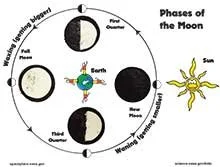
For our young ASTRA members, NASA has online webpages for kids, an educational resource for fun learning, and arts & crafts.
Make Oreo Cookie Phases of the Moon.
Around The Web
Dark Sky News

Latest News:
DarkSky New Jersey Ordinance is being updated and will be circulated again for review with the New Jersey legislature in 2026.
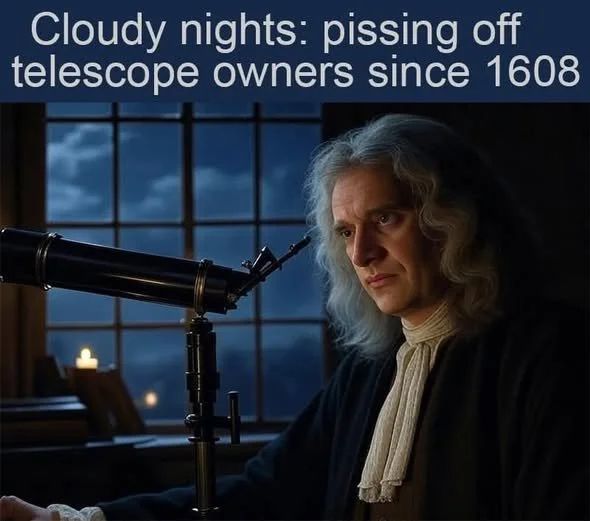
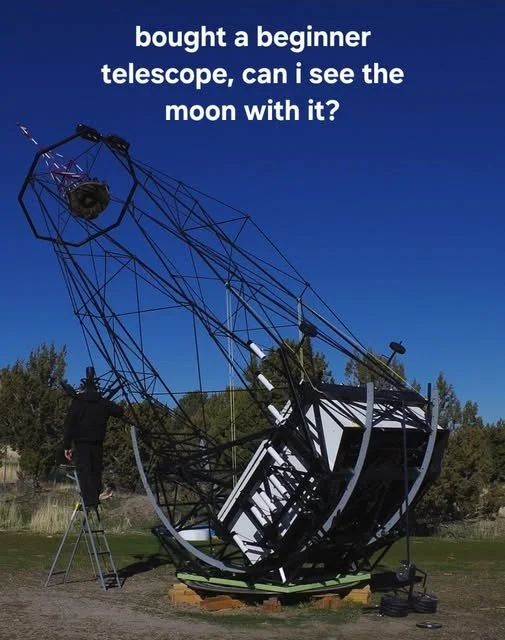
On the lighter side of astronomy …

What’s Up:
Sky Watching Tips from NASA
Provided by NASA Jet Propulsion Laboratory. Is usually updated anywhere from the first day of the month to the fifth day of the month. Check back to this linked image if it hasn’t been updated yet.
For more go to NASA Jet Propulsion Laboratory webpage: What’s Up: Skywatching Tips From NASA

This article and images are distributed by NASA Night Sky Network
The Night Sky Network program supports astronomy clubs across the USA dedicated to astronomy outreach.
Visit nightsky.jpl.nasa.gov to find local clubs, events, and more!
NSN Articles have been suspended until further notice.
The articles below are from other free sources, including older NSN articles.
The intro for each is provided, but you will need to utilize the included link to view the full article.
Castor and Pollux
Gemini’s stars are referenced quite often in cultures around the world, and even in the history of space exploration. NASA’s famed Gemini program took its name from these stars, as do the appropriately named twin Gemini North and South Observatories in Hawaii and Chile.
Ancient Greek authors tell several versions of the story of Castor and Pollux. Known as the Dioscuri, the Boys of Zeus, are twin brothers in Greek and Roman mythology, inseparable in life and action. Pollux was the immortal son of Zeus, while Castor was the mortal son of King Tyndareus. Upon Castor's death, Pollux shared his immortality, and they were transformed into the constellation Gemini. They were considered heroes, patrons of travelers, sailors, and horsemen, and were skilled boxers.
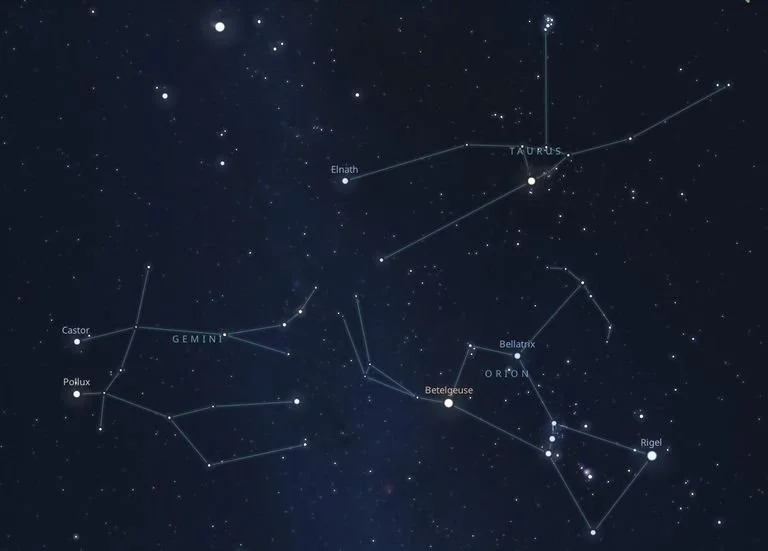
Gemini
Gemini, the Twins. This constellation can be seen in the winter sky, along with neighboring constellations Orion and Taurus. Best seen in January to March. Tracing from Mintaka in Orion's Belt to Betelgeuse, a massive red supergiant marking the left shoulder. Go beyond Betelgeuse will take you through Gimini until you reach the twins Castor and Pollux.
Image from Stellarium Web
Castor is a group of six stars that looks like a single white star to the naked eye. Castor is the second-brightest star in the constellation Gemini and one of the brightest in the night sky, located about 51 light-years from Earth. Although it appears as a single star, it is actually a complex sextuple system composed of three pairs of binary stars (Castor A, B, and C). It is often paired with the brighter star Pollux.
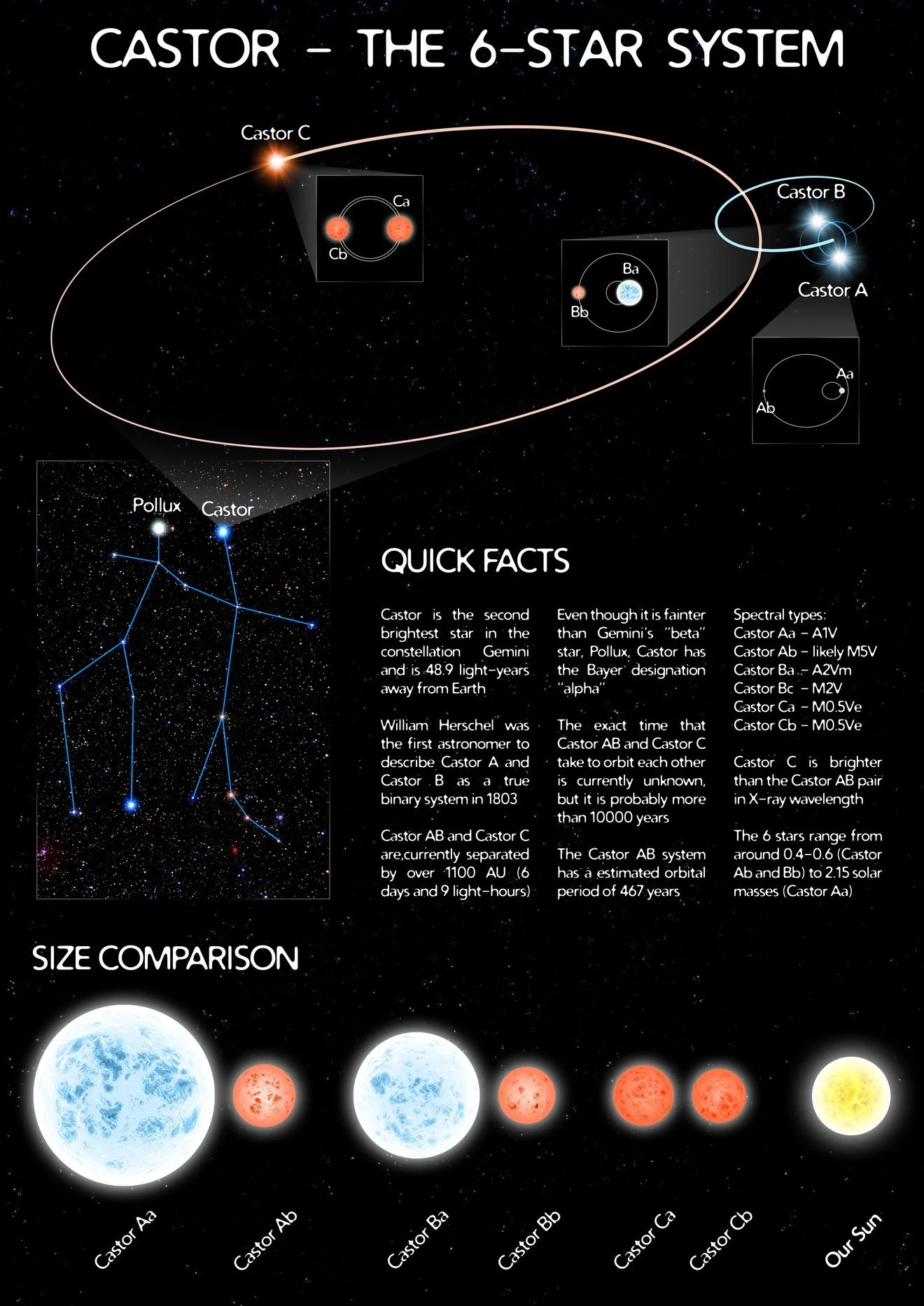
Image Source: NASA
Pollux (Beta Geminorum) is the brightest star in the Gemini constellation and the closest giant star to the Sun, located about 34 light-years away. As an orange-hued, evolved K0III giant star, it is over 30 times more luminous than the Sun and is orbited by a known exoplanet, Pollux b (or Thestias). Pollux b is at least 2.9 times the mass of Jupiter, orbiting at 1.65 astronomical units (roughly the distance from Mars to the Sun).
The triangle forms the inner, southern part of the larger "Winter Hexagon" asterism.
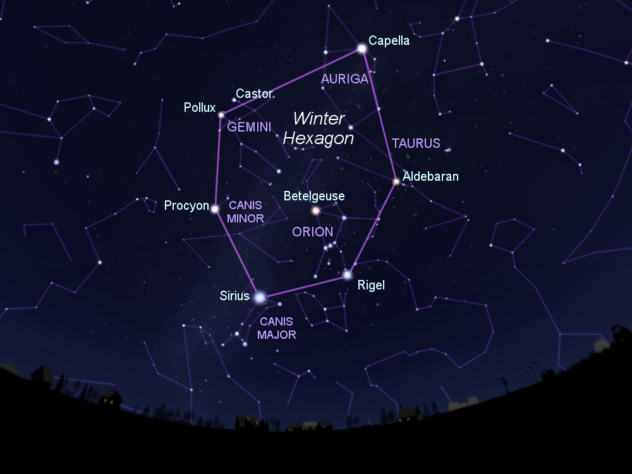
Pollux and the Winter Hexagon
Pollux is part of the Winter Hexagon. The Winter Hexagon (or Winter Circle) is a prominent, large asterism visible in the evening sky from January to March in the Northern Hemisphere. Formed by connecting six bright stars—Rigel, Aldebaran, Capella, Pollux, Procyon, and Sirius—this pattern spans a large area of the southern sky, providing a useful guide for identifying major winter constellations.
Detailed information on Gemini, the Twins, and the Winter Hexagon can be found at Constellation-Guide.com

Let’s Explore Space
The Latest News on Astronomy and Sky Watching — By StarWalk Astronomy App - Sky Tonight

Tonight’s Sky: No longer posting
October 2024 was the last updated posting of Tonight’s Sky. It is still available via YouTube.
Linked is the twelve-month playlist on YouTube.
Any suggested replacements, let me know.
Visit the STScI, which produced Hubblesite.org video overviews for Tonight’s Sky.
They can be found both on Facebook and stsci.edu.
Submissions Welcome
Members are invited to submit articles, photos, news, or stories for inclusion with Astral Projections Online. Please contact the ASTRA Webmaster.